
FSD(监督模式)

Search documents
双重人工监管:特斯拉承认其 Robotaxi 仍需车内司机与远程操作员
Xin Lang Cai Jing· 2026-02-22 11:23
Core Viewpoint - Tesla's submission to the California Public Utilities Commission (CPUC) reveals that its "Robotaxi" service still relies on human drivers and remote operators, contradicting its claims of full autonomy [1][3][4] Group 1: Operational Details - Tesla's ride-hailing service requires a human driver in the vehicle and a remote operator, highlighting a significant operational gap compared to Waymo's fully autonomous service [3] - The service operates under the Transport Charter Program (TCP) with a Level 2 (L2) driver assistance system, necessitating a licensed human driver to monitor and take control when needed [3][4] - Tesla has deployed local remote operators in Austin and the Bay Area, who must pass background checks and training, providing an additional layer of safety [3][4] Group 2: Marketing and Regulatory Issues - Tesla argues against mandatory passenger consent for L2 technology use, claiming that user agreement during app registration suffices [5][7] - The company opposes Waymo's proposal to restrict the use of terms like "autonomous" or "Robotaxi" for L2 services, asserting that existing advertising laws are adequate [6][7] - Tesla's contradictory stance of claiming its vehicles are not autonomous while simultaneously marketing them as "Robotaxi" raises questions about its compliance with advertising regulations [6] Group 3: Safety Claims and Data Reporting - Tesla cites its Vehicle Safety Report, claiming that the probability of accidents decreases to 1/7 when using the Full Self-Driving (FSD) system [9] - The self-reported safety data has faced criticism due to Tesla's lack of comprehensive takeover data, which is required for autonomous vehicle licensing [9]


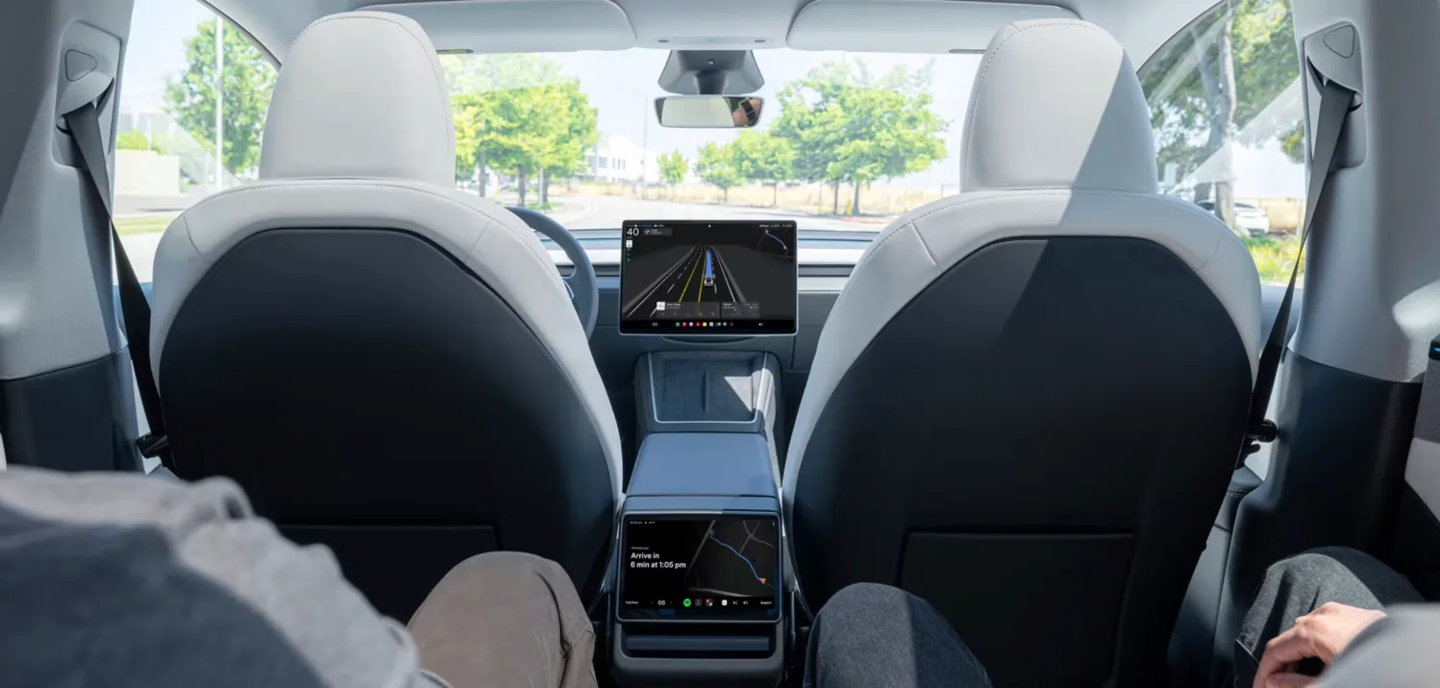
消息称特斯拉将于本月底在澳大利亚推出FSD
Feng Huang Wang· 2025-08-27 04:44
Core Viewpoint - Tesla's Full Self-Driving (FSD) capability is being showcased through videos that demonstrate its ability to navigate without driver intervention, although human supervision is still required [1][2] Group 1: FSD Demonstration - Videos circulating on social media show Tesla vehicles performing lane changes, slowing down to avoid traffic, and making turns autonomously while a driver supervises [1] - The FSD system's responsiveness to real-world conditions is highlighted, with comparisons made to human driving behavior [1] - The FSD (supervised mode) is set to launch in Australia on August 29, utilizing 360-degree camera views to manage blind spots and execute lane changes [1] Group 2: Company Statements - Thom Drew, Tesla Australia's director, confirmed that there are "no obstacles" to launching the supervised mode FSD in Australia, indicating ongoing efforts to roll out this feature [2]