
Fireworks

Search documents
Video shows Michigan synagogue suspect buying $2K worth of fireworks
NBC News· 2026-03-14 02:24
Two days before a synagogue ramming attack in Michigan, the same suspect was allegedly here at a Detroit area fireworks store buying over $2,000 worth of explosives. Phantom Fireworks says someone signing in as Aean Gazali, seen right here on the video, came to one of the company's Detroit area stores on March 10th in the afternoon. You can see in the surveillance video, this individual pulls up in a pickup truck, goes into the store.The company says every person who buys something from one of their stores ...


*ST熊猫:预计2025年归母净利润1400万元-2100万元,烟花出口业务保持盈利
Xin Lang Cai Jing· 2026-01-23 14:08
*ST熊猫1月23日公告,预计2025年度归母净利润1400万元-2100万元,上年同期亏损4.74亿元。业绩预 增的主要原因:2024年度,公司基于谨慎性原则对其他应收款和其他流动资产中存在回收风险的款项计 提了较大金额的减值损失;2025年度,公司无类似事项的影响,并且公司的主业烟花出口业务保持盈 利。 ...

Benchmark 加入一位新 GP,a16z 和红杉重金押注了一个语音 AI 硬件
投资实习所· 2025-10-22 05:52
Core Insights - Benchmark has experienced significant leadership changes, losing three General Partners (GPs) in the past two years, while also adding a new GP, Everett Randle, who has a strong background in AI investments [1][4][5] Group 1: Leadership Changes - Victor Lazarte, a key figure in Benchmark's investment in HeyGen, has left to start his own VC firm, marking a notable shift in the firm's leadership [1] - Everett Randle, previously a partner at KP, has joined Benchmark, bringing a wealth of experience in AI investments [1][2] - The firm has emphasized a flat organizational structure, valuing equal power and responsibility among partners [5] Group 2: Investment Performance - Benchmark's investments in AI have yielded impressive results, with many projects experiencing rapid revenue growth or securing multiple funding rounds [5] - Recent notable investments include a $25 million Series A round for an AI document product and a $105 million Series B round for Cursor, an AI programming tool [6] - The firm has also led significant funding rounds for AI-related projects, such as $85 million for Exa, which aims to create AI-centric search solutions [7] Group 3: Notable Projects and Valuations - Benchmark's early investments in AI projects like Cerebras have resulted in substantial valuations, with Cerebras recently achieving an $8.1 billion valuation after a $1.1 billion Series G round [8] - The firm has invested in various AI sectors, including AI coding, bug detection, and sales tax compliance automation, showcasing a diverse portfolio [6][8] - Benchmark's involvement in projects like HeyGen and Manus highlights its influence in the Chinese market, with HeyGen achieving $100 million in annual recurring revenue (ARR) [8]

Figma敲钟背后:90后辍学少年,如何站上AI资本塔尖?
Hu Xiu· 2025-08-05 00:23
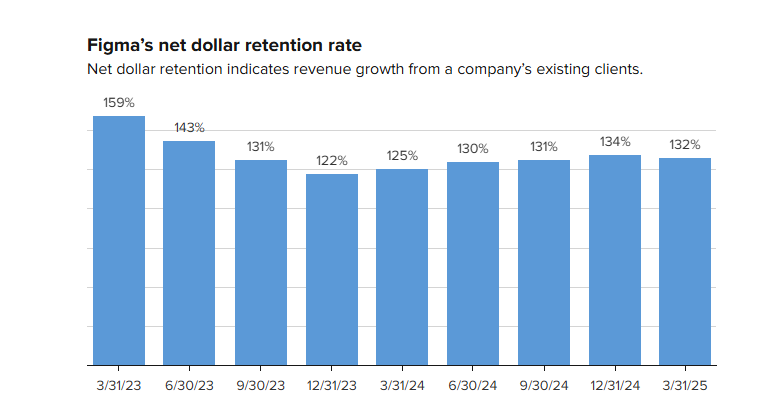
Core Insights - Figma recently completed its IPO, marking a significant event in Silicon Valley after a long period of market downturn due to inflation and rising interest rates [1] - CEO Dylan Field emphasizes the volatility of stock prices, reminding the team that they are merely snapshots of the moment [2] Company Background - Dylan Field's entrepreneurial journey began with a $100,000 scholarship from Peter Thiel, which he used to co-found Figma with Evan Wallace in 2011 [3] - Figma aimed to create a user-friendly web design tool, capitalizing on Adobe's decision to discontinue its Fireworks software [3][4] - The company faced early challenges, including poor user feedback and a slow development pace, but eventually found success with the introduction of a free preview version and real-time collaboration features [5][6] Growth and Development - By 2019, Figma had gained significant traction, with a valuation of $4.4 billion led by Sequoia Capital [6] - The COVID-19 pandemic accelerated the demand for Figma's collaboration tools, leading to a surge in its user base [8] - Figma's valuation reached $10 billion after rejecting two acquisition offers from Adobe, which sought to acquire the company for $20 billion [9][10] Regulatory Challenges - The acquisition deal with Adobe faced regulatory scrutiny, with UK regulators expressing concerns about potential stifling of innovation [10][12] - Despite the failed acquisition, Figma's net revenue retention rate rebounded from 122% to 132%, indicating strong customer loyalty [13][16] Future Prospects - Figma is now focusing on integrating AI into its offerings, launching Figma Make, a tool designed to convert sketches into functional prototypes [17][18] - However, there are concerns about Figma's ability to compete in the AI space, with critics suggesting it may be lagging behind competitors [17][18]


Figma敲钟背后:CEO如何从90后辍学少年,炼成AI圈的亿万富翁
3 6 Ke· 2025-08-04 12:14
Core Insights - Figma's recent IPO has significantly increased its valuation, marking a notable event in Silicon Valley after a period of market downturn due to inflation and rising interest rates [3] - CEO Dylan Field emphasizes the importance of maintaining a grounded perspective on stock prices, viewing them as temporary snapshots rather than long-term indicators [4] - Figma's strategic shift towards becoming an AI creation platform is highlighted by the launch of Figma Make, which aims to transform design processes [17] Company Background - Dylan Field dropped out of Brown University to co-found Figma with Evan Wallace, supported by Peter Thiel's "Thiel Fellowship" [1][5] - Figma's journey began in 2011 with a $100,000 scholarship, leading to the development of a web-based design tool that aimed to democratize design [5][9] - The company faced early challenges but gained traction with the introduction of real-time collaboration features and a freemium model [9][10] Competitive Landscape - Adobe initially viewed Figma as a threat, attempting to acquire the company for $20 billion, but the deal was blocked by antitrust regulators [1][10][11] - Figma's growth was accelerated during the pandemic, as its collaboration tools became essential for remote work [10] - Despite the failed acquisition, Figma's net dollar retention rate rebounded, indicating strong customer loyalty [15] Recent Developments - Figma Make, launched as part of the company's AI strategy, aims to allow designers to create prototypes from simple prompts, although it has faced technical challenges [17][18] - The company has received mixed feedback regarding its AI capabilities, with some industry experts questioning its ability to replicate its success in design tools within the AI space [17][18] - Field's leadership style, characterized by responsiveness to feedback and maintaining high employee loyalty, has been crucial for Figma's resilience [1][12]
X @Bloomberg
Bloomberg· 2025-07-02 09:13
Trade Dependency - The US relies on China for fireworks, especially on July 4th, when celebrating independence from British rule [1]