Full Self - Driving (FSD) software

Search documents
Tesla's Latest Update Changes Everything
The Motley Fool· 2026-02-07 09:05
Core Viewpoint - The company's $20 billion investment in 2026 signifies a shift in the investment narrative, moving away from traditional car company valuations to a broader vision of transportation as a service [1][2]. Investment Strategy - Tesla is committing $20 billion to build six new factories, which supports CEO Elon Musk's vision for the future of electric vehicles (EVs) and transportation [3][4]. - The investment includes a lithium refinery and a lithium iron phosphate (LFP) battery factory, aimed at producing cost-effective batteries for future models like the Cybercab [4]. Market Position and Valuation - Tesla's current market cap stands at $1.4 trillion, with a trading valuation exceeding 200 times Wall Street's earnings estimates for 2026 [4]. - The company is transitioning from being viewed solely as a car manufacturer to being perceived as a transportation-as-a-service provider, with a focus on autonomous driving [4]. Risks and Challenges - The company faces significant cash burn due to the $20 billion investment, with estimates suggesting a $6.2 billion cash outflow for 2026 [7]. - Regulatory approvals for unsupervised robotaxis and the Cybercab are still pending, which adds uncertainty to Tesla's future plans [6][10]. Future Outlook - Tesla's CFO stated that the company has $44 billion in cash and investments to support its spending, but there are risks associated with premature investments in projects like Cybercab and Optimus [8]. - The stock may appeal to investors who believe in Musk's vision for the future of transportation, despite the high-risk nature of the investment [11].


Big Tech Earnings Live: Meta and Tesla Shares Surge on Strong Results; Microsoft Drops as Cloud Revenue Growth Slows
Investopedia· 2026-01-29 01:01
Microsoft - Microsoft’s stock decline is attributed to slowing revenue growth from its Azure cloud platform and concerns over backlog concentration, particularly its reliance on a significant deal with OpenAI [1][2] - The company’s remaining performance obligations, or backlog, is currently $625 billion, more than double from a year ago, with approximately 45% tied to OpenAI [2] - Despite these concerns, analysts believe Microsoft can monetize AI effectively due to its diverse business segments, including applications, security, and infrastructure [3] - Microsoft reported $81.3 billion in revenue for its fiscal second quarter, with adjusted earnings per share of $4.14, exceeding analyst expectations [21] - Intelligent Cloud revenue, which includes Azure, reached $32.9 billion, surpassing the consensus estimate of $32.39 billion [21] - Capital expenditures for Microsoft were $37.5 billion, higher than the expected $34.3 billion, with a significant portion allocated to short-lived assets like GPUs and CPUs [18] Meta - Meta's anticipated capital expenditures for 2026 are projected to be between $115 billion and $135 billion, significantly higher than last year's $72.22 billion and above analysts' expectations of $110 billion [13][14] - The increase in spending is primarily driven by investments in AI initiatives, particularly the Meta Superintelligence Labs [14] - Meta reported fourth-quarter earnings of $8.88 per share, with a 24% year-over-year revenue increase to a record $59.89 billion, driven by a surge in ad revenues [15] - The company expects first-quarter revenue between $53.5 billion and $56.5 billion, exceeding analyst projections [15] Tesla - Tesla's stock rose after reporting quarterly revenue of $25.71 billion, surpassing the consensus expectation of $25.12 billion, with net income at 60 cents per share [17] - The company did not provide a detailed outlook for vehicle sales, focusing instead on maximizing factory capacity utilization [12] - Tesla confirmed plans to unveil a new Optimus robot in the first quarter of 2026, with production expected to start in the same year [10]


Here's How Much Traders Expect Tesla Stock to Move After Earnings
Investopedia· 2026-01-28 18:41
-- Here's How Much Traders Expect Tesla Stock to Move After Earnings [Stocks Little Changed Ahead of Fed Decision, Tech Earnings][What to Expect from Fed Meeting][How One Stock Shaved 422 Points Off the Dow Tuesday][Nvidia's Plans to Sell More Chips in China Just Cleared a Major Hurdle]- Top StoriesTesla shares hit a record high last month, even as its vehicle sales have declined, as investors focus on the company's advances in AI, self-driving cars, and robotics.David Paul Morris / Bloomberg / Getty Images ...
Tesla Is Set to Dominate the EV Market -- Here Are 4 Reasons Why
Yahoo Finance· 2026-01-28 09:02
Core Insights - The electric vehicle (EV) market is becoming increasingly competitive for Tesla, yet the company's long-term competitive position is strengthening, positioning it well to dominate the EV market [1] Group 1: Tesla's Performance - Tesla's EV deliveries fell by 8.6% in 2025 compared to 2024, primarily due to the refresh of the Model Y, which remains the best-selling EV in the U.S. [2] - Despite a decline in the Model Y's market share in late 2024 and early 2025, a quick rebound is expected in the second quarter with the new Model Y's availability [2] - Tesla's market share, particularly for the Model Y, saw a significant increase in the fourth quarter after the expiration of EV Federal tax credits, indicating that Tesla was less affected than its low-cost EV competitors [3] Group 2: Competitive Landscape - There is a distinction between low-cost EV models and those subsidized to gain market share, with the latter being unsustainable; Ford's Model e segment lost $3.6 billion in the first nine months of 2025 and incurred a $19.5 billion charge to refocus its EV operations [5] - Tesla remains profitable and has the scale to increase production while reducing costs per vehicle, enhancing its competitive edge [6] Group 3: Future Growth Potential - Tesla's CEO Elon Musk confirmed the removal of safety drivers from some robotaxis in Austin, Texas, marking a positive step in the rollout of Tesla's robotaxi service [8] - The potential for robotaxis to transform Tesla's earnings is significant, as it could generate substantial revenue from Cybercabs and share revenue from Tesla EVs converted into robotaxis using unsupervised full self-driving software [9]
Here's How Much Traders Expect Tesla Stock to Move After Earnings This Week
Investopedia· 2026-01-26 23:20
Core Insights - Tesla is expected to report its fourth-quarter financial results, with traders anticipating a significant stock movement of about 5% in either direction following the announcement [1][7] - The company is facing declining vehicle sales, but investors are focusing on its growth potential in artificial intelligence, self-driving cars, and robotics [3] Financial Performance - For the fourth quarter, Tesla is projected to report revenue of $25.1 billion, which represents a decline of approximately 2.4% year-over-year, with adjusted earnings per share expected to be $0.46, down from $0.60 last year [6] Market Expectations - Options pricing indicates that Tesla's stock could fluctuate between $412 and $459 by the end of the week, based on Monday's closing price of around $435 [1][7] - Wall Street analysts are divided on Tesla's stock, with six out of eleven analysts rating it as a "buy," three as "hold," and two as "sell," with an average price target of $446, indicating a modest 2% potential rise from the recent close [7] Strategic Developments - CEO Elon Musk is expected to discuss advancements in self-driving technology and robotics during the earnings call, which could become key revenue drivers as EV sales face challenges [2] - Tesla plans to start selling its Optimus humanoid robots to the public by the end of next year, as mentioned by Musk [2] - The company has removed human safety monitors from some of its robotaxis in Austin, which analysts suggest could be a significant step for its robotaxi strategy [5] Revenue Streams - Sales from Optimus robots and subscriptions for Tesla's Full Self-Driving (FSD) software are critical metrics for Musk's compensation agreement, with FSD transitioning to a recurring subscription model starting next month [4]
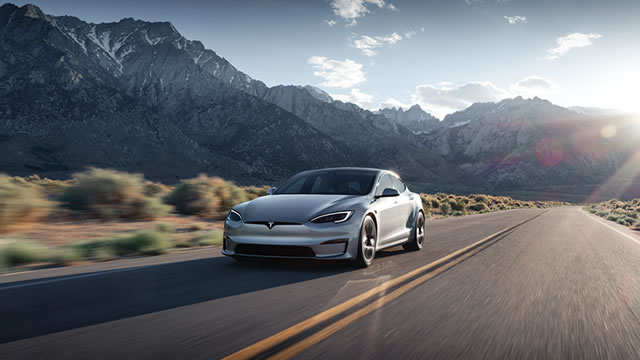
2 AI Stocks to Buy Before They Soar to $20 Trillion, According to Wall Street Experts
The Motley Fool· 2026-01-24 08:40
Core Insights - Nvidia and Tesla are positioned to deliver significant returns for shareholders due to their involvement in the AI revolution [1][2] - Experts predict that the combined market value of Nvidia and Tesla could reach at least $20 trillion in the future [2] Nvidia - Nvidia's GPUs are the industry standard for AI infrastructure, accounting for approximately 85% of AI accelerator sales in 2025, with expectations of maintaining this dominance [4][5] - The company employs a "full-stack" approach to accelerated computing, integrating hardware and software to provide the lowest total cost of ownership for customers [4][5] - Nvidia's data center GPU sales are projected to grow at an annual rate of 36% through 2033, with adjusted earnings expected to increase at 38% annually over the next three years [6][7] - Analyst Beth Kindig predicts Nvidia could reach a market value of $20 trillion by 2030, implying a potential upside of about 340% from its current market value of $4.5 trillion [8] Tesla - Tesla's current market value is $1.5 trillion, with CEO Elon Musk suggesting it could reach $25 trillion, indicating a potential upside of approximately 1,560% [8][10] - Despite losing its status as the global leader in electric vehicle sales, Tesla's investment thesis now focuses on physical AI, including autonomous vehicles and humanoid robots [10][12] - Tesla's full self-driving (FSD) software is set to expand into new markets, with plans for monetization through subscriptions and autonomous ride-sharing services [11] - The robotaxi market is expected to grow at 99% annually through 2033, while humanoid robot sales are projected to increase at 54% annually through 2035 [13] - Musk claims Tesla's expertise in physical AI is unmatched, but the stock's valuation remains challenging due to struggles in the core electric car business and execution risks in new AI ventures [14][15]

Elon Musk says Tesla's full self-driving package will only be available by subscription
New York Post· 2026-01-14 17:30
Core Viewpoint - Tesla will transition its full self-driving (FSD) software to a monthly subscription model starting February 14, moving away from the one-time purchase option [1][5]. Group 1: FSD Software Details - The FSD software is currently available for a one-time payment of $8,000 or a monthly subscription of $99 in the US [1][5]. - FSD is classified as an assistance system that requires drivers to remain attentive and ready to intervene when necessary [3][4]. Group 2: Regulatory and Safety Concerns - The National Highway Traffic Safety Administration (NHTSA) has opened an investigation into 2.88 million Tesla vehicles equipped with the FSD system due to over 50 reports of traffic-safety violations and several crashes [2]. - Tesla has added the term "Supervised" to the FSD designation for passenger vehicles, indicating the need for driver oversight [2]. Group 3: Market Reaction - Following the announcement regarding the subscription model for FSD, Tesla shares experienced a decline of more than 2% [4].
Musk says Tesla is moving Full Self-Driving to a monthly subscription
CNBC· 2026-01-14 16:12
Core Viewpoint - Tesla will transition its Full Self-Driving (FSD) software from a one-time purchase to a monthly subscription model starting February 14, 2024, which is a strategic move to enhance recurring revenue streams [1][2] Group 1: Subscription Model Change - Tesla will cease selling FSD for a flat rate and will only offer it as a monthly subscription, starting at $99 per month [1][2] - This change is aimed at establishing Tesla as a leader in autonomous mobility, which is crucial for the company's future [2] Group 2: Impact on Stock and Services - Following the announcement, Tesla's shares fell more than 2% [1] - Tesla has previously launched a limited robotaxi service in Austin, Texas, and offers ride-hailing services in San Francisco, although these services currently require a driver [2]
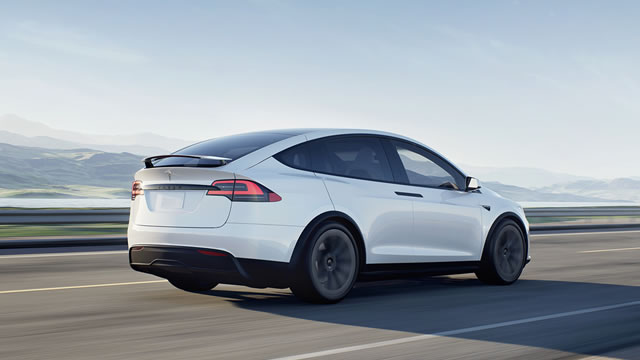
Prediction: Tesla's EV Sales Will Return to Growth in 2026
The Motley Fool· 2026-01-10 12:15
Core Viewpoint - Tesla's recent decline in EV deliveries is concerning, but there are strong indicators that sales will rebound in 2026, strengthening the investment case for the stock. Group 1: Sales Performance - Tesla experienced an 8.5% drop in full-year EV deliveries for the year [1] - The Model Y refresh significantly impacted sales, with the Model Y being responsible for over a quarter of total EV sales in the U.S. [2][4] - Model 3 sales rose by 17.6% in the first nine months of 2025, indicating that the sales decline is primarily a Model Y issue [5] Group 2: Future Projections - Annualizing fourth-quarter deliveries results in 1.67 million deliveries, while the second half annualized to 1.83 million deliveries, with a Wall Street analyst consensus for 2026 at 1.75 million [8] - The rollout of the Juniper Model Y and the introduction of more affordable versions are expected to improve sales in 2026 [6] Group 3: Technological Advancements - The potential introduction of robotaxis and regulatory approvals for Full Self-Driving (FSD) software will enhance the value proposition of Tesla's EVs [9][10] - Lower interest rates are anticipated to benefit vehicle sales, making EVs more affordable [11] Group 4: Investment Implications - The return to growth in EV sales is crucial for Tesla's narrative and will help counteract negative perceptions from declining sales [12] - Increasing production volume is essential for margin expansion and reducing EV production costs, ensuring affordability [12]
Tesla Just Delivered Very Bad News for Investors
The Motley Fool· 2026-01-06 10:06
Core Viewpoint - Tesla stock is currently overvalued as investors speculate on future products like the Cybercab and Optimus, despite significant short-term challenges in its EV business [1][3]. Group 1: Current Financial Performance - Tesla's EV business accounts for 75% of its total revenue, but it experienced the largest sales decline in company history in 2025, with total deliveries dropping by 8.5% to 1.63 million vehicles [2][6]. - The company delivered 418,227 EVs in Q4 2025, falling short of Wall Street's expectations, marking a significant downturn in performance [6][17]. - Tesla's market share in Europe decreased from 2.4% to 1.7% in 2025 as consumers opted for lower-cost alternatives, such as BYD's Dolphin Surf EV priced at $26,900 [7]. Group 2: Future Product Prospects - The Cybercab and Optimus are projected to be several years away from mass commercialization, with the Cybercab expected to enter production by the end of 2026 [10][11]. - The Cybercab could generate a new revenue stream estimated at $756 billion annually by 2029, contingent on the approval of Tesla's full self-driving software [11][12]. - Optimus is anticipated to become Tesla's most successful product, with a potential revenue of $10 trillion by 2040, although mass production is not expected until late 2026 [13][14]. Group 3: Valuation Concerns - Tesla's price-to-earnings (P/E) ratio stands at 292, significantly higher than other tech companies valued over $1 trillion, indicating a potential overvaluation [15]. - The upcoming fourth-quarter results are expected to reflect a sharp decline in profits due to weak EV sales, which may further inflate the P/E ratio [17][18].