G60千帆星座

Search documents
我国三大万颗星座计划,推动商业航天进入高速发展期
Huan Qiu Wang· 2025-12-06 01:21
Core Insights - The global satellite internet constellation is rapidly developing, with major players including Starlink, GW constellation, G60, Honghu-3, OneWeb, and Kuiper, particularly highlighting the advancements of SpaceX's Starlink project which has launched over 10,000 satellites as part of a planned 42,000 satellites [1] - China is also making significant strides with three major satellite constellation plans, including China Star Network (GW constellation), Shanghai Yuanxin (G60 Qianfan constellation), and Blue Arrow Hongqing Technology (Honghu-3 constellation), aiming to launch a total of 116 satellites by October 2025 [1] - The commercial space industry is characterized by market-driven activities where enterprises, including private and mixed-ownership companies, invest, operate, and bear risks across the entire aerospace value chain, covering technology R&D, manufacturing, launching, and application [1] Industry Developments - The report indicates that the launch schedule for national rockets like Long March 12, Long March 8A, and Long March 6 modified is tight due to other national space missions, leading to slower than expected overall launch progress [3] - There is an urgent need for high-capacity, low-cost, and reliable reusable rockets, with new commercial rocket models such as Zhuque-3, Tianlong-3, and others expected to debut by the end of 2025, which could accelerate the deployment of domestic low-orbit satellite constellations [3] - The satellite manufacturing process is evolving towards modular design, automated testing, and mass assembly, which is expected to release production capacity, while rocket launches are transitioning to reusable, low-cost, and high-capacity models, indicating a shift from validation to engineering application and large-scale development [3]

商业航天:奇点时刻,航天强国
Soochow Securities· 2025-12-03 07:30
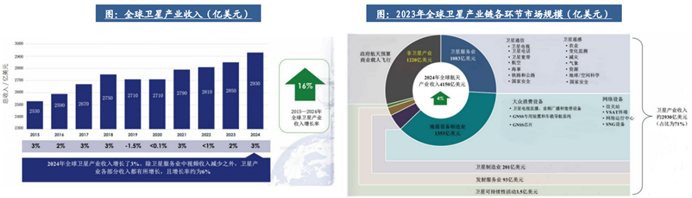
Investment Rating - The report provides a positive investment outlook for the commercial aerospace industry, highlighting significant growth opportunities driven by technological advancements and market demand [2]. Core Insights - The commercial aerospace sector is characterized by market-driven activities involving both private and mixed-ownership enterprises, focusing on investment, operation, and risk management across the entire aerospace value chain [2][38]. - Global satellite frequency and orbital resources are becoming increasingly scarce, leading to a surge in satellite constellation construction, with countries competing for these critical resources [2][46]. - The Starlink project by SpaceX is leading the global satellite constellation efforts, while China is rapidly advancing with its own satellite constellation plans [2][47]. - The era of reusable rockets in China is beginning, with several new commercial rocket models expected to launch by the end of 2025, which could accelerate the deployment of low Earth orbit satellite constellations [2][34]. - Investment recommendations include focusing on satellite manufacturing, rocket launching, and space computing, with specific companies highlighted for their potential in these areas [2][34]. Summary by Sections Commercial Aerospace Overview - Commercial aerospace is defined as market-driven activities involving investment, operation, and risk management by enterprises, covering the entire aerospace technology development, manufacturing, launching, and application [2][38]. - The industry is segmented into upstream manufacturing, midstream launching, and downstream application and operation [2][38]. Satellite Industry Overview - The global aerospace industry is projected to reach $415 billion by 2024, with satellite industry revenues estimated at $293 billion [20]. - Satellite services account for 37% of the total satellite industry revenue, while satellite manufacturing and launching services contribute 6.9% and 3.2%, respectively [25]. Satellite Communication Market - The satellite communication market is expected to grow significantly, with China's satellite internet market projected to reach 75.1 billion yuan by 2025 and 151.2 billion yuan by 2030 [34]. - The demand for satellite communication is primarily driven by commercial and government sectors, accounting for 55% and 31% of the market, respectively [28]. Domestic Satellite Constellation Plans - China has ambitious plans for satellite constellations, with three major projects aiming to deploy over 30,000 satellites, including the GW constellation, G60 constellation, and Honghu-3 constellation [79][81]. - As of October 2025, the GW constellation has launched 116 satellites, marking significant progress in China's satellite internet development [84].