GEO系统使用权

Search documents
299元就能“买通”AI推荐你的产品?
Xin Lang Cai Jing· 2026-01-18 17:25
Core Viewpoint - The rise of generative AI search tools has shifted consumer behavior from traditional searches to asking AI for recommendations, but this has led to concerns about the objectivity of AI-generated results due to the infiltration of advertising content [2][3]. Group 1: Emergence of Generative Engine Optimization (GEO) - Generative Engine Optimization (GEO) is an upgraded version of Search Engine Optimization (SEO), where advertisers can pay to have their content appear in AI search results without clear labeling as advertisements [3][4]. - Advertising agencies are leveraging GEO by flooding AI models with "soft articles" to increase the likelihood of their brands being captured in search results [4][5]. Group 2: Manipulation of AI Search Results - Some advertisers are using tactics such as creating fake reports and employing "fake experts" to manipulate AI search results, leading to the dissemination of misleading information [6][7]. - A test conducted by a tech self-media outlet demonstrated how easily AI can be tricked into presenting low-quality, repetitive content as credible information [6]. Group 3: Market for GEO Tools - Various sellers on e-commerce platforms are offering tools that claim to facilitate generative engine optimization, with prices ranging from tens to hundreds of yuan for annual usage rights [8]. - These tools primarily focus on generating and distributing soft articles to enhance visibility in AI searches [8]. Group 4: Regulatory Recommendations - Experts suggest that clear distinctions between AI-generated content and advertisements are crucial, advocating for regulations that require the labeling of ads in AI search results to prevent consumer confusion [9][10]. - The Chinese government has initiated measures to manage generative AI services, emphasizing the need for transparency and accuracy in generated content [10][11].

AI给出的搜索结果 可信吗?
Xin Hua She· 2026-01-17 01:36
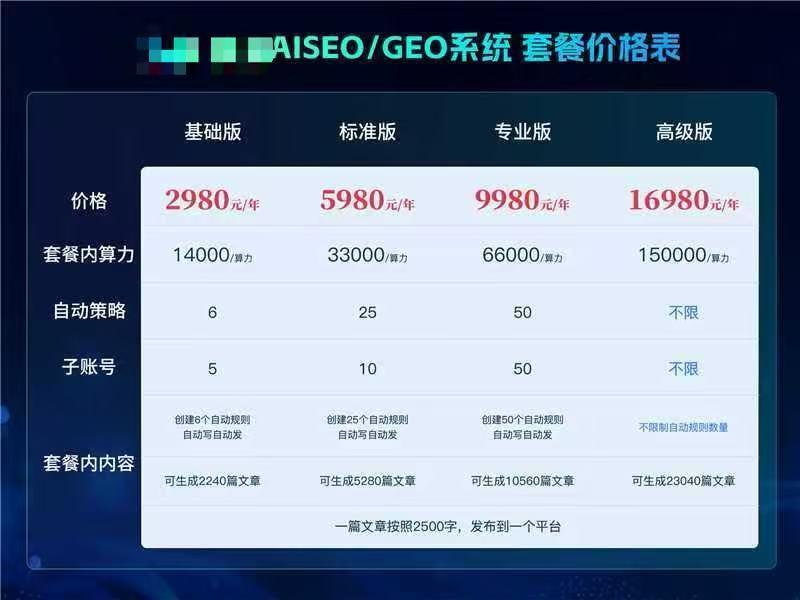
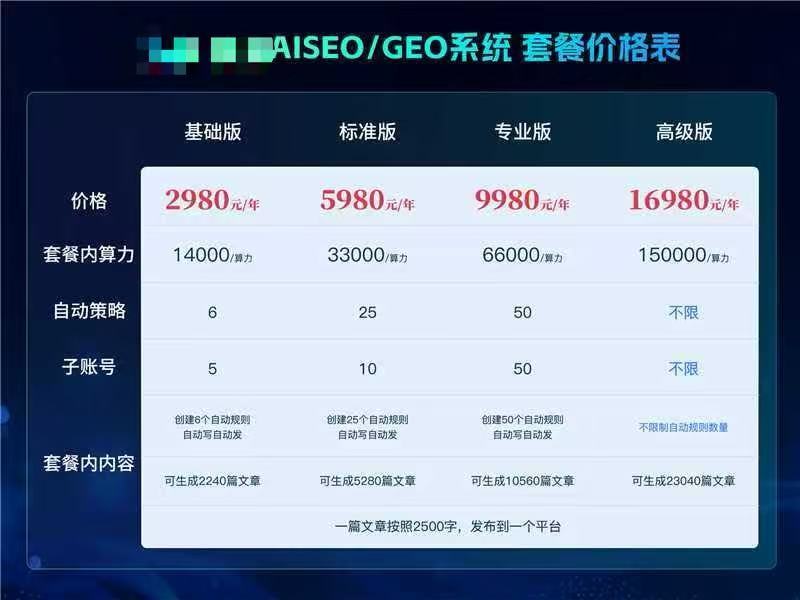
Core Viewpoint - The rise of generative AI search tools has shifted consumer behavior from traditional searches to asking AI for recommendations, but this has led to concerns about the objectivity of AI-generated results due to the infiltration of advertising content [1][2]. Group 1: Generative Engine Optimization (GEO) - Generative Engine Optimization (GEO) is an upgraded version of Search Engine Optimization (SEO), where advertisers can pay to have their content appear in AI search results without clear labeling as advertisements [3][4]. - Advertising agencies are leveraging GEO by flooding the internet with "soft articles" to increase the chances of their content being captured by AI models, leading to potential data pollution [5][4]. - A service provider for GEO offers various packages for clients, with prices ranging from 2,980 yuan to 16,980 yuan per year, depending on the strength of the computational resources used for content placement [3][4]. Group 2: Misleading Content and Practices - Some advertisers create fake reports and employ fake experts to manipulate search results, which can mislead consumers [6][8]. - A test conducted by a tech media outlet demonstrated how easily AI can be tricked into providing biased information based on repeated and low-quality content [5]. - Tools for generating and distributing soft articles for GEO are being sold on second-hand trading platforms, allowing users to create content that promotes their products in AI searches [11][8]. Group 3: Regulatory and Industry Recommendations - Experts suggest that clear distinctions between AI-generated results and advertisements are crucial, advocating for regulations that require advertisements to be clearly marked [9][10]. - The Chinese government has issued guidelines to prevent the generation of false and harmful information through generative AI services, emphasizing the need for transparency and reliability in AI-generated content [9][10]. - Industry professionals recommend that content distribution platforms utilize AI to identify and remove misleading content, and share blacklists of companies that produce false information [10].
小心!你问的AI,可能在悄悄给你推广告
Xin Hua She· 2026-01-17 01:32
Core Viewpoint - The rise of generative AI search tools has shifted consumer behavior from traditional searches to asking AI for recommendations, but this has led to concerns about the objectivity of AI-generated results due to the infiltration of advertising content [1][2]. Group 1: Generative AI and Advertising - Some AI search results are embedded with advertisements, misleading users into thinking they are receiving unbiased recommendations [2][3]. - The emergence of Generative Engine Optimization (GEO) is a new industry where advertising agencies manipulate AI search results by embedding paid content without clear labeling [3][4]. Group 2: Mechanisms of GEO - GEO is described as an upgraded version of Search Engine Optimization (SEO), where advertisers can pay to have their content appear in AI search results without being marked as advertisements [3][4]. - Agencies utilize a strategy of flooding the internet with "soft articles" to increase the likelihood of their content being captured by AI models, effectively creating a form of data pollution [5][4]. Group 3: Misleading Content and Practices - Some advertisers create fake reports and employ fictitious experts to influence search results, undermining the credibility of AI-generated information [7][8]. - Tools claiming to facilitate GEO are being sold on second-hand platforms, allowing users to generate and distribute promotional content easily [8][10]. Group 4: Regulatory and Industry Response - The need for clearer distinctions between AI-generated content and advertisements is emphasized, with recommendations for labeling paid content to prevent consumer confusion [11][12]. - Experts suggest that content distribution platforms should leverage AI to identify and eliminate false information, creating a blacklist of entities that produce misleading content [12][13].