生成式引擎优化

Search documents
求证了1028遍AI回复:泛滥的GEO,割了多少韭菜
21世纪经济报道· 2026-03-30 05:20
Core Viewpoint - The article discusses the rise of Generative Engine Optimization (GEO) in the marketing industry, highlighting its controversial nature and the potential risks associated with its use, particularly regarding content quality and ecological pollution in the information ecosystem [1][2][23]. Group 1: GEO Popularity and Market Dynamics - GEO has gained significant traction in the marketing industry, with many businesses reporting increased engagement despite concerns raised by media outlets [1]. - A study found that over 30% of tested references in various commercial scenarios were identified as GEO content, indicating its widespread use [2][4]. - The penetration rate of GEO is notably high in B2B services, driven by customer acquisition anxiety [7]. Group 2: Effectiveness and Limitations of GEO - Despite the hype, 57% of advertisers were not recommended by any major model, suggesting that the effectiveness of GEO is overstated [2][20]. - GEO's impact on AI decision-making is inconsistent, as it can influence input but not reliably control output from large models [20][21]. Group 3: Content Quality and Ethical Concerns - A significant portion of GEO content (87%) contains fabricated endorsements, raising ethical concerns about the integrity of information [23][26]. - GEO often employs misleading tactics, such as creating false authority and using persuasive language aimed at AI rather than human readers [23][26]. - The article highlights the potential for GEO to pollute the content ecosystem, leading to a decline in the quality of AI-generated responses [27]. Group 4: Industry Response and Future Outlook - The industry is grappling with how to regulate GEO, as it poses challenges to maintaining content quality while balancing commercial interests [27]. - Major AI platforms are aware of the need to combat GEO but lack a comprehensive strategy to address its implications [21][27].


智能体商务崛起:当AI聊天机器人成为“新中介”
Zhi Tong Cai Jing· 2026-02-18 11:22
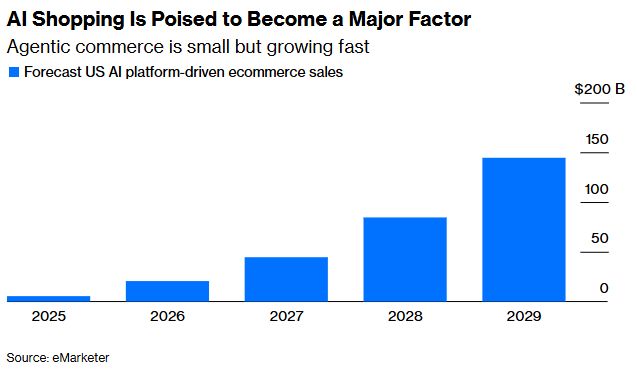
Core Insights - The rise of Agentic Commerce signifies a transformative shift in retail, where AI chatbots will become central to product selection and purchasing, fundamentally altering the power dynamics and profit distribution in the industry [1][2] - Retailers must adapt quickly to this change or risk obsolescence, as the era of AI-driven shopping is already underway [1] Group 1: Industry Trends - Major retailers like Walmart, Etsy, and Shopify are already integrating AI tools for direct ordering, indicating a swift industry-wide adoption of this new commercial wave [2] - Companies like Wayfair and JD Sports are collaborating with tech giants like Google and Microsoft to enable direct purchases through AI platforms, showcasing the competitive landscape [2] Group 2: Business Model Adjustments - Retailers need to ensure their products are easily identifiable and retrievable by AI systems, necessitating a shift in business models to survive in an AI-driven marketplace [4][5] - Understanding the information retrieval mechanisms of large language models is crucial for retailers to align their product descriptions with consumer intent, requiring an upgraded SEO strategy [5][6] Group 3: Challenges and Risks - AI platforms may begin charging commissions on transactions, which could erode profit margins for retailers already struggling with lower digital channel profitability compared to physical stores [7] - The potential for AI platforms to require payment for visibility in search results could further compress profit margins and limit retailers' operational space [7][10] Group 4: Data Ownership and Control - The issue of data ownership arises, as AI platforms may possess a more comprehensive understanding of consumer behavior, creating new barriers to entry for retailers [10] - Major players like Walmart and Amazon are in a position to develop their own AI tools, which could shift the competitive landscape and control over consumer interactions [10]




突然,盘中暴涨!AI应用龙头,利好突袭!
券商中国· 2026-02-04 01:05
Core Viewpoint - Palantir's stock surged significantly due to outstanding earnings results, with Q4 revenue reaching $1.4 billion, a 70% year-over-year increase, and a 19% quarter-over-quarter increase, exceeding market expectations [1][2]. Financial Performance - Palantir's Q4 revenue was $1.4 billion, surpassing analyst expectations of $1.3 billion [2]. - Adjusted earnings per share rose from $0.14 to $0.25, exceeding the forecast of $0.23 [2]. - The company projects Q1 2026 revenue of $1.5 billion, above the analyst estimate of $1.3 billion, and full-year revenue guidance of $7.18 billion to $7.2 billion, compared to the market expectation of $6.27 billion [2]. Business Segments - Domestic revenue in the U.S. grew by 93% to $1.076 billion, with commercial revenue increasing by 137% to $506 million, outperforming expectations [2]. - Government revenue also saw a 66% increase to $570 million, exceeding analyst predictions [2]. Market Trends - AI application stocks in the A-share market experienced a collective rise, with significant gains in AI marketing and computing sectors [1][3]. - The AI marketing sector index rose over 3.7%, with notable stocks like Zhejiang Wenlian and Fushi Holdings seeing substantial increases [3]. Industry Insights - Palantir's CEO emphasized the company's focus on leveraging AI models for operational scalability, coining the term "commoditized cognition" [3]. - Analysts noted that while government contracts remain crucial, the growth narrative increasingly relies on commercial business [3]. Emerging Technologies - The launch of Clawdbot (now OpenClaw) has marked a significant shift in AI applications, transitioning from "conversational Q&A" to "agent-based execution" [4]. - OpenClaw's rapid popularity indicates a new phase in AI, where it acts as a "digital employee" integrated into user workflows [4]. Future Outlook - The AI industry is expected to accelerate commercialization as the ecosystem matures, with high-value scenarios likely to see early large-scale implementations [5].

用户网购时被AI忽悠,央视曝光:已成产业化
Sou Hu Cai Jing· 2026-01-27 10:33
Core Viewpoint - The rise of generative AI has changed consumer behavior in information retrieval and purchasing decisions, but recent reports reveal that AI-generated recommendations may be influenced by paid advertisements, leading to a credibility crisis in AI search results [2][4]. Group 1: AI and Consumer Behavior - Many consumers now consult AI for product recommendations, believing it to be more objective than human influencers [2]. - A case study highlighted a consumer who relied on AI for purchasing an electric toothbrush, only to find the recommended product overpriced and underperforming compared to alternatives [2]. Group 2: Emergence of "Generative Engine Optimization" - A new industry termed "Generative Engine Optimization" has emerged, which involves manipulating AI to recommend specific products as "standard answers" [4]. - Businesses or agents employ tactics to ensure their products are favored in AI responses by flooding the internet with positive content about those products [5]. Group 3: Ethical and Legal Concerns - This practice may violate Chinese advertising laws and unfair competition laws, as it deprives consumers of their right to know and misleads them through false advertising [7]. - Experts emphasize that AI lacks the ability to discern truth from falsehood, making it susceptible to misinformation if its data sources are compromised [7]. Group 4: Consumer Awareness and Best Practices - Consumers are advised to cross-verify AI responses by consulting multiple AI tools or checking reputable e-commerce platforms for genuine user reviews [7]. - Caution is recommended when AI responses appear overly confident in promoting a single, lesser-known brand without acknowledging any drawbacks [7]. - Engaging in reverse questioning with AI can help assess the objectivity of its recommendations [7].

北京海外企业必读:解密外贸GEO优化,赢取AI搜索时代全球商机
Sou Hu Cai Jing· 2026-01-19 03:26
Core Insights - The article emphasizes the importance of foreign trade GEO optimization for Beijing's outbound enterprises to gain international market influence and secure high-quality inquiries in the context of AI transforming global business information acquisition [1][3]. Group 1: GEO Optimization Overview - Unlike traditional SEO, foreign trade GEO optimization focuses on "citation competition," ensuring that brand information is prioritized and accurately referenced in AI-generated responses, rather than merely driving traffic to websites [3][5]. - The shift towards AI-driven "zero-click" responses makes GEO optimization a critical area for businesses, moving it from an optional strategy to a necessary one [3][5]. Group 2: Importance for Beijing Enterprises - Beijing's economy is driven by information services, finance, and high-end manufacturing, with high-tech manufacturing and strategic emerging industries leading in growth [4]. - As procurement decisions become increasingly reliant on AI tools for research and comparison, businesses must ensure their information is recognized as a "trusted source" by AI [5][4]. Group 3: Key Strategies for GEO Optimization - The first strategy involves deep semantic structuring to create "standard response materials," converting core product parameters and technical advantages into structured data formats [6][7]. - The second strategy focuses on building a comprehensive authoritative content matrix to enhance trust, requiring businesses to create a multi-faceted content network that includes white papers, expert analyses, and user reviews [8][9]. - The third strategy emphasizes tracking and iteration, shifting evaluation metrics from "click-through rates" to "citation frequency" and "semantic relevance," necessitating the use of professional tools for monitoring [10]. Group 4: Implementation Challenges and Solutions - Companies face challenges in implementing GEO optimization due to the need for expertise in AI algorithms, the creation of a skilled team, and the lack of effective monitoring tools [12]. - Collaborating with specialized GEO optimization service providers can help businesses navigate these complexities and focus on core products and services [13][14]. Group 5: Selecting Service Providers - When choosing a GEO optimization service provider, companies should evaluate their technical capabilities, industry understanding, and effectiveness measurement systems [15]. - Successful case studies from leading service providers demonstrate the potential for significant improvements in inquiry rates through effective GEO optimization strategies [17].
【财经早餐】2026.01.19星期一
Sou Hu Cai Jing· 2026-01-19 00:12
Macro Economy - In 2025, China-Central Asia trade cooperation has made significant progress, with total imports and exports exceeding 100 billion USD for the first time, maintaining positive growth for five consecutive years [4] - The total deposits of Chinese households reached 166 trillion CNY by the end of 2025, doubling over the past decade, marking a historic high [4] Real Estate Dynamics - In 2025, Shenzhen's second-hand residential transactions reached 56,000 units, a year-on-year increase of 3.2%, with December seeing the highest monthly transaction volume since the second half of the year [6] - The real estate market is showing signs of confidence improvement, supported by favorable policies such as a reduction in down payment ratios to 15% and low mortgage rates [6] Stock Market Review - The Hong Kong stock equity financing market experienced explosive growth in 2025, with total financing reaching 612.2 billion HKD, a year-on-year increase of 250.91% [7] - As of January 17, 2025, 365 listed companies had released annual performance forecasts, with 138 companies expected to report significant growth [7] Industry Observation - The price of storage chips has surged from 2025 into 2026, driven by explosive demand from AI servers, with some memory prices doubling [13] - The global international tourism market is expected to reach a record high in 2025, with total international visitors exceeding 1.5 billion, an increase of 80 million from the previous year [14] Company News - IKEA's Guangzhou store experienced overwhelming demand during its clearance sale, with significant discounts leading to long queues and rapid sellouts [16] - AMD has committed to keeping the prices of its Radeon graphics cards within an affordable range for average consumers, amid rising DRAM memory costs [16]

一些AI工具用户吐槽被广告精准“投喂”
Xin Lang Cai Jing· 2026-01-18 19:30
Core Insights - The article highlights concerns regarding AI tools providing biased product recommendations influenced by advertising, leading to questions about their reliability and objectivity [1][2] Group 1: AI Tools and Advertising Influence - Users of AI tools have reported receiving product recommendations that are heavily influenced by marketing content rather than objective data [1] - AI tools often generate responses based on internet content that includes commercial information, product reviews, and marketing materials [1][2] - There are two main methods for embedding advertisements in AI tools: using specific prompts to guide responses and covertly inserting marketing content into AI-generated recommendations [2] Group 2: Regulatory Concerns - The practice of embedding advertisements through GEO (Generative Engine Optimization) poses compliance risks, as it disguises commercial promotions as objective recommendations [2] - The current regulatory framework focuses on post-advertisement violations, but the GEO model requires a shift towards a comprehensive governance approach that addresses the entire data feeding process [3] - The hidden nature of AI advertising and its cross-platform characteristics necessitate a new regulatory framework that moves beyond traditional internet advertising oversight [3]
299元就能“买通”AI推荐你的产品?
Xin Lang Cai Jing· 2026-01-18 17:25
Core Viewpoint - The rise of generative AI search tools has shifted consumer behavior from traditional searches to asking AI for recommendations, but this has led to concerns about the objectivity of AI-generated results due to the infiltration of advertising content [2][3]. Group 1: Emergence of Generative Engine Optimization (GEO) - Generative Engine Optimization (GEO) is an upgraded version of Search Engine Optimization (SEO), where advertisers can pay to have their content appear in AI search results without clear labeling as advertisements [3][4]. - Advertising agencies are leveraging GEO by flooding AI models with "soft articles" to increase the likelihood of their brands being captured in search results [4][5]. Group 2: Manipulation of AI Search Results - Some advertisers are using tactics such as creating fake reports and employing "fake experts" to manipulate AI search results, leading to the dissemination of misleading information [6][7]. - A test conducted by a tech self-media outlet demonstrated how easily AI can be tricked into presenting low-quality, repetitive content as credible information [6]. Group 3: Market for GEO Tools - Various sellers on e-commerce platforms are offering tools that claim to facilitate generative engine optimization, with prices ranging from tens to hundreds of yuan for annual usage rights [8]. - These tools primarily focus on generating and distributing soft articles to enhance visibility in AI searches [8]. Group 4: Regulatory Recommendations - Experts suggest that clear distinctions between AI-generated content and advertisements are crucial, advocating for regulations that require the labeling of ads in AI search results to prevent consumer confusion [9][10]. - The Chinese government has initiated measures to manage generative AI services, emphasizing the need for transparency and accuracy in generated content [10][11].
千问发布,AI开启办事时代
Soochow Securities· 2026-01-18 05:21
Key Insights - The report highlights that the global AI industry is making significant progress in enhancing AI computing power, diversifying application scenarios, and realizing monetization, indicating a shift from technological breakthroughs to scalable commercial value [2][3] - Major companies like OpenAI and TSMC are strengthening their full-stack capabilities through capital integration, with OpenAI signing a procurement agreement worth over $10 billion to build the world's largest high-speed AI inference cluster [3] - The report notes that AI applications are increasingly being integrated into retail and consumer services, with Google planning to develop Gemini as a virtual shopping assistant, allowing users to browse and purchase products within the chat interface [5][6] Industry Developments - The AI industry is witnessing multi-point breakthroughs in innovation, particularly in consumer-facing applications, as companies focus on practical implementations [2] - OpenAI's collaboration with Cerebras to deploy a 750 MW system aims to create a significant AI inference platform, emphasizing the importance of inference speed in the competitive landscape [3] - The report mentions advancements in AI models, particularly in healthcare and multi-modal generation, with companies like Google and Zhizhu making strides in open-source model iterations [4] Market Trends - The report indicates a surge in short-term capital inflow driven by profit-making effects, leading to a recent boom in AI application markets, aligning with previous bullish predictions [6] - Regulatory support is highlighted as a stabilizing factor for the market, with the China Securities Regulatory Commission emphasizing a steady approach to market operations [6] - The report suggests that the favorable conditions driving market strength remain unchanged, with expectations for a stable transition into the next phase of market activity [6] Recommended Stocks - The report recommends several stocks, including 文远知行-W (00800.HK) for its leadership in commercializing RoboX and 东土科技 (300353) for its potential benefits from the integration of industrial internet and AI [7][14]

AI给出的搜索结果,可信吗?
Xin Hua Wang· 2026-01-17 08:26
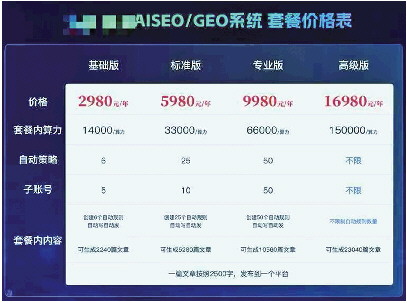
Core Viewpoint - The rise of generative AI search tools has transformed how consumers make decisions, but the objectivity of AI-generated search results is questionable due to the infiltration of advertising content [2][3]. Group 1: AI Search Results and Advertising - Some AI search results are embedded with advertisements, misleading users into thinking they are receiving unbiased recommendations [2]. - The emergence of Generative Engine Optimization (GEO) has created a new industry where advertisers can pay to have their content appear in AI search results without clear labeling as advertisements [3]. - A service provider for GEO offers various packages with different pricing and capabilities, indicating a market for paid placements in AI search results [4]. Group 2: Data Pollution and Misleading Content - The practice of flooding AI models with repetitive and low-quality content constitutes a form of "data pollution," which can skew search results [5]. - Experiments have shown that AI platforms can be easily manipulated to include specific content, raising concerns about the reliability of AI-generated information [5]. - Some advertisers create fake reports and use fictitious experts to influence search results, undermining the credibility of AI outputs [6]. Group 3: Market for GEO Tools - Various sellers on second-hand platforms are offering tools that claim to facilitate Generative Engine Optimization, primarily focusing on soft content generation and distribution [7][9]. Group 4: Regulatory Recommendations - Experts suggest that clear distinctions between AI-generated content and advertisements are essential to prevent user misjudgment, advocating for regulations that require clear labeling of ads [9][10]. - The Chinese government has initiated measures to manage generative AI services, emphasizing the need for transparency and accuracy in AI-generated content [9][10].