GPU通用计算芯片

Search documents
博通AI业务狂飙:百亿美元芯片大单到手,ASIC市场前景可期
Sou Hu Cai Jing· 2025-09-07 00:14
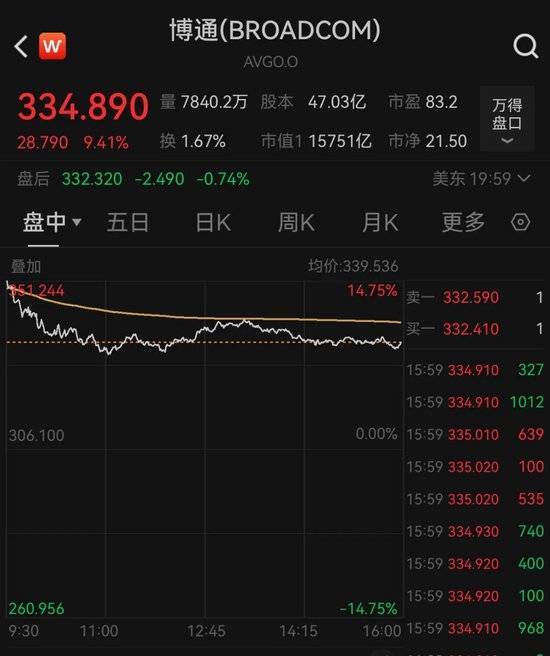
Group 1 - Broadcom's latest financial report shows Q3 FY2025 revenue reached $15.952 billion, a 22% year-over-year increase, exceeding the previous guidance of $15.8 billion [1] - Adjusted net profit for the same quarter was $10.702 billion, reflecting a year-over-year growth of 30.15% [1] - AI-related business revenue for the quarter was $5.2 billion, up 63% year-over-year, surpassing the expected $5.1 billion [1] Group 2 - Broadcom's core competitiveness lies in custom ASIC chips for cloud service providers, which are designed for specific AI inference scenarios, gaining favor from tech giants like Google and Meta [3] - The CEO of Broadcom indicated that the record revenue in Q3 was driven by strong growth in custom AI accelerators, networking equipment, and VMware business [3] - Broadcom has received a $10 billion order for XPU chips, with market speculation suggesting the client may be OpenAI [3] Group 3 - The ASIC chip market is thriving, with Marvell reporting Q2 FY2026 revenue of $2.006 billion, a 58% year-over-year increase, driven by data center business revenue of $1.491 billion, which grew 69% [3] - Industry analysis indicates that while NVIDIA dominates the GPU market during the AI training phase, ASIC chips are more competitive in the inference phase due to their energy efficiency [4] - Major North American cloud providers are developing their own ASICs, with predictions that the inference market will surpass the training market as AI applications expand [4] Group 4 - NVIDIA has initiated strategies to respond to the rise of the ASIC market, including the launch of the NVLink Fusion platform to integrate custom ASICs with NVIDIA GPU racks [4] - In the domestic market, companies like Haiguang Information and Moore Threads are competing in the GPU space, while Huawei HiSilicon, Cambricon, Baidu Kunlun, and Alibaba Pingtouge are active in the ASIC sector [4] - The compound annual growth rate for high-end cloud AI accelerators from 2023 to 2028 is projected at 50% for GPUs and 52% for ASICs, with ASIC shipments expected to surpass GPUs by 2028 [4]