George

Search documents
George drives turnaround as Asda ‘edges forwards’ in FY25
Yahoo Finance· 2026-03-30 11:24
Core Insights - Asda reported "clear progress" in its FY25 trading update, highlighting the success of its Formula for Growth plan [1] - The retailer's non-grocery divisions now account for 47% of total revenue, with significant performance in George and pharmacy [1] - Group sales (excluding fuel) decreased by 3.3% year on year to £21.0 billion, while like-for-like sales (ex-fuel) improved from -3.4% in FY2024 to 3.1% in FY2025 [1] Financial Performance - Adjusted EBITDA (after rent) fell by 33.1% to £764 million, while net debt was reduced by £500 million [2] - Asda ended the year with £1.3 billion in cash and £2.1 billion in total liquidity, attributed to disciplined cash management [2] Operational Developments - The first year of the Formula for Growth plan showed improvements in pricing, availability, systems, and customer satisfaction, with a reported 4-7% price gap versus competitors [3] - Availability reached an eight-year high of 95% following the Project Future systems changeover [3] Sales Trends - Early 2026 trading showed positive momentum, with total like-for-like sales improving from 1.6% in January to 1.2% in March, indicating growth in in-store sales for the last two months [4] Strategic Outlook - Asda's leadership emphasized an improved customer offer, stable core systems, and a strengthened balance sheet as key components for the second year of the turnaround [5] - The company aims to continue building sales momentum through disciplined cash management and operational stabilization [5]
“平移”山姆经验,沃尔玛再造沃尔玛
Jing Ji Guan Cha Bao· 2025-12-01 07:20
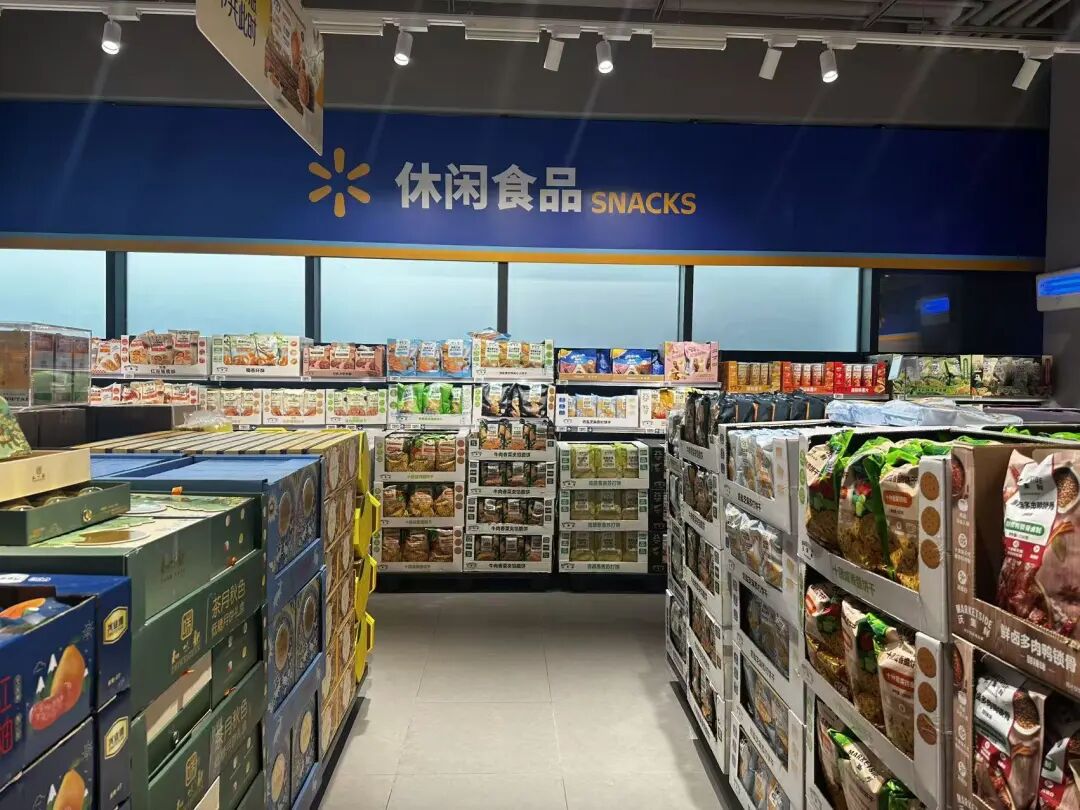
Core Insights - Walmart China is revitalizing its brand by focusing on product offerings and store formats, drawing inspiration from its Sam's Club experience [1][9][10] Group 1: Brand Strategy - Walmart China has upgraded its private label "沃集鲜" (Wojixian), launching nearly 1,000 new products in the past year, covering key categories such as fresh food, groceries, and beverages [1][2] - The company has consolidated its private brands, integrating some products from "惠宜" (Huayi) into the Wojixian brand, while Huayi now focuses on home goods [2][4] - Wojixian products are prominently displayed in stores and online, with significant SKU representation in key categories like snacks and cooking oils [3][4] Group 2: Supply Chain and Partnerships - Walmart is adopting a collaborative approach with suppliers, allowing for various partnership models, including OEM arrangements, to ensure quality and competitive pricing [4][5] - The company has established strict criteria for suppliers, ensuring that only those meeting quality standards can partner with Wojixian [6] Group 3: Store Format Innovation - Walmart is exploring new store formats, including community stores in Shenzhen, which focus on convenience and a curated selection of around 2,000 products [7][8] - The community store model emphasizes a "10-minute walk" concept, catering to high-density urban areas [7] - Walmart is also renovating existing stores to enhance the shopping experience, utilizing data analytics to optimize product offerings and introduce new sections [8] Group 4: Competitive Landscape - Walmart's traditional hypermarket format has faced challenges, leading to store closures, while Sam's Club has seen growth, prompting Walmart to adopt strategies from Sam's [9][10] - The company is differentiating its product offerings from Sam's Club by adjusting pricing and promotional strategies while maintaining a focus on quality [11][12]

“平移”山姆经验,沃尔玛再造沃尔玛
经济观察报· 2025-12-01 07:10
Core Viewpoint - Walmart China is not giving up on its brand and is focusing on product and store type innovations to revitalize its presence, including leveraging experiences from Sam's Club [2][3]. Group 1: Brand Strategy - Walmart China has upgraded its private label "沃集鲜" (Wojixian), launching nearly 1,000 new products in the past year, covering core categories like fresh food, beverages, and snacks [2][5]. - The brand restructuring has integrated some products from the "惠宜" (Huayi) brand into "沃集鲜," while "惠宜" now focuses on home goods [5]. - "沃集鲜" products are prominently displayed in stores and online, indicating a strategic emphasis on this private label [6][7]. Group 2: Store Format Innovation - Walmart has opened community stores in Shenzhen, with five locations established, focusing on a "10-minute walk" concept to cater to urban communities [11]. - The community stores offer around 2,000 selected products, including hundreds of "沃集鲜" items, aligning with the trend of near-field retail [11][12]. - Walmart is also exploring new store formats, including the opening of "龙泉店" and "正大店" in Kunming, which feature a more open layout and a focus on customer experience [12][13]. Group 3: Learning from Sam's Club - Walmart is adopting strategies from Sam's Club, which has been expanding while Walmart's traditional stores have been closing [15][16]. - The company is implementing similar product selection logic as Sam's Club but with differentiated execution, such as varying pricing strategies for similar products [16][17]. - Recent personnel changes indicate a closer alignment between Walmart and Sam's Club operations, with key positions remaining stable to ensure strategic continuity [18].

沃尔玛再造沃尔玛
Jing Ji Guan Cha Wang· 2025-11-30 03:51
Core Insights - Walmart China is upgrading its private label brand "沃集鲜" (Wojixian) with nearly 1,000 new products launched in the past year, focusing on fresh food, beverages, and other core categories [2][3] - The company is facing challenges such as declining foot traffic and revenue, leading to a reduction in the number of Walmart Supercenters from 442 in 2019 to 334 by April 2025 [2][3] - Walmart is shifting its strategy by integrating successful elements from its Sam's Club model into its Walmart Supercenters [10][11] Brand Strategy - Wojixian was launched in 2019, initially focusing on fresh food, and has since integrated some of the packaging food from the 惠宜 (Huayi) brand into its offerings [3] - The brand is prioritized in marketing efforts, with significant promotion through Walmart's official channels, while other brands like Huayi and George have seen reduced visibility [5][6] - Wojixian emphasizes "simple ingredients, collaboration with leading brands, and stable quality-price ratio" as its core principles [5][6] Product Placement and Performance - Wojixian products are prominently displayed in stores and have dedicated sections on Walmart's app, indicating a strategic focus on enhancing visibility and sales [4][5] - In key categories like snacks and cooking oils, Wojixian holds a significant share of the product offerings, showcasing its leading position in core food categories [4] Store Format Innovation - Walmart is exploring new store formats, including community stores in Shenzhen, which focus on convenience and a curated selection of around 2,000 products [8][9] - The community store model aims to cater to urban lifestyles with a "10-minute walk" concept, reflecting a shift towards proximity retailing [8][9] Learning from Sam's Club - Walmart is adopting successful strategies from Sam's Club, which has seen growth while Walmart Supercenters have closed several locations [10][11] - The company is implementing differentiated pricing and promotional strategies based on Sam's Club's product selection logic, while maintaining its unique market positioning [11][12]
商超自有品牌竞争,价值跃升成为“新赛点”
3 6 Ke· 2025-11-24 02:05
Core Insights - The retail industry is experiencing a significant shift towards private label brands, driven by consumer demand for high quality and cost-effective products [1][2][9] - Private label sales in China have surpassed 380 billion yuan, growing by 17% year-on-year and accounting for 9.2% of the overall retail market [1][8] - Major retailers are increasingly focusing on developing their own brands to enhance product differentiation and improve profit margins [3][5][8] Industry Trends - The average number of new private label products developed by retailers is expected to rise from 83 to 142 annually between 2022 and 2024, indicating rapid growth in this sector [1][8] - Over 45% of urban households in China purchased private label products in the first three quarters of this year, a 10% increase from the previous year [1][8] - The trend towards private labels is not only a response to market competition but also a strategy to enhance supply chain efficiency and consumer loyalty [8][9] Retailer Strategies - Retailers like Walmart and CR Vanguard are leveraging their supply chain advantages to create unique private label offerings that cater to diverse consumer needs [3][5][11] - Walmart's private label "沃集鲜" has been upgraded to include nearly a thousand new or improved products, focusing on stringent selection and quality control [3][11] - CR Vanguard has established a comprehensive matrix of private label brands to target different consumer demographics and preferences [5][8] Market Potential - The private label market in China has significant growth potential, with current market share at only 9.2% compared to 38.7% in Europe and 20.7% in the U.S. [8][9] - The domestic private label retail market is projected to grow at an annual rate of 15% over the next five years [9][10] - Retailers are increasingly focusing on health-oriented products, with sales of health-related private label items expected to grow by over 120% in 2024 [13][15] Challenges - The industry faces challenges such as product homogenization and reliance on supply chains, which can hinder long-term growth [9][10] - Many retailers still operate private label development under procurement departments, lacking the specialized focus needed for successful brand differentiation [9][10] - Continuous product innovation and adaptation to consumer trends are essential for maintaining competitive advantage in the private label market [12][15]