Ghostty

Search documents
Vercel Appoints Mitchell Hashimoto, Co-Founder of HashiCorp and Creator of Terraform, to Board of Directors
Businesswire· 2026-03-18 19:29
Core Insights - Vercel has appointed Mitchell Hashimoto, co-founder of HashiCorp and creator of Terraform, to its board of directors, bringing significant expertise in developer communities and infrastructure [1][2][3] Company Developments - Hashimoto's appointment comes at a pivotal time for Vercel, following a $300 million Series F funding round that valued the company at $9.3 billion, alongside a GAAP revenue run-rate of $340 million and an 84% year-over-year growth [3][4] - Hashimoto has a strong history with Vercel's products, having been a customer and user of Next.js since its inception, which aligns with his commitment to the company's mission [3][4] Industry Context - Hashimoto is recognized as a leading figure in the open source community, having developed widely adopted tools like Terraform, which is now the standard for infrastructure-as-code [2][4] - His experience includes leading HashiCorp to a $6.4 billion acquisition by IBM in 2024, showcasing his capability in scaling technology companies [2][3] Strategic Vision - Hashimoto expressed enthusiasm for Vercel's focus on building a powerful developer presence and industry-defining products, emphasizing the importance of trust and quality in software development [4][5] - Vercel aims to enable rapid, secure, and scalable development for AI applications, positioning itself as a key player in the evolving tech landscape [5][6]



AI“氛围编程”威胁开源,维护者面临危机
AI前线· 2026-03-08 05:49
Core Insights - Open source maintainers are increasingly closing doors to external contributors due to the overwhelming volume and low quality of AI-generated contributions, leading to a crisis in the open source community [2][3] - A recent study indicates that the reliance on AI for coding is creating a negative feedback loop, diminishing the quality and availability of software as fewer developers engage with documentation and report issues [3][4] Group 1: Impact of AI on Open Source Contributions - The phenomenon termed "AI Slopageddon" reflects the challenges faced by maintainers as they struggle to manage the influx of low-quality AI-generated code [2] - Stack Overflow activity dropped by 25% within six months of ChatGPT's launch, while Tailwind CSS saw a 40% decrease in documentation traffic and an 80% drop in revenue [3] - By 2025, it is projected that 20% of code submissions will be AI-generated, with overall effectiveness declining to 5% [3] Group 2: Responses from Maintainers - Some maintainers, like Hashimoto, have adopted zero-tolerance policies against unapproved AI contributions, emphasizing the need for high-quality submissions regardless of their origin [5] - Ruiz has taken drastic measures by closing external contributions after encountering poorly generated issues from AI tools, questioning the need for external input if coding becomes too easy [6] - The platforms that host open source projects, such as GitHub, are criticized for not providing tools to filter AI submissions, exacerbating the problem for maintainers [6] Group 3: Structural Challenges and Future Outlook - Researchers propose a model where AI platforms could redistribute subscription revenue based on package usage, but the required contribution from AI users is deemed unrealistic at 84% of current direct user revenue [7] - The Linux Foundation and Apache have focused on licensing rather than quality, failing to address the flood of low-quality contributions [7] - The impact of this crisis is expected to be uneven, with popular libraries likely to find sponsors while smaller projects may struggle, raising concerns about the future of foundational projects like Linux [8]

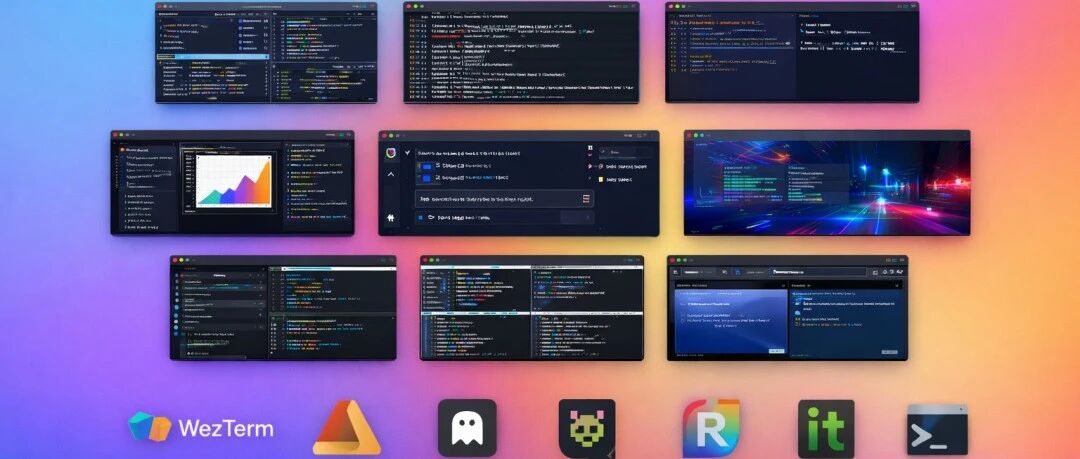
2026 开发者必备:9 款终端 GPU 加速神器,效率直接拉满~
菜鸟教程· 2026-03-04 03:30
Core Insights - The article discusses the evolution of terminal applications from simple command input interfaces to essential productivity tools for developers, highlighting their role in coding, scripting, Git collaboration, remote SSH, container management, and AI development [1][3]. Group 1: Terminal Evolution - The terminal has transformed into a core productivity tool for developers, facilitating various engineering processes [1]. - The introduction of GPU rendering technology in terminal applications marks a significant upgrade in user experience, particularly for heavy terminal workflows [3]. Group 2: Recommended Modern Terminals - The article lists eight modern terminals to watch in 2026, focusing on cross-platform compatibility, performance, AI integration, and remote development capabilities [4]. Terminal 1: WezTerm - WezTerm supports multiple platforms and features GPU acceleration, true color support, image protocol, and a highly programmable configuration system [6][8]. - It is noted for its high performance and built-in multiplexer functionality, making it a potential replacement for tmux [8][10]. - Ideal for cross-platform developers and remote users [11]. Terminal 2: Alacritty - Alacritty is designed for speed, focusing solely on display without additional features like tabs or splits, making it a benchmark for GPU terminals [14][15]. - Best suited for developers who prioritize responsiveness and a pure CLI workflow [18]. Terminal 3: Ghostty - Ghostty emphasizes minimal configuration with OpenGL GPU rendering and low input latency, aiming to provide an excellent out-of-the-box experience [19][21]. - Targeted at users looking to reduce configuration overhead while enjoying modern terminal features [26]. Terminal 4: Kitty - Kitty is a feature-rich GPU-accelerated terminal favored by advanced users and DevOps engineers, supporting image display and excellent font rendering [27][31]. - Suitable for heavy terminal users and those developing automated workflows [32]. Terminal 5: Warp - Warp integrates AI deeply into the terminal experience, redefining the interaction between developers and the command line [34][35]. - Aimed at developers looking to enhance efficiency through AI [36]. Terminal 6: Rio - Rio is an experimental terminal built on WebGPU, supporting custom shader effects and true color display [37][38]. - It is designed for tech enthusiasts and those interested in visual experiences [41]. Terminal 7: Tabby - Tabby is an integrated terminal platform suitable for users frequently engaging in remote development or server management [42][45]. Terminal 8: iTerm2 - iTerm2 is a mature terminal for macOS, known for its stability and extensive ecosystem, making it ideal for developers seeking a reliable production environment [49][50]. Terminal 9: Windows Terminal - Windows Terminal has become the de facto standard for Windows development environments, featuring advanced split-screen capabilities and deep integration with tmux [52][53]. - It offers a natural upgrade path for Windows developers [55][56].