
Gold ETF

Search documents
Gold price today, Friday, March 27: Gold strengthens after President Trump extends Hormuz deadline
Yahoo Finance· 2026-03-23 10:49
Core Viewpoint - Gold prices are influenced by geopolitical events, particularly tensions with Iran, and the potential for inflation due to rising oil prices, which could affect Federal Reserve interest rate decisions [2][3]. Gold Price Movement - April gold futures opened at $4,371.80 per troy ounce, a decrease of 0.1% from the previous day's close of $4,376.30 [1]. - Gold prices rose above $4,400 following President Trump's announcement regarding Iran, extending the deadline for negotiations [2]. - The one-year gain for gold as of January 29 was reported at 95.6% [4]. Historical Performance - Gold prices have shown significant fluctuations: a decrease of 6.7% over the past week, 15.7% over the past month, and an increase of 44.5% over the past year [9]. Investment Strategies - Experts recommend varying gold allocations based on individual investment goals, with suggestions ranging from 0% to 20% [6][10][14]. - A 2% to 5% allocation is suggested for income investors, while growth-oriented investors may consider 10% to 15% [10]. - Historical data supports a 5% to 8% allocation for resilience amid economic uncertainty [11]. - A long-term allocation of 5% to 15% is advocated, particularly through investments in gold mining companies [12]. - Some experts recommend a higher allocation of 20% for wealth protection, emphasizing gold's ability to retain purchasing power [14].
Gold price today, Friday, March 13: Gold opens lower with pressure from a stronger U.S. dollar
Yahoo Finance· 2026-03-09 10:58
Core Viewpoint - Gold prices are under pressure due to high oil prices, which strengthen the U.S. dollar and impact inflation expectations, making gold less attractive as an investment [2][3]. Group 1: Gold Price Trends - April gold futures opened at $5,084 per troy ounce, down 0.8% from the previous closing price of $5,125.80 [1]. - Over the past week, gold prices have decreased by 0.7%, increased by 2.6% over the past month, and have shown a significant one-year gain of 73.1% [8]. Group 2: Economic Influences - Rising oil prices can lead to a stronger U.S. dollar, which makes gold more expensive and less appealing compared to cash and interest-bearing assets [2][3]. - The U.S. Dollar Index has increased by approximately 1% in the last five days and 3.3% over the past month, indicating a strengthening dollar [2]. Group 3: Investment Strategies - Experts recommend varying gold allocations based on investment goals, with suggestions ranging from 0% to 20% [5][9][12][14]. - A 2% to 5% allocation is suggested for income-focused investors, while growth-oriented investors may consider 10% to 15% [9][12]. - Some experts advocate for a higher allocation of 20% in gold as a wealth protection strategy, emphasizing gold's ability to retain purchasing power amid inflation [14].
X @Cointelegraph
Cointelegraph· 2026-03-06 17:00
🚨 BIG: Gold ETF $GLD saw $2.91B in outflows on Wednesday, the largest in a decade, per Barchart. https://t.co/I7RMmcjudT ...
深圳对黄金市场划定“十条红线”, 重点打击黄金预定价交易活动
2 1 Shi Ji Jing Ji Bao Dao· 2026-02-13 05:44
Core Viewpoint - Shenzhen is implementing stricter regulatory measures to combat the rise of illegal activities in the gold market, with a focus on delineating prohibited behaviors for enterprises, individuals, and financial institutions [1] Group 1: Regulatory Measures for Enterprises - Enterprises are prohibited from engaging in illegal gold trading activities such as pre-pricing, leveraged trading, and deferred trading through internet platforms [2] - Illegal fundraising activities under the guise of gold custody, leasing, or repurchase that promise fixed returns are banned [2] - Enterprises must not mislead consumers through false advertising or unauthorized claims regarding gold products [2][3] - The use of non-precious materials to impersonate pure gold is strictly forbidden [3] Group 2: Regulatory Measures for Individuals - Individuals are not allowed to organize or participate in illegal gold trading or fundraising activities [4] - Development and sale of illegal gold trading software or applications are prohibited for individuals [4] Group 3: Regulatory Measures for Financial Institutions - Financial institutions must not conduct gold business without proper regulatory approval and must adhere to reporting requirements for large and suspicious transactions [6] - Financial institutions and non-bank payment agencies are prohibited from providing services to illegal operators in the gold market [6] Group 4: Previous Illegal Cases - The Shenzhen Financial Office previously highlighted three illegal cases involving gold trading, including fraudulent schemes that misled consumers into investing in gold without actual delivery [7] - Specific examples include a gold dealer enticing consumers to sign contracts for gold purchases without delivering the physical gold, leading to illegal investment activities [8]
印度1月黄金ETF净流入2404亿卢比,史上首次超越股市
Hua Er Jie Jian Wen· 2026-02-10 07:49
Group 1 - The core point of the article highlights a significant shift in investment trends in India, where gold ETFs saw record net inflows in January, surpassing stock funds for the first time, indicating a growing market enthusiasm for gold amid rising prices [1][2]. - In January, gold ETFs recorded net inflows of 240.4 billion rupees (approximately $2.65 billion), slightly exceeding the 240.3 billion rupees net inflow of stock funds, marking a notable crossover in investment preferences [1][2]. - The continued demand for gold, despite a recent price pullback, suggests resilience in market interest, reflecting a preference for gold's defensive attributes amid geopolitical and monetary risks [1][3]. Group 2 - The increase in gold ETF allocations by local investors indicates a rising willingness to compete with equity assets, suggesting a shift in risk appetite rather than mere short-term price fluctuations [2][4]. - Globally, gold ETF holdings remain near a three-year high, supported by persistent geopolitical risks and weakening confidence in sovereign bonds and currencies, which may sustain the inflow of funds into gold [3][4]. - Despite being surpassed by gold in January, stock funds maintained a positive net inflow for 59 consecutive months, driven by systematic investment plans that provide stability against market volatility [5].
大宗商品分析师-硬资产轮动带来的提振
2026-02-10 03:24
Summary of Key Points from the Conference Call Industry Overview - The analysis focuses on the commodities market, particularly precious metals, copper, oil, and natural gas, in the context of a hard assets rotation driven by macroeconomic and geopolitical uncertainties [2][5][72]. Core Insights and Arguments Investor Positioning and Price Impact - Active investor positioning can significantly influence commodity prices due to the relatively small size of commodity markets compared to equities and bonds [2][14]. - The rotation into hard assets is expected to drive larger price increases for precious metals and copper compared to oil and natural gas for three main reasons: 1. **Market Size**: Metals markets are smaller, allowing for greater price boosts from investor flows [2][24]. 2. **Supply Response**: Higher energy prices incentivize shale supply, which dampens price increases, while supply for copper and precious metals is constrained [2][26]. 3. **Storage and Roll Costs**: Energy has lower storage capacity limits, leading to potential roll costs, whereas metals have limited roll costs and are easier to store [2][33]. Price Forecasts - **Gold**: Upside risk to the $5,400 forecast for December 2026, with a 1 basis point increase in gold's share of US financial portfolios raising prices by 1.5% [2][48]. - **Copper**: A 1 standard deviation increase in net managed money as a percentage of open interest could boost prices by 6.9% in the short run, moderating to 4.2% after one year [2][55]. - **Oil**: A similar increase in net managed money could raise oil prices by 10% in the short run, moderating to 7.5% after one year [2][74]. Long-Term Trends - The investor rotation into hard assets is likely to keep metals prices elevated beyond what physical fundamentals would suggest, particularly for copper [3][87]. - The analysis indicates that the intrinsic value of commodities, especially metals, is expected to hold up well in the face of inflation and economic uncertainty [5][23]. Additional Important Insights - The report highlights the role of physically backed instruments like ETFs in amplifying price movements for precious metals due to reduced available inventory [38][39]. - Strategic stockpiling by countries, particularly in response to supply security concerns, could further influence copper prices, with estimates suggesting a potential 19% price increase from a 1 million tonnes increase in strategic stockpiling [68][71]. - The report also discusses the impact of geopolitical risks on oil prices, suggesting that positioning and geopolitical uncertainties could lead to significant price fluctuations [72][83]. Conclusion - The analysis underscores the importance of active investor positioning in the commodities market, particularly in the context of a hard assets rotation, and provides detailed forecasts for gold, copper, and oil prices based on current market dynamics and investor behavior [2][5][72].
Gold's precipitous price drop didn't spook ETF investors - World Gold Council
KITCO· 2026-02-06 20:01
Group 1 - The article highlights a significant increase in ETF holdings, with an addition of 120 tonnes, reaching an all-time high of 4,145 tonnes [1][3] - There have been substantial inflows into ETFs, amounting to $19 billion [1][3]

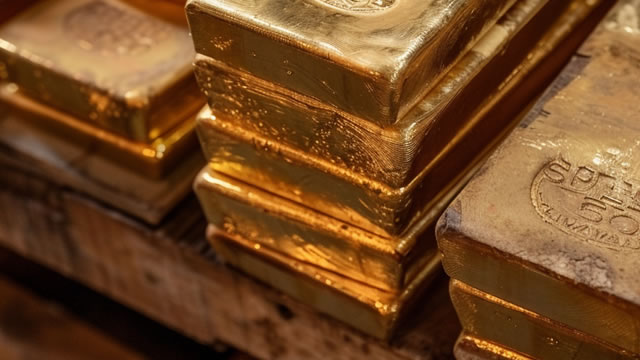
Gold ETF Pops 73% While the S&P 500 Gained Just 14% | GLD VOO
247Wallst· 2026-02-06 13:04
Group 1 - The core viewpoint is that gold is often sought after by investors during times of inflation fears or volatile equity markets [1] Group 2 - Investors typically turn to gold as a safe-haven asset when economic uncertainty arises [1] - The demand for gold tends to increase as a hedge against inflation and market instability [1] - Historical trends show a correlation between rising inflation and increased gold purchases [1]

Gold, silver attempt rebound for second day in a row
Yahoo Finance· 2026-02-04 17:00
Group 1: Gold Market Insights - Gold futures have recently stabilized around $4,900 per ounce after a period of volatility, with analysts maintaining a bullish outlook for the long term, projecting prices could reach $5,400 per troy ounce by the end of 2026 due to central bank accumulation and increased gold ETF purchases [1][2] - Year-to-date, gold prices have increased approximately 14%, indicating a strong performance despite recent fluctuations [6] Group 2: Silver Market Dynamics - Silver has experienced significant volatility, with a dramatic drop of over 30% last Friday, but has rebounded by 8% for two consecutive days, currently hovering near $90 per ounce [3][5] - Analysts from Goldman Sachs advise caution for volatility-averse clients due to a shortage of readily available silver in the London market, which is contributing to price instability [4] - JPMorgan forecasts a price floor for silver at around $75-80 per ounce this year, suggesting that the metal is unlikely to lose its recent gains [5]
Gold, silver rally for second day in a row as investors buy the dip
Yahoo Finance· 2026-02-04 16:04
Group 1 - Gold futures are hovering near $5,000, while silver has rallied for two consecutive days after a significant drop last week [1] - Analysts from Goldman Sachs forecast gold prices could reach $5,400 per troy ounce by the end of 2026, driven by central bank accumulation and increased gold ETF purchases [2] - JPMorgan analysts predict gold prices could rise to $6,300 per ounce by the end of 2026, citing strong demand from central banks and investors [4] Group 2 - Silver experienced a dramatic drop of over 30% last Friday but has rebounded, with prices hovering near $90 per ounce and an 8% increase for two consecutive days [3] - Goldman Sachs advises caution for volatility-averse clients regarding silver due to a shortage in the London market, which is increasing price volatility [4] - Year-to-date, bullion prices are up approximately 14%, while silver has increased by about 16% [6]