H100)

Search documents
谈到华为5G技术出口,黄仁勋着急:要是中国AI也搞“一带一路”…
Sou Hu Cai Jing· 2025-12-04 07:40
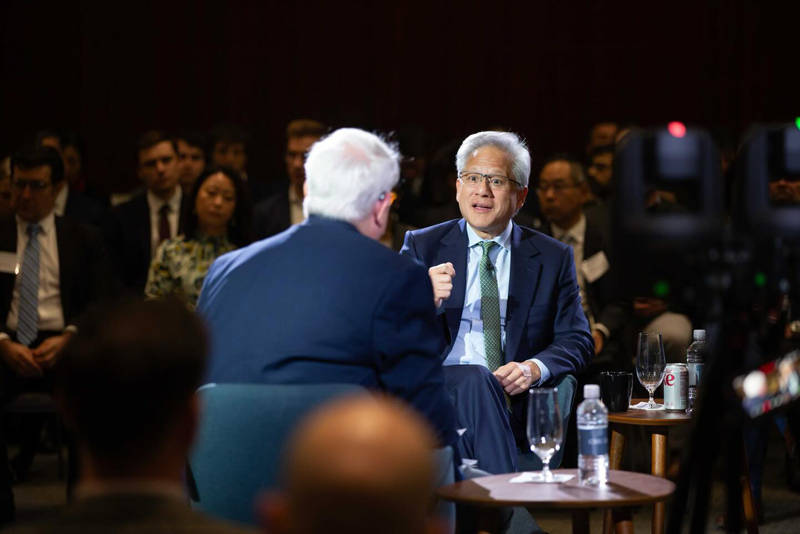
Core Viewpoint - Nvidia's CEO Jensen Huang emphasizes the urgency of addressing chip export restrictions to China, warning that neglecting the Chinese market could allow local competitors like Huawei to dominate the global AI landscape [1][2]. Group 1: Market Dynamics - Huang warns that if American companies allow Chinese competitors to capture the market, China will quickly seek to export its AI technology globally [1]. - He asserts that the U.S. is effectively ceding the second-largest AI market to China, which will enable local firms to mature technologically and compete with U.S. companies on a global scale [1][2]. - Huang highlights that the Chinese AI chip market is currently valued at approximately $50 billion and could grow to $200 billion by the end of 2030, representing a significant revenue opportunity for U.S. companies [7]. Group 2: Competitive Landscape - Huang expresses concern over Huawei's capabilities, noting that the company has successfully exported 5G technology through initiatives like the Belt and Road Initiative, and a similar trend is emerging in the AI sector [2]. - He acknowledges Huawei as a formidable global tech competitor, emphasizing their agility and rapid response in the market [2]. Group 3: Energy and Resource Considerations - Huang points out that China has a significant advantage over the U.S. in terms of energy supply, with China's total energy being twice that of the U.S., which he finds illogical given the larger U.S. economy [2]. Group 4: Regulatory Environment - Nvidia is currently navigating a complex regulatory landscape, facing scrutiny in China over security risks and antitrust investigations, while also dealing with backlash in the U.S. regarding its compliance with export controls [5]. - Huang's recent discussions with U.S. President Trump revolve around the critical issue of whether Nvidia will be allowed to sell the H200 chip to China, which is a generation behind its flagship products [5][6]. - The U.S. Congress is considering legislation that could impact Nvidia's ability to sell advanced AI chips to China, with potential implications for national security and market access [6].


业绩破纪录的台积电,背后有反常现象
芯世相· 2025-05-14 07:16
Core Viewpoint - TSMC's impressive financial performance in Q1 2025 masks underlying issues, including low wafer shipment volumes and a heavy reliance on advanced process nodes and AI semiconductor demand [4][43][44] Group 1: TSMC's Financial Performance - TSMC reported Q1 2025 revenue of $25.53 billion, a 41.6% year-over-year increase, and operating profit of $12.38 billion, up 56.1%, both setting historical records for the first quarter [4] - Since 2023, TSMC's revenue and operating profit have shown a continuous growth trend, with operating profit margins recovering to nearly 50% by Q4 2024 [4][6] - TSMC's market share is projected to reach 68% by 2025, while competitors like Samsung are expected to see their market share decline significantly [6][7] Group 2: Wafer Shipment and Revenue Discrepancy - Despite record revenue, TSMC's wafer shipment volume remains low, with Q1 2025 shipments at 3.26 million wafers, down from a peak of 3.97 million [12][21] - The discrepancy between revenue growth and wafer shipments indicates a potential issue with production capacity and market demand [8][21] Group 3: Factory Utilization Rates - TSMC's factory utilization rates have been declining, with 8-inch wafer fabs dropping from 95% in Q1 2020 to an estimated 69% in Q1 2025, and 12-inch fabs from 94% to 86% [16][18][21] - The overall low utilization rates contrast sharply with the record revenue, suggesting inefficiencies in production [21] Group 4: Technology Node Performance - Sales from the 7nm node have halved since their peak, while 5nm and 3nm nodes are driving revenue growth [27][28] - Traditional nodes like 16nm and 28nm are experiencing sustained declines, indicating a shift in demand towards more advanced technologies [27][28] Group 5: Regional Sales Distribution - The U.S. market accounted for 77% of TSMC's sales in Q1 2025, a significant increase, while other regions remain below 10% [34][35] - This heavy reliance on the U.S. market raises concerns about potential geopolitical risks and trade policies affecting TSMC's operations [35][36] Group 6: Platform Sales Dynamics - The share of smartphone chips in TSMC's revenue has decreased to 28%, while AI semiconductor sales, particularly in high-performance computing (HPC), have surged to 59% [39][41] - The automotive and IoT sectors remain underperforming, which could impact future growth prospects for TSMC [41][42] Group 7: Future Risks - TSMC's current revenue structure is heavily dependent on AI semiconductor demand, particularly from NVIDIA, creating vulnerability to market fluctuations [43][44] - A potential decline in GPU prices could lead to significant revenue drops for TSMC, highlighting the fragility of its growth model [44]