
IC增值分销

Search documents
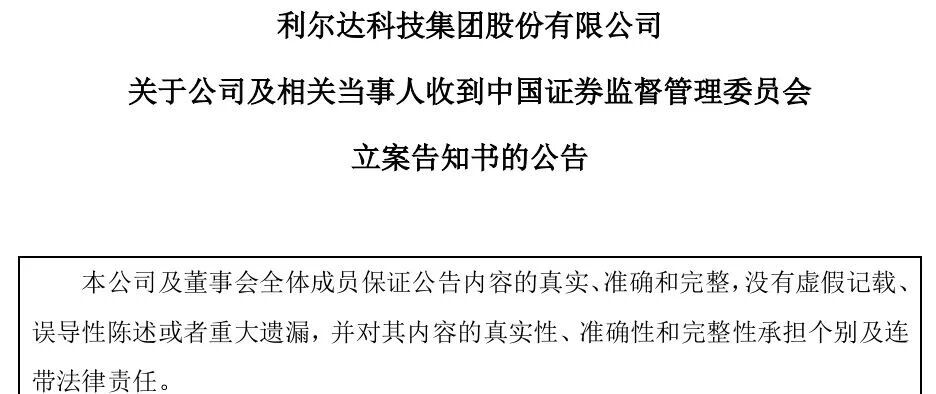
国内物联网通信模组赛道的头部玩家被立案!
是说芯语· 2026-03-14 10:44
Core Viewpoint - Lierda (stock code: 920249) is under investigation by the China Securities Regulatory Commission (CSRC) for suspected violations of information disclosure laws, involving key executives including Chairman Ye Wenguang and General Manager Chen Kai [1][3]. Group 1: Company Background and Ownership Structure - Lierda was founded in 2001 and specializes in IC value-added distribution and IoT module solutions, listing on the Beijing Stock Exchange in February 2023 [5]. - The actual control of the company is held by Chen Kai, Ye Wenguang, and Chen Yun, who collectively own 60.12% of the shares, indicating a strong influence over the company's operational and financial decisions [4]. - Chen Kai and Ye Wenguang are related, with Ye being Chen's uncle by marriage, and both have been in key management positions for many years [4]. Group 2: Financial Performance - In 2023, Lierda's revenue decreased by 5.87% to 2.427 billion yuan, with a net loss of 12.81 million yuan [5]. - The financial situation worsened in 2024, with revenue dropping by 19.31% to 1.958 billion yuan and a net loss of 108 million yuan [5]. - However, in 2025, Lierda reported a revenue increase of 24.17% to 2.432 billion yuan and a net profit of 49.15 million yuan, indicating a recovery driven by growth in IoT module and system solutions [6]. Group 3: Regulatory Issues - The CSRC's investigation is ongoing, and the specific details of the violations and potential penalties have not yet been disclosed [3]. - Lierda has committed to cooperating with the CSRC during the investigation and will adhere to its information disclosure obligations [3]. - Prior to the investigation, Lierda had to correct its 2024 annual report due to accounting errors affecting financial data from 2019 to 2023 [6].

业绩分化显韧性 多元布局谋增长
Zhong Guo Zheng Quan Bao· 2026-02-08 20:22
Core Insights - A total of 123 companies listed on the Beijing Stock Exchange have disclosed their 2025 annual performance forecasts, showing significant performance differentiation [1] - 40 companies are expected to report positive performance, with 24 forecasting growth, 13 turning losses into profits, and 3 showing slight increases [1] - Companies demonstrating strong resilience have implemented strategies such as technological innovation, market expansion, and operational optimization [1] Performance Highlights - Twelve companies, including Hongyu Packaging, Huiwei Intelligent, and Haineng Technology, are expected to see net profit growth exceeding 100% in 2025, driven by enhanced core competitiveness and industry development benefits [2] - Hongyu Packaging anticipates a net profit of 17 million to 22 million, representing a year-on-year increase of 357.91% to 492.59%, attributed to optimized customer and product structures and improved operational efficiency [2] - Haineng Technology expects a net profit of 41 million to 44 million, with a growth of 213.65% to 236.61%, benefiting from industry demand recovery and continuous investment in high-end product development [2] Turnaround Companies - Among the 13 companies that have turned losses into profits, Lierda, Chunguang Intelligent, and Zhongcheng Technology have successfully adjusted their operational strategies [3] - Lierda forecasts a net profit of 35 million to 50 million, recovering from a loss of 109 million the previous year, driven by R&D investments and improved cash flow management [4] - Shibibai expects a net profit of 50 million to 60 million, turning around from a loss of 367,500, supported by growing market demand and operational efficiency improvements [4] Companies Preparing for Recovery - Some companies are facing performance pressure due to external factors like raw material price fluctuations and internal factors such as increased R&D investments [5] - Weibo Hydraulic and Kerun Intelligent are actively seeking to expand sales markets and enhance internal management to counteract performance declines [5] - Nacronor and Beiyikang are adjusting their strategies to address challenges related to industry cycles and sales model changes, focusing on cost reduction and new product commercialization [6]