IGBT功率芯片

Search documents
春晚 21 芯,看懂中国半导体风向
是说芯语· 2026-02-20 01:00
Core Viewpoint - The 2026 CCTV Spring Festival Gala serves as a cultural feast and a showcase of the global chip industry, highlighting the advancements in China's chip technology from "usable" to "highly usable" [1][29] Group 1: Robotics Showcase - Four humanoid robots, MagicBot Z1, Galbot G1, Unitree H1, and "Little Bumi," showcased at the gala, demonstrating the capabilities of eight chip companies that support these "tech performers" [3][29] - MagicBot Z1 features 100% domestically produced core chips, with Allwinner Technology providing the main SoC chip for overall control and motion planning [4][5] - Galbot G1 relies on NVIDIA's AGX Orin 64GB chip, achieving 275 TOPS of computing power for AI interactions [6][7] - Unitree H1, the most commercially successful model, utilizes multiple chips including Intel's Core i7 for high-performance motion control and NVIDIA's Jetson Orin NX for edge AI inference [8][9][10][11] - "Little Bumi" targets the consumer market with a price under 10,000 yuan, using Rockchip's RK3588 SoC for approximately 6 TOPS of AI computing power [12][13][14] Group 2: Broadcasting Technology - The gala achieved 8K ultra-high-definition wireless broadcasting, supported by four chip companies that built the computational foundation [15][29] - Huawei's Hi3536DV400 chip enabled real-time compression of 8K video, while the Kunpeng 920S chip supported over 1 billion concurrent live requests [16][17] - AMD's EPYC 9004 series chips provided rendering power for real-time graphics during the event [18] Group 3: Communication Infrastructure - The seamless connection between the main venue and four sub-venues relied on three chip companies for communication technology [19][29] - Huawei's Tian Gang 02 base station chip facilitated low-latency transmission of 8K signals, marking the large-scale application of 5G-A technology [19] - ZTE and China Star Network contributed to the 5G-A network and satellite communication, ensuring stable signal transmission in remote areas [20][21] Group 4: Stage Control and Perception - The precise operation of stage lighting, robotic arms, and AR effects depended on three chip companies providing MCU, power chips, and perception chips [22][29] - GigaDevice's GD32H7 series MCU enabled rapid light switching and robotic movement control [23] - STMicroelectronics' IGBT power chips ensured stable operation of high-power stage equipment [24] - Orbbec provided depth perception chips for the Unitree H1 robot, enhancing spatial awareness and obstacle avoidance [25] Group 5: End-User Experience - The viewing experience for audiences was enhanced by three chip companies ensuring high-quality visuals and security [26][29] - Hisense's X9 image quality chip optimized 8K visuals for the gala [27] - Unisoc's financial-grade security chips safeguarded interactive data during the event [28] - BDU's BD960 positioning chip ensured synchronization of devices across different locations [29]



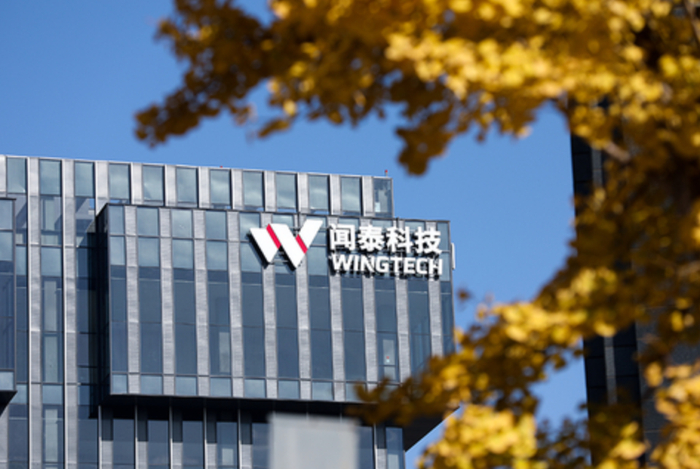
索赔80亿欧元,闻泰科技在阿姆斯特丹发起反击:让强盗亲尝“清零”代价
Xin Lang Cai Jing· 2026-01-18 04:22
Core Viewpoint - The legal battle between Nexperia and Wingtech Technology highlights a significant shift in the semiconductor industry, with Wingtech's strategic withdrawal from Europe and the loss of control over Nexperia's European operations, leading to a broader discussion on global supply chain dynamics and the implications of foreign capital intervention [1][4][6]. Group 1: Legal Proceedings and Implications - The hearing in Amsterdam has become a focal point for discussions on foreign capital and control, with accusations of "scorched earth tactics" against Wingtech, while the defense argues that the control dispute revolves around a non-operational shell company [1][3]. - The Dutch government’s freezing of control over Nexperia by Zhang Xuezheng has led to a strategic shift, with Nexperia (Shanghai) announcing a complete transition to local wafer supply starting in 2026, indicating a permanent change in operational strategy [3][4]. - Despite the legal proceedings, the reality is that Nexperia's Dutch team has lost practical control over wafer production and customer agreements, effectively transforming the company into an Asian enterprise registered in Europe [3][4]. Group 2: Impact on European Industry - The legal battle represents a deeper industrial withdrawal from Europe, with Nexperia's factory in the Netherlands ceasing operations and a significant talent exodus, while Nexperia (Shanghai) experiences a surge in shipments, particularly to automotive clients [4][5]. - European automotive companies are increasingly bypassing the headquarters in favor of direct agreements with Nexperia (Shanghai), further fragmenting the supply chain management in Europe [4][5]. - The irony lies in the failure of a new factory in Malaysia, which was part of Europe's strategic push, due to ineffective technology transfer, highlighting the loss of strategic assets [4][5]. Group 3: Market Dynamics and Future Considerations - The legal victory for the Dutch government may not translate into regained control over the semiconductor supply chain, as the market has already indicated a preference for operational realities over legal rulings [6][7]. - The case serves as a lesson for global observers that true control over production and technology dictates market outcomes, and attempts to leverage judicial measures against market realities may lead to significant losses [6][7]. - The overarching narrative is that Europe has not only lost control over a factory but has also exposed its vulnerability within the global semiconductor network, raising concerns about its future strategic position [6][7].