ISG业务

Search documents
东吴证券:AI驱动营收利润增长与整体竞争力提升 维持联想集团“买入”评级
Zhi Tong Cai Jing· 2025-12-02 04:14
Core Insights - Lenovo Group's three major business units are collaborating effectively, driven by AI, leading to revenue and profit growth as well as enhanced overall competitiveness [1] Business Line Summaries IDG (Intelligent Devices Group) - For FY2026H1, IDG's revenue reached $28.57 billion, a year-on-year increase of 14.6%, with operating profit growing by 13% and an operating profit margin of 7.2% [2] - The global market share increased by 1.8 percentage points to 25.6%, achieving a historical high, and Lenovo holds the top position in the global Windows AI PC market [2] - In China, AI-enabled laptops with five key features accounted for 30% of total shipments, with higher average selling prices and profit margins for high-end products [2] - High-end smartphone models like edge and razr performed strongly, with new device activations reaching record highs [2] ISG (Infrastructure Solutions Group) - For FY2026H1, ISG's revenue was $8.38 billion, reflecting a 29.6% year-on-year growth, driven by both cloud and enterprise infrastructure businesses [3] - AI server business benefited from global demand for AI training and inference, achieving high double-digit year-on-year revenue growth [3] - Neptune liquid cooling technology showed impressive performance, with revenue growth in the first quarter reaching double digits and further triple-digit growth in the second quarter, supported by over 100 patents [3] SSG (Solutions and Services Group) - For FY2026H1, SSG's revenue reached a record high of $4.81 billion, up 18.9%, with an operating profit margin of 22% [3] - Revenue from operational services and project solutions increased to 58.9% of SSG's total, marking a historical high [3] - TruScale platform orders saw triple-digit year-on-year growth, driven by the success of Device as a Service (DaaS) and Infrastructure as a Service (IaaS) initiatives [3]


业绩复苏的联想控股(03396.HK),股价走到了哪个阶段
Ge Long Hui· 2025-09-01 00:13
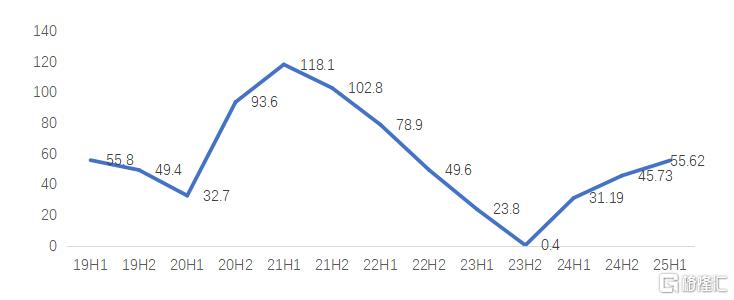
Core Viewpoint - Lenovo Holdings reported a significant increase in revenue and net profit for the first half of 2025, driven by improved profitability in Lenovo Group and growth in its financial investments [1][2]. Group 1: Financial Performance - Lenovo Holdings achieved revenue of 281.59 billion yuan, a year-on-year increase of 21% [1]. - The net profit attributable to shareholders was 699 million yuan, reflecting a substantial year-on-year growth of 144% [1]. - The tax-pre-profit indicator shows a recovery trend, with three consecutive reporting periods of profit increase since 2024 [2]. Group 2: Key Business Highlights - Lenovo Group's performance is bolstered by the AI cycle, with all main business segments experiencing double-digit growth [4]. - The PC segment saw a 15% year-on-year increase in market share, reaching 24.6%, with AI PCs accounting for one-third of Lenovo's PC sales revenue [4]. - The smartphone business grew by 17% year-on-year, maintaining a strong position in the global market, particularly in the foldable phone segment [4]. - The investment business of Lenovo Holdings has successfully led five companies to IPOs in the first half of the year, maintaining its leading position in the direct investment sector [5]. Group 3: Investment and Market Conditions - The investment sector is facing challenges, with some individual projects underperforming, leading to small losses in the incubation and investment segment [7]. - The overall venture capital environment is recovering, but the primary market remains cautious, with fundraising and exit difficulties persisting [9][10]. - Lenovo Holdings has a comprehensive investment strategy in AI, with over 270 AI companies in its portfolio, establishing a significant competitive advantage [11]. Group 4: Strategic Adjustments and Future Outlook - The company has made strategic moves, including reducing stakes in certain investments and planning potential sales of assets, indicating a possible shift towards AI and embodied intelligence [19]. - Lenovo Holdings is currently valued at a low price-to-book (PB) ratio of around 0.5, suggesting potential for valuation improvement as market conditions and performance trends align [20].