L4级智能驾驶技术

Search documents
45万亿!中国智驾的新风口来了
自动驾驶之心· 2025-12-15 11:33
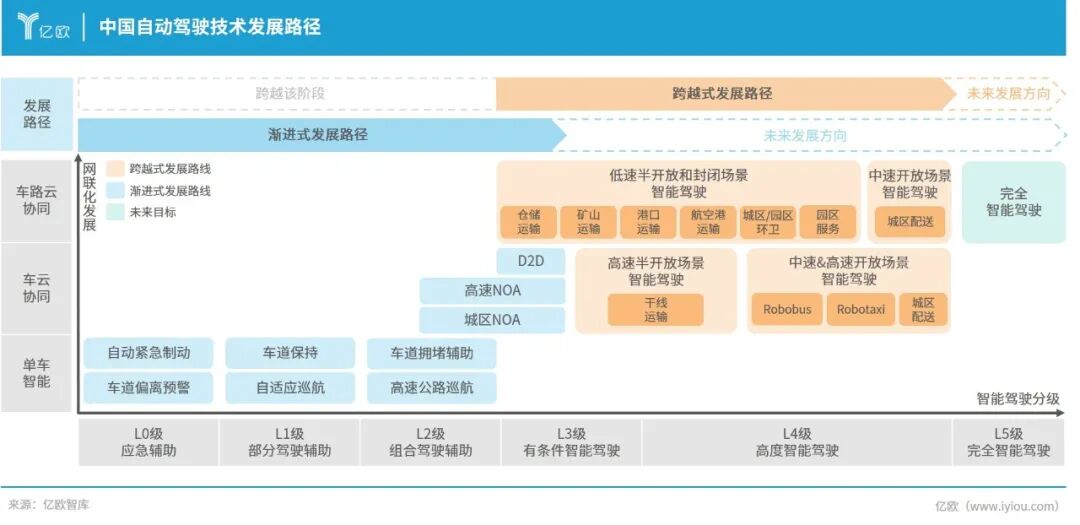
Core Viewpoint - The commercialization process of L4-level autonomous driving is significantly accelerating, driven by policies, technology, and application scenarios, marking the beginning of the "Universal Smart Driving" era by 2025 with an expected vehicle ownership exceeding 100,000 in five cities and a related industry scale surpassing 20 billion yuan [2][3]. Policy Perspective - National-level planning and pilot projects in five cities clarify accident liability, removing institutional barriers [2]. - The release of policy dividends, core technological advancements, and the expansion of application scenarios are collectively fostering the growth of L4 autonomous driving [2]. Technological Development - Continuous reduction in system costs and enhanced vehicle-road-cloud collaboration capabilities are improving reliability in complex environments [2]. - The standardization of "vehicle-cloud" and "vehicle-road-cloud" collaboration is becoming essential, with a rise in patents related to perception, decision-making, and control [3]. Application Scenarios - L4 autonomous driving is currently in the commercial model exploration and full-scale application phase for low-speed semi-open and closed scenarios, while mid-to-high-speed open scenarios are still in early stages [6]. - Various application scenarios include Robotaxi, unmanned delivery, and trunk logistics, transitioning from low-speed closed to mid-speed open environments [2][3]. Business Models - The main business models currently include product sales and operational agency, with product sales being the primary focus [8]. - In industrial parks, L4 autonomous vehicles can save approximately 180,000 yuan annually per intelligent heavy forklift, while smart patrol vehicles in commercial parks can save around 70,000 yuan annually [11]. Cost Savings - In urban sanitation scenarios, L4 autonomous vehicles can save 11% in costs compared to manual cleaning, while electric autonomous sanitation vehicles can save 21% compared to traditional diesel vehicles [15]. - The expected annual cost savings for logistics operations using L4 technology can reach 170,000 yuan compared to traditional vehicles after large-scale operations [29]. Future Trends - L4 autonomous driving is transitioning from the technology validation phase to the commercialization phase, facing challenges such as technical bottlenecks, regulatory gaps, and ethical data issues [45]. - By 2035, the market size for L4 and above autonomous driving in China is projected to exceed 45 trillion yuan, with a penetration rate of over 13% [45].

45万亿,中国智驾的新风口来了
3 6 Ke· 2025-09-11 08:40
Core Insights - The L4 autonomous driving market in China is expected to exceed 45 trillion yuan by 2035, with significant acceleration in commercialization by 2025 driven by policy, technology, and application scenarios [1][28]. Policy Developments - National planning and pilot programs in five cities clarify accident liability and remove institutional barriers [2]. - The release of policy benefits is expected to lead to a significant increase in L4 vehicle ownership, projected to surpass 100,000 units by 2025, contributing over 20 billion yuan to the related industry chain [2]. Technological Advancements - Continuous reduction in system costs and enhanced vehicle-road-cloud collaboration improve reliability in complex environments [2][3]. - The industry is transitioning from low-speed closed scenarios to medium-high speed open scenarios, with a focus on "vehicle-cloud" and "vehicle-road-cloud" collaboration as standard [3]. Application Scenarios - L4 autonomous driving is entering commercial exploration and widespread application in low-speed semi-open and closed scenarios, while medium-high speed open scenarios are still in early stages [4]. - Various application scenarios include Robotaxi, unmanned delivery, and trunk logistics, with significant cost savings reported in industrial and commercial parks [6][10]. Commercial Models - The primary commercial models for L4 technology include product sales and operational management, with product sales being the main focus [4]. - In urban delivery, the main model is "direct sales + subscription service," with vehicle prices below 100,000 yuan and monthly subscription fees around 2,000 to 3,000 yuan [10]. Financial Performance - Robotaxi operations can generate annual revenues exceeding 150,000 yuan per vehicle, with a gross profit margin of approximately 21% [12]. - Robobus operations in urban microcirculation and park connections can yield annual revenues of nearly 700,000 yuan, with a gross profit margin of 25% [14]. Industry Trends - The L4 autonomous driving sector is moving from technology validation to commercialization, facing challenges such as technical bottlenecks, regulatory gaps, and ethical data considerations [28]. - The market is expected to penetrate over 13% by 2035, with a shift towards cross-scenario operational platforms integrating shared economy elements [28].