L4级智能驾驶

Search documents
小马智行20151223
2025-12-24 12:57
Summary of the Conference Call for Xiaoma Zhixing Company Overview - Xiaoma Zhixing is focused on autonomous driving technology, specifically in the Robotaxi and Robotruck sectors, with a significant emphasis on innovation and cost control [2][4][10]. Key Financial Performance - Revenue growth from 2021 to 2024 is projected at a compound annual growth rate (CAGR) of 110%, with 2025 revenue expected to reach $75.03 million, a 4% increase year-over-year [3][19]. - For the first three quarters of 2025, revenue reached $60 million, a 54% increase year-over-year, driven by Robotaxi and Robotruck services [2][19]. - The company reported a net loss of $270 million in 2024, with an adjusted net loss of $150 million [3]. Business Segments - Revenue breakdown for 2024: Robotaxi accounted for 10%, Robotruck for 54%, and licensing and application services for 36.5% [3]. - Robotaxi passenger fare revenue increased by over 200% [2][19]. - Robotruck revenue in the Chinese market grew by 8.7% to $10.2 million [2]. Market Potential - The global L4 autonomous driving market is expected to grow rapidly, with the Robotaxi market projected to reach trillions, and the combined annual market size for taxis and ride-hailing in China estimated at 236 billion yuan [4][20]. - The Robotruck market in China is expected to reach 90 billion yuan over 30 years, assuming annual sales of 60,000 units at a price of 1.5 million yuan each [5][24]. Technological Advancements - Xiaoma Zhixing's seventh-generation Robotaxi has a 70% cost reduction compared to previous models and is designed for mass production [2][12][13]. - The company employs a multi-sensor fusion approach, integrating LiDAR, cameras, and millimeter-wave radar to enhance environmental perception and safety [2][30]. Strategic Partnerships - Collaborations with Toyota and GAC Toyota to establish joint ventures for large-scale production and deployment of Robotaxis [2][7]. - Partnerships with various manufacturers, including SAIC and BAIC, to develop diverse vehicle models [2][7]. Research and Development - R&D expenses are high, with a rate of 320%, focusing on machine learning software and vehicle engineering to maintain a technological edge [4][28]. - The company has established standardized production processes to improve product consistency and quality [29]. Future Outlook - Revenue projections for 2025-2027 are $8 million, $9 million, and $19.5 million, respectively, with continued net losses expected [4][36]. - Plans to expand Robotaxi services across more regions in China and grow the Robotruck business significantly [9][36]. Additional Insights - The company has a unique voting structure, with founders holding 75% of voting rights despite owning only 23% of shares [16]. - Xiaoma Zhixing's management team has strong technical backgrounds, enhancing the company's capabilities in autonomous driving technology [17][18]. Conclusion - Xiaoma Zhixing is positioned for significant growth in the autonomous driving sector, with a focus on innovation, strategic partnerships, and expanding its market presence, despite facing ongoing financial losses as it scales operations [4][36].
IPO前夕战略股东退场 天瞳威视闯关港交所
Xin Lang Cai Jing· 2025-12-19 20:36
Core Viewpoint - TianTong Vision is positioning itself as a leading player in the intelligent driving solutions market, focusing on both L2-L2+ and L4 solutions, with significant growth in revenue and a strategic plan for future development [1][3]. Financial Performance - Revenue is projected to grow from 172 million yuan in 2022 to 483 million yuan in 2024, with a compound annual growth rate of 67.7% [1]. - Gross margin is expected to slightly decrease from 31.1% in 2022 to 30% in 2024 [3]. - R&D expenses as a percentage of total revenue have decreased from 108.7% in 2022 to 11.6% in 2024, indicating improved cost management [6]. Business Strategy - The company aims to enhance its R&D capabilities and expand its global sales network through the IPO proceeds [1]. - TianTong Vision is focusing on a dual-track strategy, developing both L2-L2+ and L4 solutions simultaneously to cater to different market needs [4][9]. - The company plans to extend its L4 solutions into various sectors, including commercial vehicles and logistics, to address high capital and operational costs [8][9]. Market Position - TianTong Vision is the second-largest provider of L2-L2+ solutions in China and the third-largest DMS solution provider [1]. - The company has secured intention orders for over 2,500 vehicles, with a total contract value of approximately 1 billion yuan [4]. Challenges and Responses - The decline in gross margin for L4 solutions is attributed to higher hardware and software development costs, as well as a strategy to capture market share through competitive pricing [2]. - Continuous negative operating cash flow over three years indicates reliance on external financing, raising concerns about financial sustainability [7]. Future Outlook - The company plans to recruit 85 new talents in data science and engineering to support its growth in intelligent driving solutions [8]. - TianTong Vision aims to transform from a product supplier to an integrated service provider, offering products, operations, and data services [9].
45万亿!中国智驾的新风口来了
自动驾驶之心· 2025-12-15 11:33
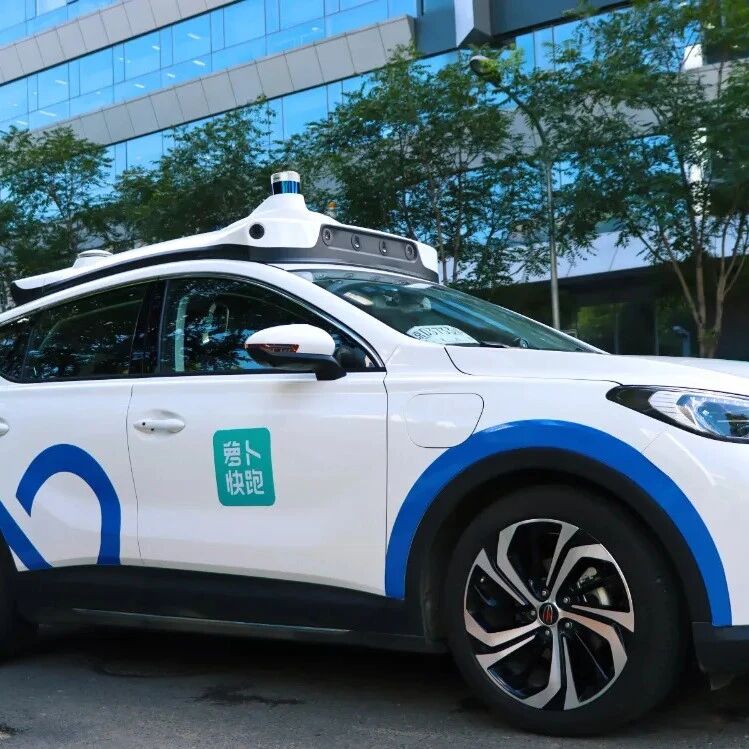
Core Viewpoint - The commercialization process of L4-level autonomous driving is significantly accelerating, driven by policies, technology, and application scenarios, marking the beginning of the "Universal Smart Driving" era by 2025 with an expected vehicle ownership exceeding 100,000 in five cities and a related industry scale surpassing 20 billion yuan [2][3]. Policy Perspective - National-level planning and pilot projects in five cities clarify accident liability, removing institutional barriers [2]. - The release of policy dividends, core technological advancements, and the expansion of application scenarios are collectively fostering the growth of L4 autonomous driving [2]. Technological Development - Continuous reduction in system costs and enhanced vehicle-road-cloud collaboration capabilities are improving reliability in complex environments [2]. - The standardization of "vehicle-cloud" and "vehicle-road-cloud" collaboration is becoming essential, with a rise in patents related to perception, decision-making, and control [3]. Application Scenarios - L4 autonomous driving is currently in the commercial model exploration and full-scale application phase for low-speed semi-open and closed scenarios, while mid-to-high-speed open scenarios are still in early stages [6]. - Various application scenarios include Robotaxi, unmanned delivery, and trunk logistics, transitioning from low-speed closed to mid-speed open environments [2][3]. Business Models - The main business models currently include product sales and operational agency, with product sales being the primary focus [8]. - In industrial parks, L4 autonomous vehicles can save approximately 180,000 yuan annually per intelligent heavy forklift, while smart patrol vehicles in commercial parks can save around 70,000 yuan annually [11]. Cost Savings - In urban sanitation scenarios, L4 autonomous vehicles can save 11% in costs compared to manual cleaning, while electric autonomous sanitation vehicles can save 21% compared to traditional diesel vehicles [15]. - The expected annual cost savings for logistics operations using L4 technology can reach 170,000 yuan compared to traditional vehicles after large-scale operations [29]. Future Trends - L4 autonomous driving is transitioning from the technology validation phase to the commercialization phase, facing challenges such as technical bottlenecks, regulatory gaps, and ethical data issues [45]. - By 2035, the market size for L4 and above autonomous driving in China is projected to exceed 45 trillion yuan, with a penetration rate of over 13% [45].

2025中国智能车未来挑战赛聚焦多智能体具身交互
Xin Hua She· 2025-12-14 13:27
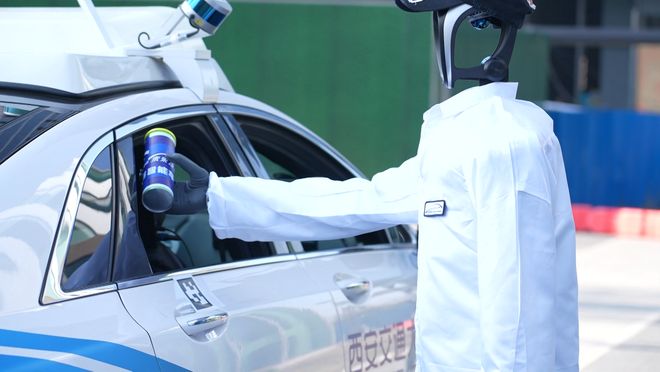
Group 1 - The 15th "China Intelligent Vehicle Future Challenge" concluded on December 14 in Changshu, Jiangsu Province, with the Hong Kong University of Science and Technology (Guangzhou) team winning the championship, followed by teams from Xi'an Jiaotong University and Tsinghua University receiving second and third prizes respectively [1] - This year's competition focused on "advanced autonomous driving and multi-agent embodied interaction," addressing real-world challenges such as emergency response in dynamic environments, human behavior understanding, and multi-agent interaction [2] - The event serves as an important platform for integrating national intelligent vehicle innovation policies with cutting-edge technology practices, showcasing China's latest research advancements in autonomous driving and providing demonstration scenarios for policy implementation, technology validation, and industry collaboration [2] Group 2 - Since its inception in 2009, the China Intelligent Vehicle Future Challenge has cultivated thousands of experts and talents in the autonomous driving field, leading to significant achievements and the emergence of innovative companies that support China's autonomous driving industry [2]
小马智行赴港上市,CEO:中企成本优势数倍于美国
Guan Cha Zhe Wang· 2025-11-06 09:53
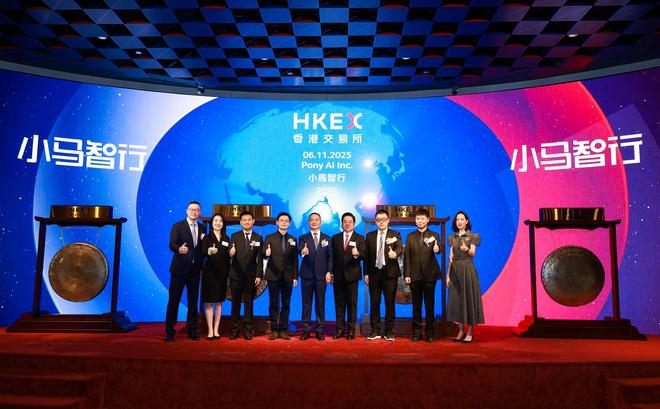
Core Viewpoint - Xiaoma Zhixing officially listed on the Hong Kong Stock Exchange on November 6, 2023, raising approximately HKD 7.7 billion (around RMB 7.055 billion), marking the largest IPO in the global autonomous driving sector in 2025 [1][3] Group 1: Company Overview - Xiaoma Zhixing has established a dual primary listing structure with its previous listing on NASDAQ in November 2024, attracting investments from notable long-term institutions [3] - The company, founded in 2016, focuses on autonomous driving services, including Robotaxi and Robotruck, and has obtained permits for commercial operations in major Chinese cities [3][4] - Xiaoma Zhixing has R&D centers in Beijing, Shanghai, Guangzhou, Shenzhen, Silicon Valley, and Luxembourg, with plans to expand its products and services into Europe, the Middle East, and Asia [3] Group 2: Market Strategy and Future Outlook - The CEO of Xiaoma Zhixing, Peng Jun, emphasized that the Hong Kong listing is a crucial step in the company's global capital strategy and aims to connect with a broader range of resources [3][6] - The company anticipates that achieving a fleet size of 50,000 autonomous vehicles will lead to positive cash flow by 2028-2029, highlighting the importance of overseas markets for scaling operations [6][7] - Peng Jun believes that the autonomous driving industry has a high ceiling for growth, with many complex tasks remaining to improve efficiency, fleet management, and user experience [4][6] Group 3: Competitive Landscape - The CEO does not agree with the notion that increased competition will lead to accelerated company eliminations, asserting that the number of industry players is still insufficient [6][7] - Xiaoma Zhixing's cost control is significantly better than that of similar companies in the U.S., providing a competitive advantage in markets outside of China [7] - The company aims to enhance its business operations while navigating the short-term fluctuations in capital market interest in the autonomous driving sector [7]