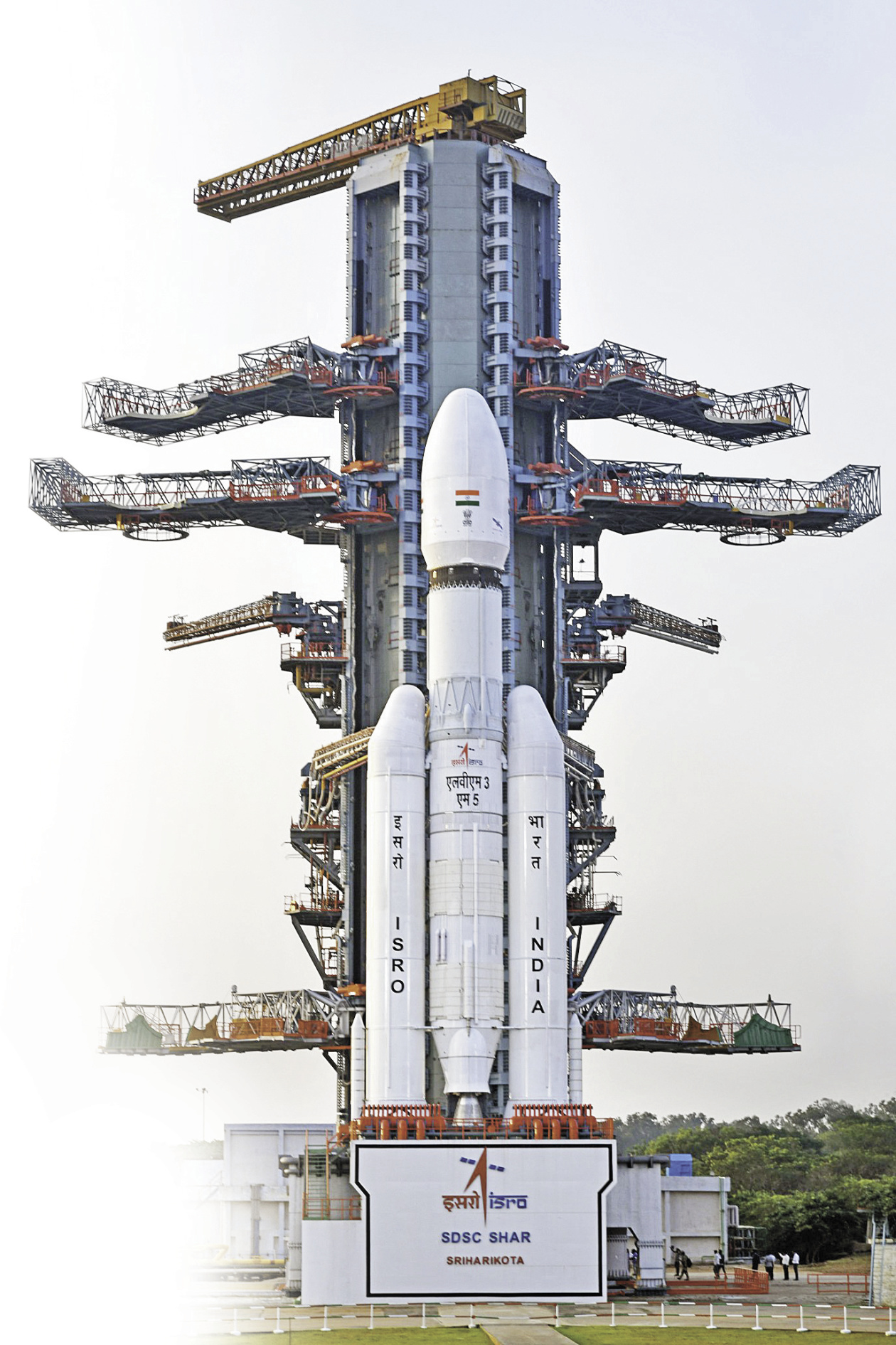
LVM3火箭

Search documents
奋起直追SpaceX:欧洲、加拿大、日本都在发力,就连印度也在整活...
Hua Er Jie Jian Wen· 2026-01-12 13:12
Core Insights - A global competition around low Earth orbit satellite internet is intensifying, with various countries and commercial space companies aiming to challenge SpaceX's dominance in satellite communications, which is tied to both commercial interests and national security [1] Group 1: SpaceX Developments - The FCC has approved SpaceX to deploy an additional 7,500 second-generation Starlink satellites, bringing the total approved to 15,000, with approximately 9,400 currently operational [2] - SpaceX is projected to complete 154 launches by 2025, accounting for over 80% of total U.S. launches, and controls nearly two-thirds of active satellites globally [2] - The FCC has set strict deployment deadlines for SpaceX, requiring 50% of the second-generation satellites to be operational by December 2028 and the remaining by December 2031 [2] Group 2: European Initiatives - The European Space Agency has approved a record €22 billion funding plan, with approximately €900 million allocated to support five startups aiming to enhance Europe's launch capabilities [3] - Germany's Isar Aerospace is one of the leading challengers, having raised over €500 million and planning to produce more than 30 rockets annually [3] - Geopolitical factors, including tensions with the U.S. and the implications of the Russia-Ukraine war, are driving Europe to strengthen its space sector [3] Group 3: Canadian Efforts - Canada is investing nearly CAD 183 million over three years to improve domestic launch capabilities, with Kepler Communications recently launching 10 low Earth orbit satellites [5] - Kepler aims to enhance its optical relay network, utilizing advanced technology to significantly improve data transmission speeds [5] - The Canadian government has allocated CAD 81.8 billion over five years to bolster defense capabilities, which includes support for space initiatives [5] Group 4: Japanese Plans - Japan is developing a "Japanese version of Starlink" with a budget of ¥150 billion (approximately USD 960 million) to support domestic satellite communication services [6] - This initiative is driven by concerns over reliance on foreign satellite communications, especially highlighted during natural disasters [6] Group 5: Indian Challenges - India's ambitions in the global commercial space sector are facing setbacks due to recent launch failures, raising concerns about the reliability of its rockets [7] - Despite these challenges, India continues to show growth potential in heavy-lift capabilities, successfully launching its largest rocket for commercial purposes [7] Group 6: Chinese Developments - China is accelerating its reusable technology updates, which could significantly reduce launch costs and facilitate the deployment of low Earth orbit satellites [9] - The country has applied for frequency resources for over 200,000 satellites, indicating a strategic national focus on satellite communications [9]
改进多个方面性能,印度试射最强火箭,备战载人计划
Huan Qiu Shi Bao· 2025-11-03 22:55
Core Insights - The Indian Space Research Organisation (ISRO) successfully launched a 4410 kg military communication satellite, CMS-03, into geosynchronous transfer orbit, marking the heaviest satellite launched by India using a domestic rocket [1][4] - The launch demonstrated the capabilities of the indigenous LVM3 rocket, which is expected to play a crucial role in India's manned space program [1][4] Launch Details - The CMS-03 satellite is an advanced multi-band communication satellite for the Indian Navy, designed to replace the GSAT-7 satellite launched in 2013 [5] - The satellite will enhance communication capabilities in the Indian Ocean region, supporting voice, data, and video links for naval operations [5] - The LVM3 rocket has improved its payload capacity by 10% for this mission, showcasing advancements in its performance [5][6] Technical Specifications - LVM3 is India's most powerful rocket, capable of carrying payloads over 4000 kg to geosynchronous transfer orbit and 8000 kg to low Earth orbit [6] - Since its first launch in 2014, LVM3 has successfully completed all eight missions, establishing itself as the preferred rocket for heavy payloads [6][8] Future Plans - The launch is a significant step towards reducing India's reliance on foreign technology for heavy satellite launches [6][8] - ISRO plans to conduct the first unmanned flight test of the Gaganyaan manned space program by March 2026, using the LVM3 rocket [8] - The organization aims to complete seven launches by March 2026, as part of a broader vision to conduct 50 launches in the next five years [8][9] Market Position - LVM3 and PSLV are the mainstay rockets for ISRO, handling multiple commercial launch tasks for international clients [9] - Despite its capabilities, India's rocket technology still lags behind leading space nations, particularly in comparison to reusable rockets like SpaceX's Falcon 9 [9]