Maia 200 AI芯片

Search documents
都怪台积电?
半导体芯闻· 2026-01-28 10:31
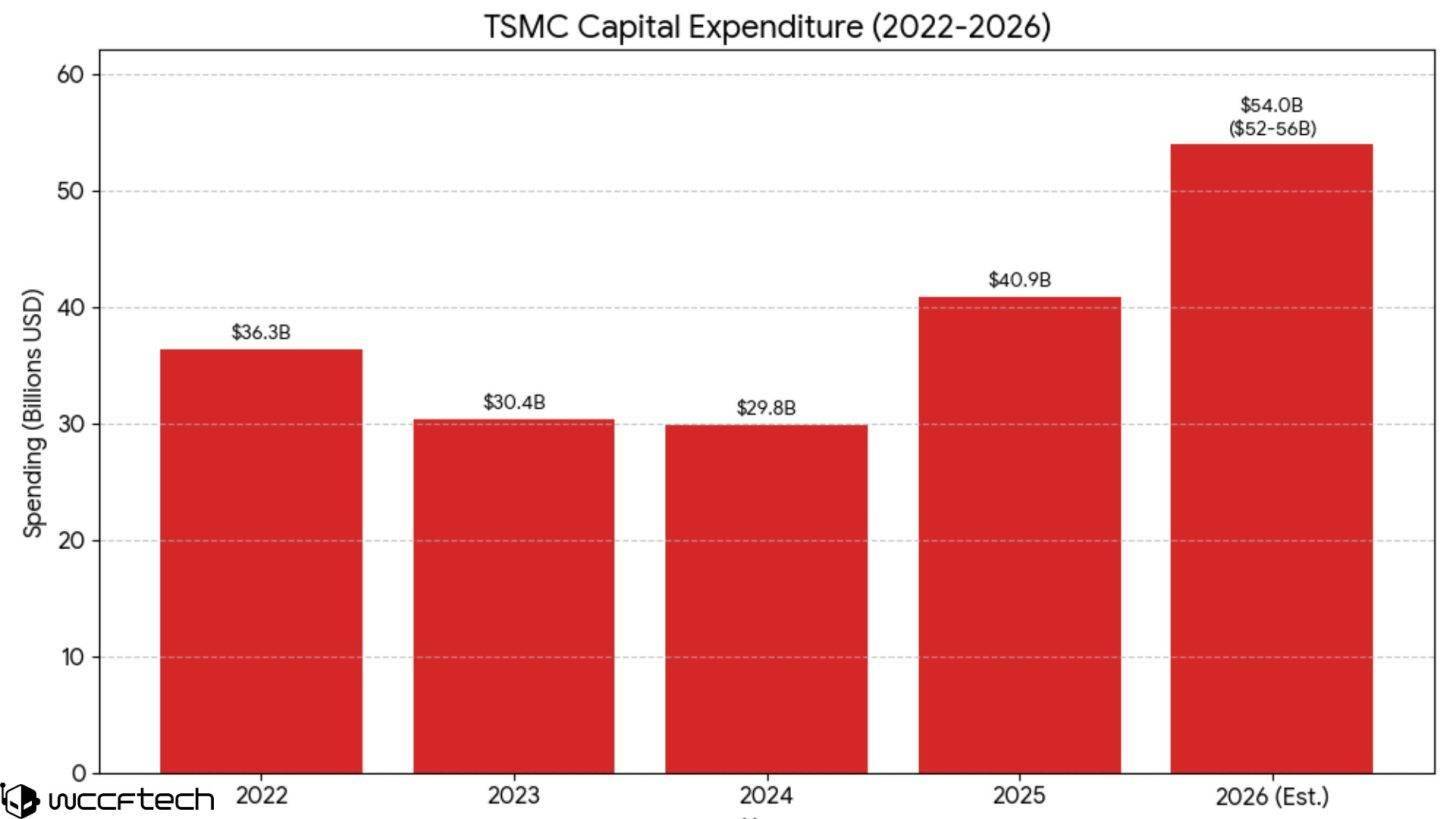
Core Viewpoint - TSMC has become a significant risk factor in the AI supply chain due to its previous misjudgment of market demand, leading to a supply bottleneck that hampers the growth of AI infrastructure [1][2][5] Group 1: TSMC's Role in AI Supply Chain - TSMC is crucial in the AI supply chain, providing extensive foundry services and supporting large-scale cloud service providers, making it an indispensable player in the AI revolution [1][2] - NVIDIA has surpassed Apple to become TSMC's largest customer, indicating a major shift in the semiconductor market structure driven by strong demand for high-performance computing orders [1] Group 2: Investment and Capacity Challenges - TSMC's past reluctance to significantly increase capital expenditures has resulted in production line bottlenecks, which are now impacting the supply chain [2][3] - TSMC plans to raise its capital expenditure to $56 billion by 2026 to address previous investment shortfalls, but analysts view this as a response to earlier hesitations that have positioned TSMC as a "brake" in the current AI boom [2][5] Group 3: Impact on Downstream Companies - The limited capacity at TSMC has led to substantial impacts on downstream tech companies, including NVIDIA and AMD, which are facing extended delivery times [3] - Companies like Microsoft, Google, and Meta, which are developing custom silicon, are unable to place orders that guarantee timely delivery due to the supply constraints [3] Group 4: Advanced Packaging Technology - Advanced packaging technology, such as TSMC's CoWoS, is also facing significant challenges, with TSMC's capacity in this area not matching its semiconductor manufacturing capabilities [4] - The inability to scale advanced packaging capacity could hinder product delivery, even if wafer manufacturing issues are resolved [4] Group 5: Strategic Dilemma for Tech Giants - Tech companies face a strategic dilemma: continue relying on TSMC and risk losing billions in revenue due to delays, or seek alternative foundries, which could introduce higher risks [5] - TSMC's conservative strategies and underestimation of market demand have triggered a chain reaction in the supply chain, affecting various companies and highlighting TSMC's decisive influence on the global AI landscape [5]


Stratechery称台积电已成为全球AI供应链中最大的“风险”因素
Sou Hu Cai Jing· 2026-01-28 04:25
Core Viewpoint - TSMC has been identified as the largest "risk" factor in the global AI supply chain due to its conservative early predictions regarding AI demand, despite its dominant position in the semiconductor foundry sector [1] Group 1: TSMC's Position and Challenges - TSMC's CEO has shown caution towards large-scale construction, leading to insufficient early investments and resulting in a severe supply shortage [2] - The impact of capacity bottlenecks has spread from chip manufacturers to downstream hyperscalers, with companies like Nvidia and AMD facing extended delivery cycles [2] - Major tech companies such as Microsoft, Google, and Meta are currently unable to secure guaranteed delivery schedules, with Microsoft's Maia 200 AI chip facing significant supply constraints [2] Group 2: Financial Implications and Production Capacity - Analysts warn that the current risks could translate into revenue losses amounting to billions of dollars for hyperscale operators [2] - In addition to wafer manufacturing, the shortage of advanced packaging capacity is another critical issue, with TSMC's CoWoS technology being the preferred solution for AI chip manufacturing [2] - TSMC plans to increase capital expenditures to $56 billion this year to alleviate pressure, but it is unlikely to meet the surging market demand in the short term [2] Group 3: Competitive Landscape - Competitors like Intel Foundry and Samsung are attempting to enter the AI chip manufacturing space, but manufacturers remain hesitant to switch from TSMC due to the irreplaceable supply chain ecosystem and trust established by TSMC [4]