MakerWorld平台

Search documents
拓竹和泡泡玛特和解,免费打印大牌IP的日子正在倒计时
36氪· 2026-03-26 13:46
Core Viewpoint - The 3D printing industry is transitioning from hardware competition to content competition, with intellectual property (IP) becoming a critical factor for success in the market [4][11]. Group 1: Industry Challenges - After years of rapid growth, the 3D printing sector is now facing significant IP infringement issues, highlighted by the recent settlement between Bambu Lab and Pop Mart over unauthorized models [5][6]. - The consumer-grade 3D printing industry has reached a consensus that strong hardware specifications are merely entry points, while a robust community ecosystem is essential for long-term success [6][11]. - Bambu Lab's MakerWorld platform has become the largest 3D model community globally, boasting over 10 million monthly active users and more than 1 million 3D models [6][19]. Group 2: Legal and IP Risks - Hardware manufacturers operating 3D model communities face high legal responsibilities for user-uploaded infringing content, especially from major copyright holders like Disney [9][10]. - The current trend shows that many models uploaded are for personal use and have not yet entered the market, but as community users grow, legal scrutiny is expected to increase [10][21]. - The most downloaded models on MakerWorld are often related to popular IPs, which poses a significant risk of infringement and potential legal action from IP owners [20][21]. Group 3: Community and Business Model - The 3D printing community has historically been fragmented, with users relying on third-party sites for models, but this is changing as companies recognize the commercial value of model forums [13][19]. - MakerWorld has implemented a gamified incentive system to encourage user engagement, rewarding model uploads and downloads with points redeemable for materials [14][19]. - The platform's focus on providing optimized print files for specific machines creates a strong user barrier, enhancing customer loyalty and engagement [17][19]. Group 4: Future Outlook - The 3D printing market is projected to exceed billions in scale, prompting IP holders to take action against infringement, which could reshape the landscape for startups in the industry [22][23]. - The evolution of 3D model communities is expected, with a shift towards exclusive content production by hardware manufacturers, moving away from the open-source model of the past [23].


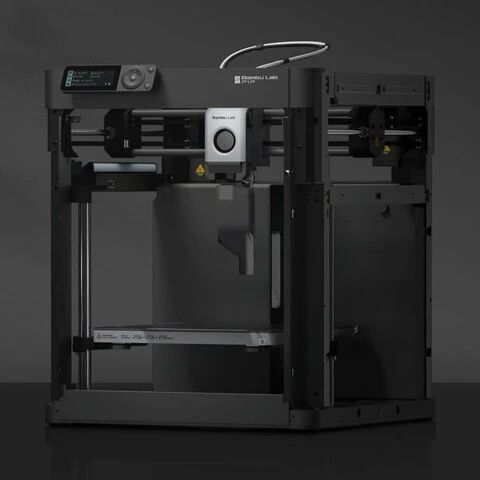
泡泡玛特与拓竹科技达成和解
证券时报· 2026-03-16 04:44
Core Viewpoint - The lawsuit between Pop Mart and Shenzhen Tuozhu Technology has been settled amicably, avoiding a court hearing scheduled for early April [1][3]. Group 1: Company Overview - Shenzhen Tuozhu Technology, established in 2020, focuses on consumer-grade 3D printing equipment and is a leading company in the domestic 3D printing industry [4]. - Tuozhu Technology's MakerWorld platform claims to have over one million high-quality 3D printing and laser cutting models [4]. Group 2: Legal Issues - The lawsuit was initiated by Pop Mart against Tuozhu Technology and its subsidiaries for copyright infringement related to unauthorized 3D printing models of Pop Mart's IP [3]. - The settlement resulted in the complete removal of the related models from the MakerWorld platform [1][3]. Group 3: Industry Insights - The consumer-grade 3D printing sector is experiencing rapid growth, with projections indicating a global market size of $4.1 billion by 2024 [4]. - According to Guojin Securities, the consumer-grade 3D printing industry is entering a phase of rapid technological iteration similar to that of the mobile phone industry from 2022 to 2025 [4].

涉泡泡玛特侵权纠纷,拓竹下架问题内容
第一财经· 2026-03-16 02:29
Core Viewpoint - The article discusses the resolution of a copyright dispute between Tuozhu Technology and Pop Mart, highlighting the importance of intellectual property rights in the industry [1][2]. Group 1 - Tuozhu Technology announced that its MakerWorld platform had reached a settlement with Pop Mart regarding IP copyright issues, which had garnered significant public attention [1]. - Following negotiations, Tuozhu has fully removed the related content from its platform [1].

谁在“托举”拓竹?
3 6 Ke· 2026-01-23 03:22
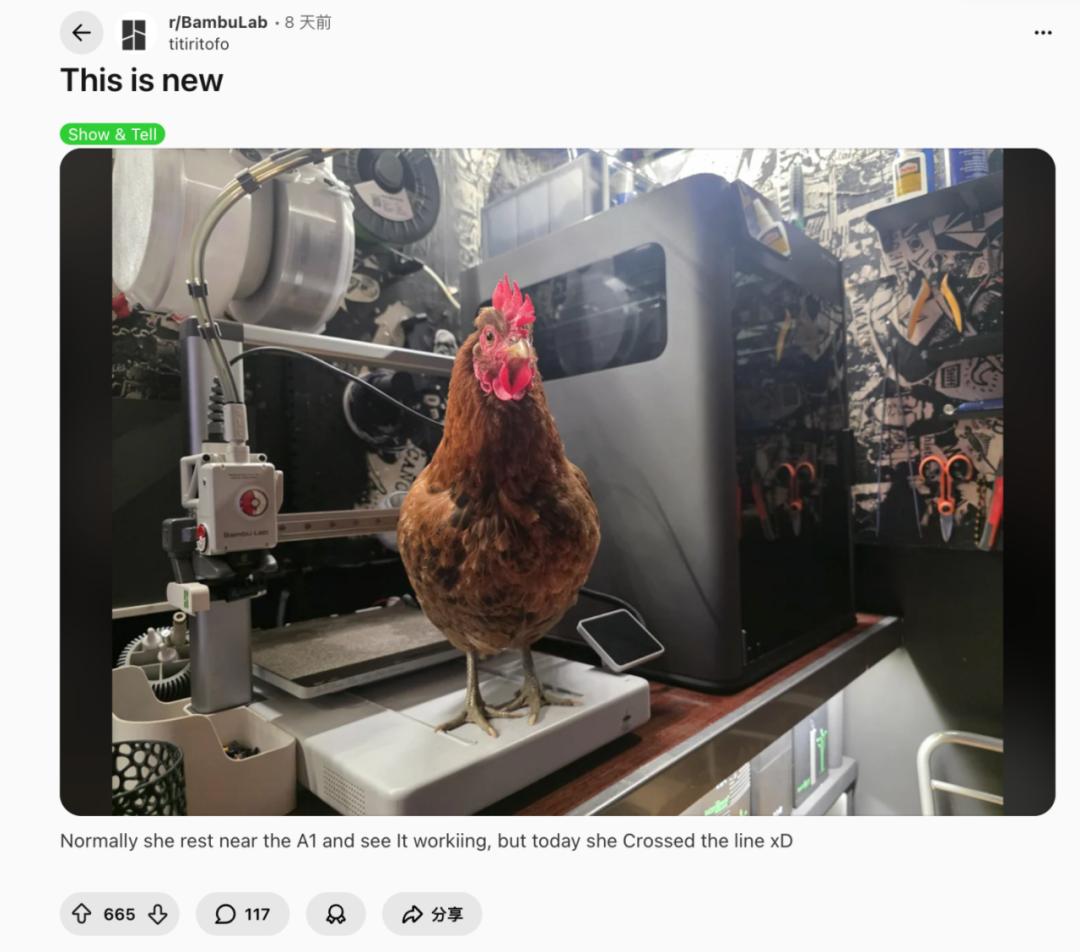
Core Insights - The article discusses the vibrant community surrounding Bambu Lab's 3D printing machines, particularly on platforms like Reddit, where user-generated content (UGC) plays a crucial role in brand engagement and marketing [3][4][7]. Group 1: Community Engagement - Bambu Lab's Reddit community has over 330,000 members, with high activity levels compared to other tech communities, indicating a strong user base and engagement [3][4]. - The community thrives on discussions about practical issues related to 3D printing, such as troubleshooting and material selection, rather than traditional marketing messages [4][5]. - User-generated content fosters a sense of belonging and creativity among users, enhancing brand loyalty and community interaction [11][15]. Group 2: Content Marketing Strategy - Bambu Lab's MakerWorld platform allows users to download 3D printing models, addressing the common issue of users losing interest after initial excitement [9][11]. - The company encourages content creation through competitions and incentives, which helps build a robust ecosystem of creators and users [11][12]. - The brand's marketing strategy focuses on community-driven content rather than relying solely on influencers or traditional advertising [7][14]. Group 3: Brand Identity and User Interaction - Bambu Lab's approach emphasizes the importance of user creativity and DIY culture, aligning with the brand's core values of empowerment and personal manufacturing [30][38]. - The brand's success is attributed to its ability to create a platform where users feel valued and engaged, leading to organic content generation [24][42]. - The community's discussions often reflect a shared identity and emotional investment in the brand, which enhances user retention and brand affinity [15][43].
AI生成的手办图想变成实物 拓竹腾讯联手把这件事搞定了
Feng Huang Wang· 2025-12-12 03:21
Core Insights - The collaboration between拓竹 and Tencent has led to the launch of a new 3D model generator named "印你," aimed at simplifying the 3D modeling process for ordinary users through AI technology [1][2] - The underlying technology from Tencent's mixed Yuan 3D 3.0 model has improved modeling precision by three times compared to its predecessor, achieving a geometric resolution of 1536 and supporting ultra-high-definition modeling with up to 36 billion voxels [1] Group 1 - The new 3D-DiT hierarchical carving technology addresses common issues in AI-generated models, such as facial abstraction and detail blurriness, allowing for precise reconstruction of facial contours and clear presentation of sharp details like joints and mechanical edges [1] - The "印你" tool on the MakerWorld platform significantly simplifies the traditional figurine production process, enabling users to convert a 2D image into a 3D model by simply uploading a portrait [1] - The process includes generating a 2D stereoscopic image, automatic background removal, and stylization, ultimately producing a 3D model file that accurately reflects the face, clothing, and posture, ready for direct printing [1] Group 2 - The拓竹 MakerLab platform has launched 20 modeling tools, including "印你," serving over 2 million users globally [2] - This partnership signifies the acceleration of top-tier generative AI technology from laboratory settings to consumer applications, indicating a reduction in design cycles and a substantial release of personalized creative capabilities for 3D printing enthusiasts [2]


800元一台,年入55亿,3D打印机杀疯了
3 6 Ke· 2025-11-20 12:06
Core Insights - The 3D printing market is experiencing rapid growth as young consumers showcase various printed products on social media, driven by lower prices and increased accessibility [2][3] - Major investments from companies like DJI, Meituan, and Hillhouse Capital indicate a competitive landscape in the 3D printing sector, with leading companies like Tuozhu Technology achieving a valuation exceeding 30 billion RMB and a global market share of 29% [2][8] - The market is characterized by high concentration, with the top five companies holding nearly 90% of the market share, leading to intensified competition [2][14] Market Dynamics - The price of consumer-grade 3D printers has significantly decreased, with many models available for around 800 RMB, making them more accessible to ordinary users [3][5] - The introduction of generative AI modeling tools has lowered the barriers for consumers, enhancing the appeal of 3D printing [3][5] - The sales channels for 3D printers are shifting from offline distributors to online platforms like Tmall and JD, with online sales expected to account for about 50% of total sales by 2024 [12] Financial Performance - Tuozhu Technology is projected to generate over 5.5 billion RMB in revenue in 2024, with a net profit margin of 30% [6][14] - The cost of raw materials for companies like Chuangxiang Sanwei has remained around 50% of sales costs, with a consistent gross margin of approximately 30% [9] Competitive Landscape - The entry of DJI into the 3D printing market has heightened competition, with significant investments in companies like Smart派 and others [7][8] - The leading companies in the market, referred to as the "Four Little Dragons," include Tuozhu Technology, Chuangxiang Sanwei, Zongwei Lifang, and Smart派, collectively dominating the global market [14][16] - The MakerWorld platform launched by Tuozhu Technology has attracted nearly 10 million active users, facilitating a content ecosystem that supports creators and enhances user engagement [8][9] Future Outlook - The global 3D printing market is expected to reach a size of 24.61 billion USD in 2024, with a projected CAGR of 18.5% over the next decade [16] - The challenge remains for companies to create more use cases and integrate 3D printing into everyday life, similar to the impact of smartphones [16]