
Mako机器人

Search documents
手术机器人行业深度报告-AI驱动辅助操作迈向-自动驾驶-国产龙头扬帆全球市场
2026-02-02 02:22
Summary of Surgical Robot Industry Conference Call Industry Overview - The surgical robot industry is characterized by stable cash flow contributions post-installation, with significant potential for consumable flow and data value, particularly in fields like endoscopy and orthopedics, where penetration rates can be greatly improved [1][2] - The global surgical robot market is projected to maintain a compound annual growth rate (CAGR) of approximately 16% from 2024 to 2033, with the Chinese market expected to grow at a remarkable 34% [1][8] Key Insights - **Investment Opportunities**: The surgical robot sector is seen as one of the most attractive business models in the medical device field due to its combination of equipment, consumables, and service models, leading to high customer stickiness and continuous cash flow [2][3] - **Market Penetration**: Current penetration rates for surgical robots are low, especially in endoscopy and orthopedics, indicating substantial growth potential. The market is primarily concentrated in developed regions like the US and Europe, while emerging markets remain underexploited [2][3] - **AI Integration**: The integration of AI technology is anticipated to enhance surgical robots, moving towards an "autonomous driving" model, with companies like Intuitive Surgical and domestic firms such as MicroPort and Tianzhihang actively investing in AI advancements [2][4] Market Dynamics - **Valuation Metrics**: The valuation of surgical robots is often benchmarked against Intuitive Surgical's price-to-sales (P/S) ratio, which has historically ranged from 15 to 20 times. The market capitalization of Intuitive Surgical has surpassed RMB 1 trillion, making it the largest medical device company globally [5][19] - **Future Projections**: By 2027, if leading domestic companies capture 15% of the market share, their robot installations could exceed 6,000 units, indicating significant growth potential compared to Intuitive Surgical's current holdings [5][20] Technological Developments - **Product Features**: Surgical robots are categorized into master-slave operation and navigation systems, with applications across various surgical fields, including urology, gynecology, and orthopedics. These technologies significantly enhance surgical precision and reduce the learning curve for surgeons [7][11] - **Clinical Trial Requirements**: Clinical trials for surgical robots focus on statistical differences in surgical success rates rather than efficacy endpoints, which is a key distinction from pharmaceutical trials [12] Business Models - **Revenue Streams**: The business model for surgical robots includes equipment sales, consumable sales, and service income, with a growing emphasis on consumables as the primary revenue source over time. The rental model has gained traction, reducing hospital procurement costs and accelerating consumable revenue growth [15][16] - **Impact of Rental Models**: The rental model has significantly lowered procurement costs for hospitals, facilitating easier access to surgical robots and boosting consumable sales. For instance, Tianzhihang has seen substantial growth through this model [16] Regulatory and Policy Environment - **Medicare Policies**: Medicare policies play a crucial role in the surgical robot industry, with varying levels of coverage across countries. In the US, most laparoscopic robot surgeries are covered, while in China, only a few procedures are currently included in insurance coverage [18] - **Pricing Guidelines**: Recent pricing guidelines categorize robotic-assisted surgeries into navigation, participation, and precision execution, with laparoscopic robots classified under precision execution, potentially enhancing market penetration [17] Competitive Landscape - **Global Leaders**: Intuitive Surgical remains a leader in the market, with a significant shift in revenue from equipment sales to consumables, accounting for 60% of its total revenue in the US. The company has installed approximately 11,000 units globally [19] - **Domestic Players**: Domestic companies like MicroPort and Jingfeng Medical are rapidly expanding, with MicroPort's overseas market growth exceeding 100% in certain regions. Tianzhihang has also made notable advancements with its Tianji 4R product [20]

三万例之后,COA现场看见史赛克“数智骨科”的真实进展
思宇MedTech· 2025-11-21 07:08
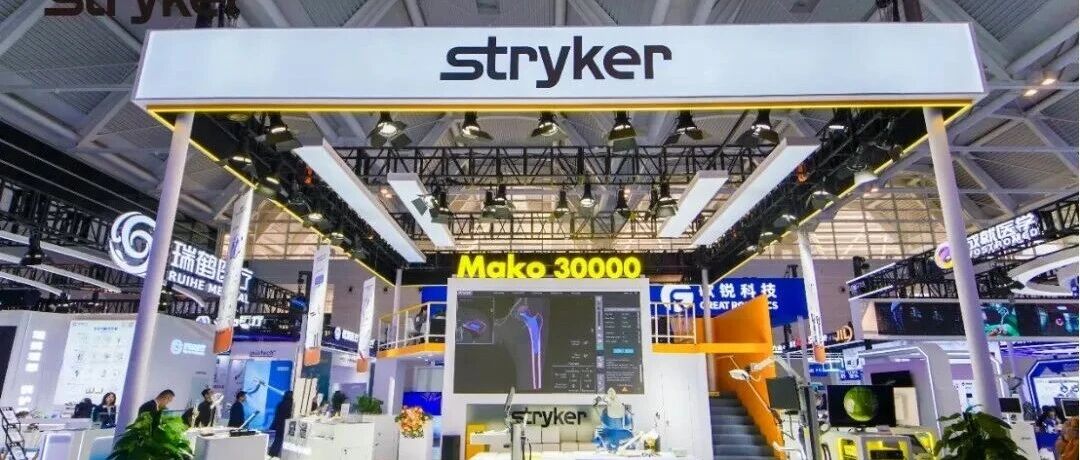
Core Insights - The article highlights the significant advancements in the field of digital orthopedic surgery showcased by Stryker during the COA, including the milestone of over 30,000 surgeries performed with the Mako robot in China and the introduction of new hip joint products [2][10]. Group 1: Mako Robot and Surgical Milestones - The Mako robot has successfully completed over 30,000 surgeries in China, marking a significant milestone since its clinical trials began in 2016 [4][10]. - The focus has shifted to understanding how Mako has changed surgical procedures, with discussions emphasizing its impact on planning and execution [4][6]. Group 2: Planning and Execution Improvements - Planning has evolved from static three-dimensional models to dynamic understanding, allowing for better identification of individual patient differences [7]. - Execution benefits from sub-millimeter precision, enhancing consistency in surgical outcomes through integrated tools and real-time adjustments [8][11]. Group 3: New Product Launches - Stryker introduced two new hip replacement products aimed at addressing critical aspects of surgery, including fixation methods and stability in complex cases [14][21]. - The Trident II Tritanium cup offers flexible fixation options for complex anatomical conditions, while the MDM dual-mobility system focuses on post-operative stability and adaptability [15][17]. Group 4: Knowledge Dissemination - The launch of the book "Digital Orthopedics: Joint Surgery" fills a crucial gap in clinical education, providing a comprehensive resource for surgeons [22][24]. - The book is a collaborative effort from experts in robotic-assisted surgery, emphasizing practical applications and decision-making processes [24]. Group 5: Expert Discussions and Clinical Needs - International experts shared insights on robotic-assisted knee replacements and complex hip cases, indicating a shift towards more granular discussions on surgical decision-making [25][29]. - The high attendance at Stryker's demonstration courses reflects an increasing clinical demand for knowledge and training in robotic surgery [30][35]. Group 6: Conclusion - The article concludes that the advancements in robotic surgery, new product launches, expert discussions, and educational initiatives collectively demonstrate Stryker's progress in digital orthopedics, emphasizing practical applications in real surgical settings [36].


Stryker(SYK) - 2025 Q2 - Earnings Call Transcript
2025-07-31 21:32
Financial Data and Key Metrics Changes - The company reported double-digit organic sales growth of 10.2% and adjusted EPS growth of 11.4% for Q2 2025, despite challenges from tariffs and divestitures [6][14][22] - Adjusted earnings per share reached $3.13, up 11.4% from the same quarter last year, driven by robust sales growth and margin expansion [15][22] - The adjusted gross margin improved to 65.4%, a 120 basis point increase compared to 2024, while the adjusted operating margin was 25.7%, up 110 basis points [21][22] Business Line Data and Key Metrics Changes - MedSurg and Neurotechnology achieved organic sales growth of 11%, with US growth at 12.5% and international growth at 5.7% [15][18] - Instruments saw US organic sales growth of 10.1%, driven by strong performance in Surgical Technologies [15] - Endoscopy reported US organic sales growth of 18.6%, fueled by demand for operating room infrastructure and new product launches [16] - Orthopedics had organic sales growth of 9%, with US growth at 9.7% and international growth at 7.5% [18][20] Market Data and Key Metrics Changes - US organic sales growth was 11.5%, with double-digit growth in endoscopy, neurocranial, trauma, and extremities businesses [6][18] - International sales growth was 6.5%, with notable contributions from South Korea and emerging markets [7][18] - The company anticipates continued strength in procedural volumes and capital demand, supported by healthy hospital capex budgets [10][11] Company Strategy and Development Direction - The company is focused on innovation and maintaining a healthy deal pipeline for future growth opportunities [8][10] - Stryker is well-positioned for the second half of the year, raising its full-year 2025 outlook, including an expected 100 basis points of adjusted operating margin expansion [8][22] - The integration of Inari Medical is progressing, with expectations of double-digit pro forma revenue growth for 2025 [13][66] Management's Comments on Operating Environment and Future Outlook - Management expressed confidence in the strength of procedural volumes and capital demand, indicating no slowdown in the order book [27][29] - Supply chain issues are primarily limited to the medical segment, with expectations for resolution throughout the year [28][56] - The company remains optimistic about international growth opportunities, despite recent slower growth rates [78] Other Important Information - The company expects a net impact from tariffs of approximately $175 million in 2025, reflecting changes in bilateral agreements and tariff rates [23][24] - The launch of new products, such as LifePack 35, is anticipated to contribute positively to growth in the coming quarters [12][106] Q&A Session Summary Question: What gives confidence to raise organic growth and EPS guidance? - Management cited strong procedural strength and capital demand, with a healthy order book and limited supply issues in the medical segment [27][29] Question: How is the integration of Inari progressing? - The integration is ongoing, with a focus on establishing a Stryker leadership team and addressing destocking issues [66] Question: What is driving the strength in underlying margins? - The strength is attributed to a focus on pricing, manufacturing efficiency, and operational improvements [34][35] Question: How is the capital environment affecting growth? - The capital environment remains strong, with elevated backlog and no signs of slowdown [104] Question: What are the expectations for international growth? - Management expects improved international growth in the second half of the year, despite recent slower rates [78]