
达芬奇机器人

Search documents
迈瑞公布,手术机器人最新进展
Xin Lang Cai Jing· 2026-02-09 10:20
Group 1 - Mindray is actively developing its surgical robot business, integrating technologies from endoscopy, energy platforms, and surgical instruments [1][7][10] - The company has established a strong foundation in minimally invasive surgery, with a projected growth rate of over 25% for this segment by Q3 2025 [2][9] - Mindray's market share for its hard endoscope systems has surpassed 10%, positioning it just behind two major imported brands [2][9] Group 2 - The surgical robot industry is highly competitive, with major players like Medtronic and Intuitive Surgical making significant advancements [3][4] - Medtronic's Hugo™ robotic system has received FDA approval, marking its entry into the U.S. market [3] - Intuitive Surgical's da Vinci 5 system has been approved for specific cardiac surgeries, expanding its application range [4] Group 3 - The endoscopic surgical robot sector is gaining attention, with Olympus investing in Swan EndoSurgical to advance this technology [11] - Johnson & Johnson's MONARCH robot has been approved in China, allowing for natural orifice procedures without incisions [12] - Domestic companies are rapidly advancing in the surgical robot field, with several achieving initial commercialization in various specialties [12] Group 4 - The National Healthcare Security Administration has introduced guidelines for pricing surgical robots based on their participation and precision in surgeries [13][14] - The evolving regulatory framework is expected to facilitate the growth of the domestic surgical robot industry [14]


手术机器人行业深度报告-AI驱动辅助操作迈向-自动驾驶-国产龙头扬帆全球市场
2026-02-02 02:22
Summary of Surgical Robot Industry Conference Call Industry Overview - The surgical robot industry is characterized by stable cash flow contributions post-installation, with significant potential for consumable flow and data value, particularly in fields like endoscopy and orthopedics, where penetration rates can be greatly improved [1][2] - The global surgical robot market is projected to maintain a compound annual growth rate (CAGR) of approximately 16% from 2024 to 2033, with the Chinese market expected to grow at a remarkable 34% [1][8] Key Insights - **Investment Opportunities**: The surgical robot sector is seen as one of the most attractive business models in the medical device field due to its combination of equipment, consumables, and service models, leading to high customer stickiness and continuous cash flow [2][3] - **Market Penetration**: Current penetration rates for surgical robots are low, especially in endoscopy and orthopedics, indicating substantial growth potential. The market is primarily concentrated in developed regions like the US and Europe, while emerging markets remain underexploited [2][3] - **AI Integration**: The integration of AI technology is anticipated to enhance surgical robots, moving towards an "autonomous driving" model, with companies like Intuitive Surgical and domestic firms such as MicroPort and Tianzhihang actively investing in AI advancements [2][4] Market Dynamics - **Valuation Metrics**: The valuation of surgical robots is often benchmarked against Intuitive Surgical's price-to-sales (P/S) ratio, which has historically ranged from 15 to 20 times. The market capitalization of Intuitive Surgical has surpassed RMB 1 trillion, making it the largest medical device company globally [5][19] - **Future Projections**: By 2027, if leading domestic companies capture 15% of the market share, their robot installations could exceed 6,000 units, indicating significant growth potential compared to Intuitive Surgical's current holdings [5][20] Technological Developments - **Product Features**: Surgical robots are categorized into master-slave operation and navigation systems, with applications across various surgical fields, including urology, gynecology, and orthopedics. These technologies significantly enhance surgical precision and reduce the learning curve for surgeons [7][11] - **Clinical Trial Requirements**: Clinical trials for surgical robots focus on statistical differences in surgical success rates rather than efficacy endpoints, which is a key distinction from pharmaceutical trials [12] Business Models - **Revenue Streams**: The business model for surgical robots includes equipment sales, consumable sales, and service income, with a growing emphasis on consumables as the primary revenue source over time. The rental model has gained traction, reducing hospital procurement costs and accelerating consumable revenue growth [15][16] - **Impact of Rental Models**: The rental model has significantly lowered procurement costs for hospitals, facilitating easier access to surgical robots and boosting consumable sales. For instance, Tianzhihang has seen substantial growth through this model [16] Regulatory and Policy Environment - **Medicare Policies**: Medicare policies play a crucial role in the surgical robot industry, with varying levels of coverage across countries. In the US, most laparoscopic robot surgeries are covered, while in China, only a few procedures are currently included in insurance coverage [18] - **Pricing Guidelines**: Recent pricing guidelines categorize robotic-assisted surgeries into navigation, participation, and precision execution, with laparoscopic robots classified under precision execution, potentially enhancing market penetration [17] Competitive Landscape - **Global Leaders**: Intuitive Surgical remains a leader in the market, with a significant shift in revenue from equipment sales to consumables, accounting for 60% of its total revenue in the US. The company has installed approximately 11,000 units globally [19] - **Domestic Players**: Domestic companies like MicroPort and Jingfeng Medical are rapidly expanding, with MicroPort's overseas market growth exceeding 100% in certain regions. Tianzhihang has also made notable advancements with its Tianji 4R product [20]
算力飙升万倍,无需开胸!达芬奇机器人再添手术新技能,马斯克预言将成真?
Di Yi Cai Jing· 2026-01-27 07:32
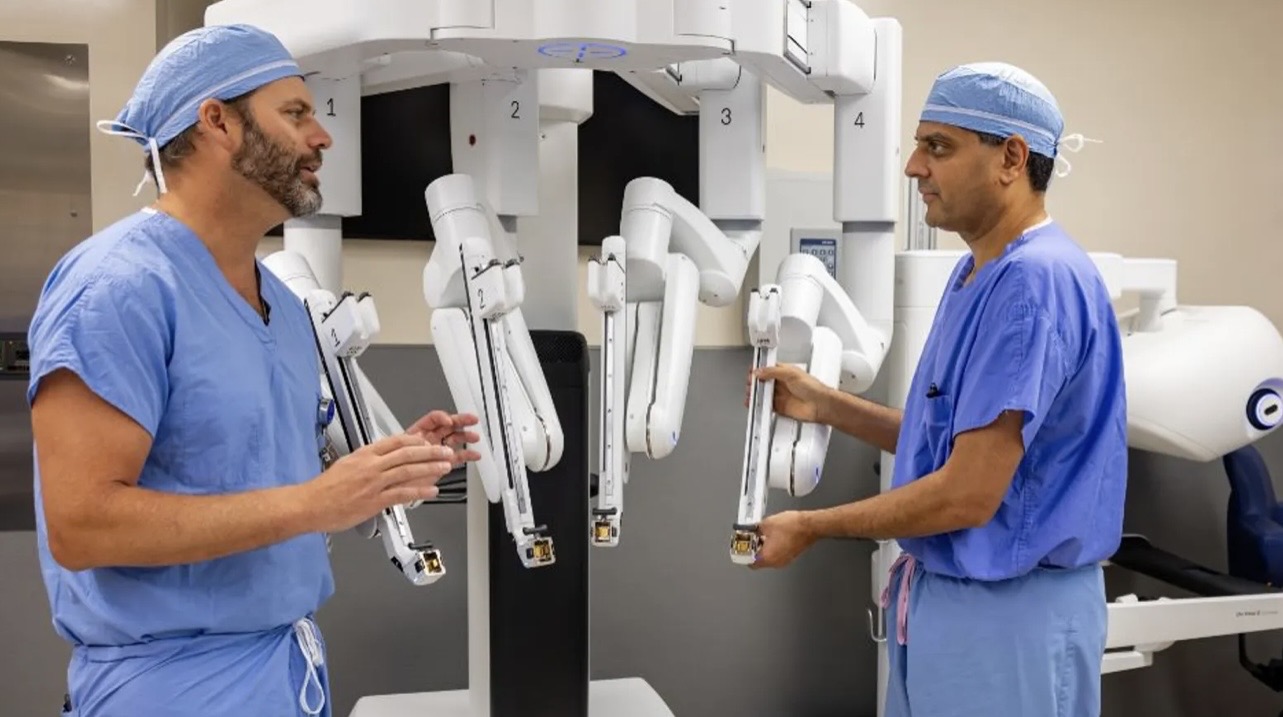
Core Insights - Intuitive Surgical's da Vinci 5 surgical robot has received FDA approval for specific heart surgeries, marking the first time the da Vinci system is officially approved for cardiac procedures [1][3] - The da Vinci robot has been used in over 140,000 heart surgeries globally, with its computational power increased by 10,000 times [1][3] - The approval expands the indications to include mitral valve repair and coronary artery bypass grafting, which are significant advancements in the field of robotic surgery [1][3] Industry Overview - Approximately 18 million people die from cardiovascular diseases annually, with over 2 million patients undergoing open-heart surgery, most requiring sternotomy [3] - Robotic-assisted minimally invasive heart surgery reduces patient trauma by allowing procedures through small incisions without opening the sternum [3] - The approval of the new indications is considered a milestone in the robotic surgery field [3] Market Potential - Intuitive plans a "controlled rollout" of the da Vinci 5 system, initially in the U.S. and South Korea, with an estimated potential of 160,000 surgical opportunities annually [3] - The global volume of da Vinci robot surgeries is expected to grow by 13% to 15% by 2026 [3] Competitive Landscape - Other medical giants are developing surgical robot systems but have not yet entered the cardiac surgery market, such as Medtronic's Hugo system and Johnson & Johnson's Ottava system, which are focused on urology and general surgery, respectively [4] - Truist Securities notes that the approval of da Vinci 5 for cardiac surgery may enhance Intuitive's competitive advantage in the market [4] Expert Opinions - Elon Musk predicts that within three years, robots will surpass human surgical skills, and within five years, they will outperform even top human surgeons [4] - Some experts believe that while robotic surgery has matured in fields like abdominal surgery, its value in cardiac surgery is still limited and requires further clinical validation [4]


马斯克预警!留给旧世界的时间只剩2000天,中国握着唯一“王牌”
Sou Hu Cai Jing· 2026-01-22 08:05
Group 1 - Musk predicts that the existing social model has about 2000 days left, with AI expected to fundamentally change everything by 2031 [1] - AGI (Artificial General Intelligence) may be realized by 2026, and by 2030, AI's total intelligence could surpass that of all humans combined [1] - The rapid advancement of AI is likened to a snowball effect, with significant implications for various job sectors, particularly for white-collar workers [3] Group 2 - The transition from 3nm to 2nm chips shows diminishing returns, indicating that the limits of Moore's Law are approaching [3] - High-profile job sectors such as law and accounting are at risk, with a Goldman Sachs report stating that 300 million jobs globally could be at risk of replacement [3] - AI's efficiency in tasks like contract review and coding is leading to a shift in job roles, with many workers becoming mere facilitators [3] Group 3 - Musk emphasizes that electricity supply is a critical bottleneck for AI development, with predictions that global AI data centers will consume more electricity than Japan by 2026 [5] - China is projected to have three times the electricity output of the U.S. by 2026, with a significant capacity for data center demands [5] - China's solar power capacity is substantial, with 1500 GW of production annually, contributing to its competitive edge in AI computing [5] Group 4 - China's computing power is ranked second globally, with a market size projected to reach 835.1 billion yuan by 2025, growing over 30% annually [7] - The country is establishing eight major computing hubs and has the highest number of supercomputers globally, accounting for 45% of the total [7] - Policies are being implemented to regulate AI-generated content and ensure data security, fostering a controlled yet vibrant AI development environment [7] Group 5 - Musk expresses optimism about the technological benefits of AI, emphasizing the need for collaboration to avoid resource wastage [9] - China is expected to lead in computing capabilities, with projections of reaching over 450 EFLOPS by 2030 [9] - The shift towards AI in various sectors, including e-commerce and healthcare, is anticipated to create new opportunities, despite the challenges of transitioning from traditional models [9]

从“工具辅助”到“流程重构”:手术机器人重塑泌外诊疗
第一财经· 2025-10-27 15:22
Core Viewpoint - Surgical robots are reshaping the landscape of precise minimally invasive diagnosis and treatment in urology, becoming an indispensable tool in the field [3][5]. Group 1: Current Trends in Urology - The incidence of urological diseases is rising due to an aging population, with prostate cancer rates in Shanghai nearing those of developed countries [3][4]. - Key urological diseases such as prostate cancer, kidney cancer, and bladder cancer are increasingly prevalent, influenced by dietary and lifestyle factors [3][4]. Group 2: Role of Surgical Robots - Surgical robots, including both imported and domestic models, play a crucial role in urological tumor diagnosis and treatment, meeting the high precision and delicacy required in surgeries [3][5]. - In urology, robotic surgeries account for 50% of procedures at Xinhua Hospital, indicating a strong demand for robotic assistance in this specialty [5][7]. Group 3: Advantages of Robotic Surgery - Robotic systems offer enhanced flexibility and precision, allowing for 360-degree rotation and improved visualization, which is critical for delicate procedures [5][7]. - The use of robotic assistance significantly reduces surgical trauma, minimizes blood loss, shortens hospital stays, and accelerates patient recovery [7][8]. Group 4: Challenges and Opportunities - Despite the growing adoption of robotic surgery in China, there remains a significant gap compared to international standards, particularly in the availability of robotic systems in smaller hospitals [9][10]. - The rapid development of domestic surgical robots is narrowing the gap with imported models, with improvements in operational smoothness and flexibility noted [10][11]. Group 5: Future Prospects - The increasing approval rate of domestic surgical robots, which reached 81.7%, indicates a shift towards domestic production and global competitiveness [11]. - Continuous technological advancements and policy support are expected to enhance the capabilities of domestic surgical robots, making them more accessible and effective for patients [11].
股市必读:国际医学(000516)9月11日董秘有最新回复
Sou Hu Cai Jing· 2025-09-11 18:41
Core Viewpoint - The company is actively integrating advanced technologies in healthcare, particularly in AI-assisted medical services and brain-machine interface applications, to enhance patient care and operational efficiency [2][3]. Group 1: AI and Smart Healthcare Initiatives - The company has implemented various smart healthcare applications, including hospital information systems, electronic medical records, and intelligent diagnostic systems, which improve diagnostic efficiency and reduce repetitive tasks for healthcare professionals [2]. - Future plans include expanding smart healthcare applications based on technological maturity and needs, contributing to the company's high-quality development [2]. Group 2: Brain-Machine Interface Developments - The company is utilizing brain-machine interfaces in rehabilitation training systems, incorporating exoskeleton robots and functional electrical stimulation devices, and has conducted surgeries related to deep brain stimulation and spinal cord stimulation [2][3]. Group 3: Hospital Operations and Insurance Collaborations - The West International Medical Center Hospital has nearly completed its construction, with bed occupancy rates expected to rise as the hospital's capabilities improve [3]. - The hospital has established partnerships with multiple commercial insurance companies, allowing patients to potentially cover proton therapy costs through their insurance plans, depending on the specific terms of their policies [4]. Group 4: Market Activity and Financial Insights - On September 11, the company experienced a net inflow of 12.97 million yuan from main funds, accounting for 11.6% of the total transaction volume, while retail investors saw a net outflow of 15.11 million yuan [4].

第三次肾移植用了机器人,毓璜顶医院完成“全球首例”高难手术
Qi Lu Wan Bao Wang· 2025-07-16 02:55
Core Viewpoint - The successful completion of the third kidney transplant assisted by the Da Vinci robot at Yantai Yuhuangding Hospital marks a significant breakthrough in complex organ transplantation in China, providing new treatment pathways for patients with end-stage kidney disease globally [1][11][13]. Group 1: Surgical Achievement - The surgery was performed by a collaborative team led by Director Yu Shengqiang from the organ transplant department and Director Wu Jitao from the urology department, under the guidance of Professor Gao Zhenli [1][11]. - The patient, Mr. Wang, had undergone two previous kidney transplants and faced high surgical difficulty and rejection risks due to extensive adhesions and weakened tissues from prior surgeries [7][11]. - The use of the Da Vinci robot significantly reduced surgical trauma and patient burden, allowing for precise operations in a challenging environment [7][13]. Group 2: Innovative Approach - The surgical team faced a lack of prior literature or practical experience regarding the use of the Da Vinci robot for a third kidney transplant, necessitating independent exploration and innovation [11][13]. - A comprehensive pre-surgical plan was developed, including individualized immunosuppressant protocols and detailed monitoring strategies to minimize rejection risks [11][13]. - The team utilized advanced techniques to navigate the complex anatomical challenges presented by the patient's previous surgeries, demonstrating a high level of surgical skill and innovation [11][13]. Group 3: Broader Implications - The success of this surgery not only saved the patient's life but also showcased the hospital's capability to tackle complex transplant challenges using cutting-edge technology [13]. - This achievement is expected to have significant clinical implications, providing valuable experience and a successful model for similar complex cases globally [13]. - The hospital's efforts reflect a commitment to advancing minimally invasive surgical techniques and contributing to the global medical community's understanding of complex organ transplants [13].
远毅资本:AI和数字化正在重塑医疗体系,投资关注两类机会
2 1 Shi Ji Jing Ji Bao Dao· 2025-07-11 09:19
Group 1 - The core viewpoint is that AI and digitalization are reshaping the global healthcare system, with digital healthcare being the future of medical health [1][2] - Yuan Yi Capital, established in 2016, focuses on early-stage investments in digital healthcare technology, having invested in over 70 companies with a total management scale exceeding 30 billion RMB [1][2] - The 2024 China Digital Healthcare Innovation Development Blue Book indicates that digital healthcare is an emerging field created by the integration of digital technology and medical scenarios, optimizing the entire diagnostic process [2][3] Group 2 - In the U.S. market, digital healthcare is a mainstream investment area, with AI and digitalization-related projects accounting for 50% of the top 100 financing deals in 2024 [3] - The evolution of medical models is driven by technology, transitioning from reliance on doctors' experience to data-driven personalized treatment and comprehensive management [3][5] - The rapid development of digital healthcare is attributed to the inefficiencies in the current healthcare system, which leads to insufficient supply and rising costs [3][5] Group 3 - Generative AI is seen as a golden opportunity in the healthcare sector due to strong demand, a large market, and high barriers to entry [5][6] - Generative AI can enhance various aspects of the healthcare ecosystem, including improving diagnostic efficiency for doctors and transforming hospital management [5][6] - A survey indicates that 90% of doctors find AI tools trustworthy, with over half willing to inform patients about AI's involvement in their treatment [6] Group 4 - Yuan Yi Capital identifies two types of innovative opportunities brought by generative AI: infrastructure development for traditional sectors and specialized AI applications in specific disease areas [6] - The focus on specialized AI applications is seen as a trillion-scale new market that can drive high-quality, low-cost personalized medical services [6]
【特稿】美国研究人员训练机器人自主完成胆囊切除手术
Xin Hua She· 2025-07-10 06:25
Core Insights - Researchers at Johns Hopkins University have developed an AI-powered robot capable of autonomously performing gallbladder surgeries, marking a significant advancement in automated healthcare [1][2] - The SRT-H robot can make independent judgments and decisions during surgery, akin to self-driving cars that can navigate various situations [1] - The robot achieved a 100% success rate in trial surgeries, although it took longer than human surgeons to complete the procedures [2] Group 1: Technological Advancements - The SRT-H robot utilizes an AI framework trained on videos of surgeons performing gallbladder surgeries on pigs, allowing it to understand surgical procedures [1] - The robot demonstrated the ability to perform complex tasks such as grasping, cutting, and decision-making in real-time during surgeries [1] Group 2: Market Implications - The global surgical robot market is approaching $10 billion, with an estimated 2.7 million robot-assisted surgeries performed worldwide in 2024 [2] - The introduction of autonomous surgical robots could address the shortage of surgeons and reduce human error, providing stable and high-quality medical services in underserved areas [2]
关税如何影响达芬奇机器人制造商?企业回应
Di Yi Cai Jing· 2025-04-23 08:43
Group 1 - The article discusses the strategic initiatives and future projections of a company in the medical device industry, particularly focusing on robotic surgical systems [1] - It highlights the expected growth in market share, projecting an increase from 65% to 66.5% by 2025, indicating a strong competitive position [1] - The company is also noted for its innovative approaches in product development and market expansion strategies [1] Group 2 - The article mentions the regulatory environment and its impact on the company's operations, emphasizing the importance of compliance in maintaining market leadership [1] - It outlines the financial performance metrics, although specific figures are not detailed in the provided text [1] - The company is positioned to leverage technological advancements to enhance its product offerings and improve operational efficiency [1]