
骨科机器人

Search documents
爱康医疗20260327
2026-03-30 05:15
Summary of Aikang Medical Conference Call Company Overview - **Company**: Aikang Medical - **Date**: March 27, 2026 - **Industry**: Orthopedic Medical Devices Key Points Business Structure and Strategy - Aikang Medical operates three main business segments: overseas business, orthopedic robotics, and domestic hospital business. The overseas segment is expected to achieve high compound annual growth rates, while the robotics segment is anticipated to leverage significant growth. The domestic hospital business provides stable cash flow due to its high market share [3][3]. - The company has established a dual-brand strategy with "Tianyan" targeting the mass market and focusing on cost efficiency, while Aikang Medical serves as a premium brand emphasizing quality and differentiation [3][3]. Market Performance and Growth - In 2025, the surgical volume in high-level hospitals increased by approximately 41% year-on-year, with T1/T2 hospitals contributing 18% of the business, up from 14% in 2024 [2][3]. - The company aims to sell 100-120 orthopedic robots by 2026, with a target of performing 10,000 surgeries, having already secured 10-12 orders in the first half of 2026, exceeding previous expectations [2][5]. Financial Guidance - For 2026, Aikang Medical projects a revenue target of 40 million yuan from its robotics business, with a loss rate expected to narrow to -30%. The overall profit growth trend is anticipated to continue, with a 10% increase in surgical volume in Q1 2026 [2][17]. Technological Advancements - The K-3 Plus surgical robot addresses clinical pain points by optimizing traditional surgical processes, significantly improving precision and reducing trauma [7][8]. - The company has developed a digital orthopedic solution covering the entire surgical process, which is now being monetized following new healthcare policies that allow for charging for previously free services [10][11]. International Expansion - Aikang Medical's overseas strategy includes a dual-brand approach, with GRI focusing on mature markets and Aikang targeting emerging markets. The overseas business is expected to grow at a rate of 29% in 2025, with exports projected to account for 24% of total revenue [12][14]. - The company plans to expand its overseas sales team from 10 to 30 members in 2026 to support this growth [20][20]. Competitive Landscape - The orthopedic robotics market is dominated by companies like Stryker and Johnson & Johnson, with Aikang Medical leveraging its established supply chain and hospital network to create a "razor-and-blades" business model [4][9]. - Aikang Medical's competitive advantage lies in its ability to integrate robotics with its implant business, ensuring a closed-loop commercial model [9][9]. Future Outlook - The company expects to maintain a revenue growth rate of around 10% in its domestic business and a 30% growth rate in its overseas business in 2026. The digital orthopedic business, particularly robotics, is projected to achieve significant sales targets [17][17]. - Key future milestones include obtaining CE certification for the K3+ robot, which is expected to enhance international sales opportunities [15][19]. Shareholder Returns - Aikang Medical has increased its share buyback program to 150 million yuan and raised its dividend payout ratio to 35%, reflecting its commitment to returning value to shareholders [18][18]. Conclusion - Aikang Medical is positioned for robust growth in the orthopedic market, driven by innovative technology, strategic international expansion, and a strong focus on shareholder value. The company is well-prepared to navigate market challenges and capitalize on emerging opportunities in the healthcare sector [21][21].
爱康医疗(01789):标内稳健增长,出海+数字骨科双轮赋能
HTSC· 2026-03-27 02:43
Investment Rating - The investment rating for the company is "Buy" with a target price of 8.41 HKD [6]. Core Views - The company is expected to achieve stable revenue growth in 2025, with a projected revenue of 1.482 billion RMB (+10.1% YoY) and a net profit of 339 million RMB (+23.8% YoY), aligning with consensus expectations [1]. - The growth drivers include the deepening import substitution of joint products and the gradual ramp-up of digital orthopedic products, alongside increasing overseas revenue and customized digital orthopedic services [1][2]. - The company is anticipated to maintain a net profit growth of over 20% in 2026, supported by stable domestic revenue and new growth engines from overseas markets and digital orthopedic products [1]. Summary by Sections Domestic Market - In 2025, the hip and knee joint segments are expected to generate revenues of 845 million RMB (+16% YoY) and 436 million RMB (+8% YoY) respectively, driven by market expansion and import substitution in high-tier hospitals [2]. - The spinal and trauma segments are projected to generate 101 million RMB (-20% YoY) due to policy impacts and intense market competition, but are expected to stabilize in 2026 [2]. Overseas Expansion - The company is projected to achieve overseas revenue of 330 million RMB (+20% YoY) in 2025, with an increasing share of overseas revenue from 21% in 1H25 to 27% in 2H25 [3]. - The dual-brand strategy ("Aikang + JRI") and expansion of the distributor network are key factors for growth, with eight new registered countries and an expanded export team [3]. Digital Orthopedics - The digital orthopedic segment, including customized products and surgical robots, is expected to generate revenue of 63.04 million RMB (+22.8% YoY) in 2025 [4]. - The surgical robot "Yidian Lingdong" is anticipated to contribute approximately 40 million RMB in revenue, with ongoing domestic and international market expansion [4]. Profit Forecast and Valuation - The projected net profits for 2026, 2027, and 2028 are 411 million RMB, 479 million RMB, and 553 million RMB respectively, with corresponding EPS of 0.37, 0.43, and 0.49 RMB [5]. - The company is assigned a 20x PE for 2026, with a target price of 8.41 HKD, reflecting a discount compared to comparable companies [5].
手术机器人行业深度报告-AI驱动辅助操作迈向-自动驾驶-国产龙头扬帆全球市场
2026-02-02 02:22
Summary of Surgical Robot Industry Conference Call Industry Overview - The surgical robot industry is characterized by stable cash flow contributions post-installation, with significant potential for consumable flow and data value, particularly in fields like endoscopy and orthopedics, where penetration rates can be greatly improved [1][2] - The global surgical robot market is projected to maintain a compound annual growth rate (CAGR) of approximately 16% from 2024 to 2033, with the Chinese market expected to grow at a remarkable 34% [1][8] Key Insights - **Investment Opportunities**: The surgical robot sector is seen as one of the most attractive business models in the medical device field due to its combination of equipment, consumables, and service models, leading to high customer stickiness and continuous cash flow [2][3] - **Market Penetration**: Current penetration rates for surgical robots are low, especially in endoscopy and orthopedics, indicating substantial growth potential. The market is primarily concentrated in developed regions like the US and Europe, while emerging markets remain underexploited [2][3] - **AI Integration**: The integration of AI technology is anticipated to enhance surgical robots, moving towards an "autonomous driving" model, with companies like Intuitive Surgical and domestic firms such as MicroPort and Tianzhihang actively investing in AI advancements [2][4] Market Dynamics - **Valuation Metrics**: The valuation of surgical robots is often benchmarked against Intuitive Surgical's price-to-sales (P/S) ratio, which has historically ranged from 15 to 20 times. The market capitalization of Intuitive Surgical has surpassed RMB 1 trillion, making it the largest medical device company globally [5][19] - **Future Projections**: By 2027, if leading domestic companies capture 15% of the market share, their robot installations could exceed 6,000 units, indicating significant growth potential compared to Intuitive Surgical's current holdings [5][20] Technological Developments - **Product Features**: Surgical robots are categorized into master-slave operation and navigation systems, with applications across various surgical fields, including urology, gynecology, and orthopedics. These technologies significantly enhance surgical precision and reduce the learning curve for surgeons [7][11] - **Clinical Trial Requirements**: Clinical trials for surgical robots focus on statistical differences in surgical success rates rather than efficacy endpoints, which is a key distinction from pharmaceutical trials [12] Business Models - **Revenue Streams**: The business model for surgical robots includes equipment sales, consumable sales, and service income, with a growing emphasis on consumables as the primary revenue source over time. The rental model has gained traction, reducing hospital procurement costs and accelerating consumable revenue growth [15][16] - **Impact of Rental Models**: The rental model has significantly lowered procurement costs for hospitals, facilitating easier access to surgical robots and boosting consumable sales. For instance, Tianzhihang has seen substantial growth through this model [16] Regulatory and Policy Environment - **Medicare Policies**: Medicare policies play a crucial role in the surgical robot industry, with varying levels of coverage across countries. In the US, most laparoscopic robot surgeries are covered, while in China, only a few procedures are currently included in insurance coverage [18] - **Pricing Guidelines**: Recent pricing guidelines categorize robotic-assisted surgeries into navigation, participation, and precision execution, with laparoscopic robots classified under precision execution, potentially enhancing market penetration [17] Competitive Landscape - **Global Leaders**: Intuitive Surgical remains a leader in the market, with a significant shift in revenue from equipment sales to consumables, accounting for 60% of its total revenue in the US. The company has installed approximately 11,000 units globally [19] - **Domestic Players**: Domestic companies like MicroPort and Jingfeng Medical are rapidly expanding, with MicroPort's overseas market growth exceeding 100% in certain regions. Tianzhihang has also made notable advancements with its Tianji 4R product [20]

威高骨科:公司正加强与集团骨科手术机器人公司的市场对接
Zheng Quan Ri Bao Wang· 2026-01-27 13:12
Core Viewpoint - Weigao Orthopedics announced that the signing ceremony for its surgical robot, developed by Beijing Weigao Smart Technology Co., Ltd., at the 2025 COA conference did not result in actual sales, and the company is not included in the consolidated financial statements of the listed company [1] Group 1: Product Development and Technology - The orthopedic robot utilizes AI three-dimensional modeling, automatically picks feature points, and employs optimized matching algorithms, providing strong end-effector power that aligns closely with clinical surgical needs [1] - The company is enhancing market integration with its group orthopedic surgical robot company to promote product education and hospital deployment [1] - The five-in-one ultrasonic bone power system, a core technology product acquired from Jiesibai'er Company, is expected to receive certification in the second half of 2025, integrating five major functions: ultrasonic bone knife, power, milling, perfusion pump, and negative pressure absorption [1] Group 2: Financial and Corporate Structure - As of the end of 2025, the sales revenue from the five-in-one ultrasonic bone power system will not be reflected in the listed company's annual report due to the incomplete equity change of Jiesibai'er [1]

手术机器人-医疗器械黄金赛道-中国企业出海正当时
2026-01-15 01:06
Summary of Surgical Robotics Industry and Companies Industry Overview - The surgical robotics market is considered a golden sector within the medical device industry, with a projected global market size reaching hundreds of billions of dollars by 2026, primarily driven by laparoscopic robots and Intuitive Surgical's revenue expected to exceed $10 billion in 2026 [1][2] Key Companies and Developments - **MicroPort Medical**: Rapid growth in the laparoscopic robot market in China, with over 160 units bid cumulatively by December 2025, and nearly 120 new units added in 2025. The overseas market is also experiencing explosive growth, with an expected 100 units ordered by 2025 [1] - **Precision Medical**: Recently listed on the Hong Kong Stock Exchange, it is the first in China and the second globally to receive registration for multi-port, single-port, and natural orifice surgical robots. As of June 2025, it signed 61 global sales agreements, with 41% of revenue coming from overseas [1][9] - **Pega Medical**: Anticipates 2026 as a pivotal year, having turned profitable in its neuro-interventional business and expecting increased surgical volumes due to price adjustments in its valve intervention business [1][17][18] - **Aohua Endoscopy**: Accelerating the layout of ERCP surgical robots, expected to be approved for market by 2027-2028, which will address traditional operational pain points [3][19] - **Anjieshi**: Launched a four-in-one software and is advancing its endoscopic treatment robot, which will enhance surgical efficiency and precision [21] Market Trends and Challenges - The business model in the surgical robotics industry is primarily driven by equipment sales leading to consumable usage, similar to the IVD industry. The increasing surgical volume is creating a stable revenue stream [2] - Challenges include high costs limiting widespread adoption and regulatory constraints in the domestic market. However, advancements in technology and policy adjustments are expected to alleviate these issues [6][22] - The future direction includes economic models, integration of artificial intelligence, and remote operations, with China positioned to lead in remote operation technologies due to advancements in 5G infrastructure [7] Competitive Landscape - Major global players include Intuitive Surgical and Stryker, with Intuitive's da Vinci system leading in laparoscopic surgery and Stryker's Mako robot dominating the orthopedic sector. Both companies have successfully driven revenue growth through equipment sales linked to consumables [5][10] - Domestic leaders like Aikang Medical, Chunli Medical, and Sanyou Medical are actively developing their orthopedic robotic products, with expectations of steady growth in spinal and joint surgeries [11][12] Future Outlook - The orthopedic surgical robot market is expected to see significant growth, with penetration rates currently low but projected to rise due to ongoing technological advancements [12][15] - Domestic orthopedic robots are in early development stages compared to laparoscopic robots, but there is potential for commercialization in emerging markets [13][14] - The overall investment outlook for the surgical robotics sector is positive, with a focus on specialized product development in areas like spine, joints, trauma, and sports medicine [15] Conclusion - The surgical robotics industry is poised for substantial growth, driven by technological advancements, increasing surgical volumes, and expanding market opportunities both domestically and internationally. Companies are strategically positioning themselves to capitalize on these trends while navigating challenges related to pricing and regulatory environments.
上海交大医工创新转化工作坊第四期:创造属于你的医疗创新奇迹
思宇MedTech· 2025-12-14 01:11
Core Insights - The article promotes the "Medical Engineering Innovation and Transformation Workshop" organized by Shanghai Jiao Tong University, aimed at fostering collaboration between doctors, engineers, and investors to address challenges in medical device innovation [2][4][23] Course Highlights - The workshop offers a unique opportunity for participants to engage in innovative thinking and explore collaboration in medical technology innovation [4] - It emphasizes the integration of medical needs with engineering solutions to create innovative medical products and facilitate their transformation into market-ready solutions [4][5] - Participants will learn the Biodesign innovation methodology, which is a global leading model for efficient transformation in medical engineering [5] Training Information - The workshop is scheduled for January 10-11, 2026, with a group price of 2500 yuan per person [6] - It includes practical training over one and a half days, focusing on the core methods and elements of medical engineering innovation and transformation [7][9] Target Audience - The workshop is suitable for various professionals, including doctors, engineering technicians, manufacturers, distributors, and investors interested in medical device innovation [9] Course Structure - The course includes sessions on medical technology innovation, intellectual property management, and practical exercises to foster interdisciplinary collaboration [10][12][15] - Participants will engage in group discussions to identify and analyze real medical industry pain points and explore potential innovative solutions [15] Expert Faculty - The workshop features a team of distinguished experts from Shanghai Jiao Tong University and the biomedical engineering field, with extensive experience in medical technology and investment [17][20] Certification - Upon completion, participants will receive a certificate from Shanghai Jiao Tong University School of Medicine and continuing medical education credits [23]


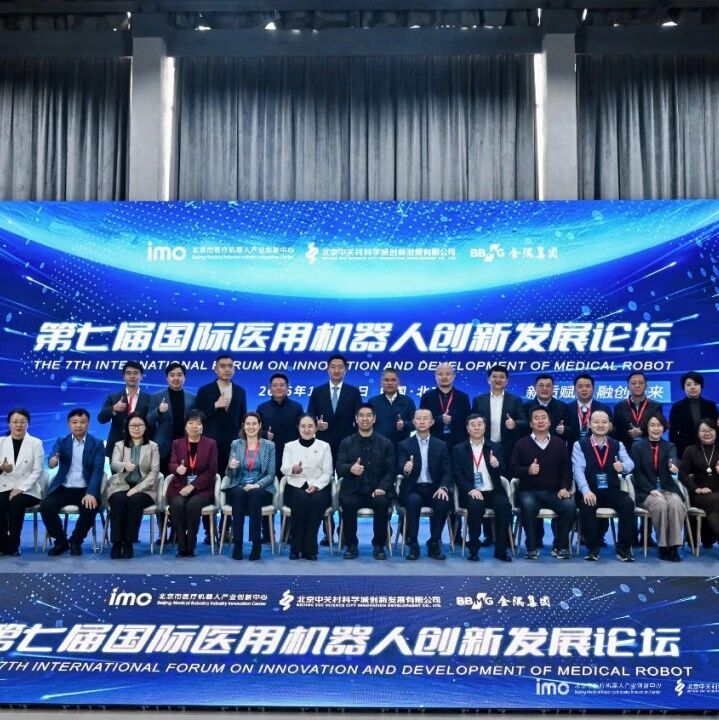
第七届国际医用机器人创新发展论坛在北京圆满举办
机器人大讲堂· 2025-12-11 09:02
Core Viewpoint - The seventh International Medical Robot Innovation Development Forum was successfully held, focusing on new opportunities and innovative breakthroughs in the medical robot industry [1] Group 1: Industry Development Insights - The Ministry of Industry and Information Technology emphasized significant progress in the domestic medical robot industry, highlighting breakthroughs in core component localization and key technology innovation [3] - Beijing has established a solid industrial foundation with over 1,000 production enterprises and a total output value exceeding 35 billion [4] - The medical robot industry is a key area of national strategy, with a focus on technological innovation and industry upgrades in the context of an aging population and the prevalence of chronic diseases [5] Group 2: Key Achievements Announced - Four major achievements were announced at the forum, covering enterprise cooperation, capital empowerment, talent cultivation, and industry research, providing multi-dimensional support for high-quality development in the medical robot sector [7] - The Beijing High-end Medical Equipment Industry Development Fund was launched to support high-end medical devices and intelligent equipment, leveraging local research and clinical resources [12] - The "Medical Equipment Industry Talent Job Capability Requirements" standard was released, filling a gap in the industry talent evaluation system [13] Group 3: Expert Discussions on Technological Trends - Experts discussed the innovative value of ophthalmic surgical robots, emphasizing human-machine collaboration to enhance precision in surgeries [18] - The construction of a precise treatment system for orthopedic robots was highlighted, focusing on minimizing surgical trauma and improving technology through collaboration with universities [21] - The importance of integrating environmental responsibility into surgical robotics was raised, advocating for sustainable medical practices [22] Group 4: Roundtable Discussions on Industry Challenges - A roundtable discussion emphasized the need for universities to focus on foundational research to address the challenges of homogenization in medical robotics [28] - Clinical application challenges were discussed, including inconsistent pricing and procurement limitations for laparoscopic robots, which hinder widespread adoption [29] - Innovative financial models, such as "rent-to-own," were proposed to alleviate procurement pressures on hospitals and facilitate product entry into clinical settings [31] Group 5: Future Outlook and Trends - Experts expressed cautious optimism for the industry by 2026, anticipating significant opportunities for companies that survive the current downturn [37] - The potential for medical device companies to expand internationally through partnerships and acquisitions was highlighted as a key trend [37] - The need for continuous efforts to align the industry with international standards and enhance competitiveness was emphasized [37]
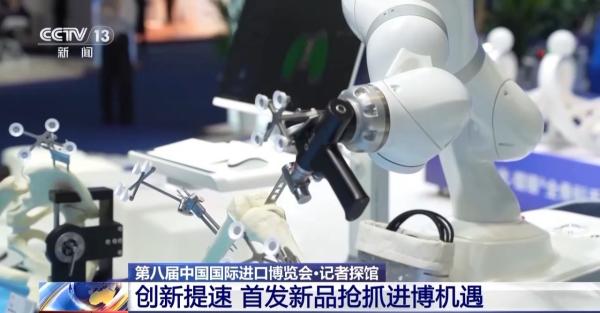
进博会新品集中发布 前沿医疗创新成果纷纷“首发首秀”
Yang Shi Xin Wen· 2025-11-07 07:35
Core Insights - The China International Import Expo (CIIE) is showcasing cutting-edge medical innovations, with a focus on new product launches in the medical device and healthcare sector [1][9]. Group 1: Medical Device Innovations - A globally launched CT device capable of completing a heart examination in one heartbeat is highlighted as the fastest CT machine [1]. - A new surgical robot featuring advanced AI algorithms has been introduced, allowing for easy switching between five surgical modes, enhancing accuracy and reducing operation time [5][3]. Group 2: Pharmaceutical Developments - Several innovative drugs, including antibiotics and treatments for rare diseases, have transitioned from presentation to market approval, marking their debut at the expo [9]. - Merck plans to introduce 40 innovative products and indications in China over the next five years, establishing a collaboration center in Beijing to enhance clinical translation of breakthroughs [11]. Group 3: Industry Perspectives - Bayer's CFO emphasizes the positive impact of China's drug priority review policy, which accelerates the approval process for new medications, boosting confidence in continued investment [13]. - Sanofi's regional manager notes that the expo facilitates open communication with government and domestic enterprises, reinforcing their commitment to growth in China [15].
第八届进博会医疗器械及医药保健展区展示前沿创新成果
Xin Lang Cai Jing· 2025-11-07 03:24
Core Insights - The eighth China International Import Expo (CIIE) showcased cutting-edge innovations from global medical enterprises, particularly in the medical devices and healthcare sector [1] - Key highlights included the debut of the world's fastest CT machine and orthopedic robots designed for spinal and trauma surgeries [1] - A number of innovative drugs that accelerated approval through the expo also gained attention, with plans to introduce 40 innovative products and indications in China over the next five years [1] - The expo serves as a platform for communication and collaboration among medical companies, reflecting China's ongoing commitment to expanding openness and development opportunities [1]
天智航
2025-11-01 12:41
Summary of the Conference Call Company Overview - The conference call was held by Jinzhihang, a company specializing in orthopedic robotics, to discuss its Q3 2025 financial performance and future strategies [1][2]. Key Financial Data - Q3 2025 revenue reached 187 million yuan, a 104% increase year-over-year [2]. - Revenue breakdown: - Orthopedic robot sales: approximately 100 million yuan (56% of total revenue) - Supporting equipment and consumables: approximately 48 million yuan - Technical services: 29 million yuan [2]. - Total sales of 28 devices in Q3, a significant increase from 5 devices sold in the same period last year [2][3]. Surgical Application and Product Updates - Approximately 35,000 surgeries were completed in the first three quarters, nearing last year's total of 39,000 [3]. - New products launched in Q1 2025 include two C-arm products, with initial sales occurring in Q4 [4]. Market Strategy and Growth Drivers - The company is focusing on expanding its commercial channels, particularly through: - Promoting a technology service purchase model, which has seen 30+ units sold, primarily in Beijing [5][6]. - Expanding financing leasing policies in several provinces to facilitate the adoption of robotic systems [6]. - International expansion strategy initiated for 2024, with initial sales in India and Mongolia, and plans to enter the European and American markets [7]. Future Outlook - Q4 2025 is expected to continue the growth trend, although the growth rate may not be as high as in previous quarters [10][12]. - The bidding process for new contracts is anticipated to improve in 2026, with a positive outlook for order confirmations [12][14]. Regulatory and Competitive Landscape - The company is awaiting the release of a pricing standard for surgical robots from the National Medical Insurance Administration, expected to be more favorable than previous proposals [18][19]. - The competitive landscape is evolving, with many orthopedic consumable manufacturers entering the robotic surgery market, which is seen as a necessary move for survival [26][27]. Strategic Partnerships and Acquisitions - The company plans to enter the consumables market through acquisitions rather than developing products in-house, focusing on innovative consumables that integrate with robotic systems [34][35]. - There is a strategic emphasis on forming partnerships with leading consumable manufacturers to enhance product offerings and market presence [30][31]. Sales Team Structure - The domestic sales team consists of approximately 50 members, organized by regional divisions, while the international team is still in the early stages of development [39][41]. - Future plans may include expanding the international sales team based on the outcomes of ongoing market assessments [43][45]. Conclusion - Jinzhihang is positioned for significant growth in the orthopedic robotics market, with a strong focus on expanding its product offerings, enhancing its market presence both domestically and internationally, and adapting to regulatory changes. The company is also preparing for increased competition as more players enter the robotic surgery space.
