MariaDB

Search documents
号称最火的开源数据库,如今 3 个月代码 0 提交,这是怎么了?
程序员的那些事· 2026-01-18 02:06
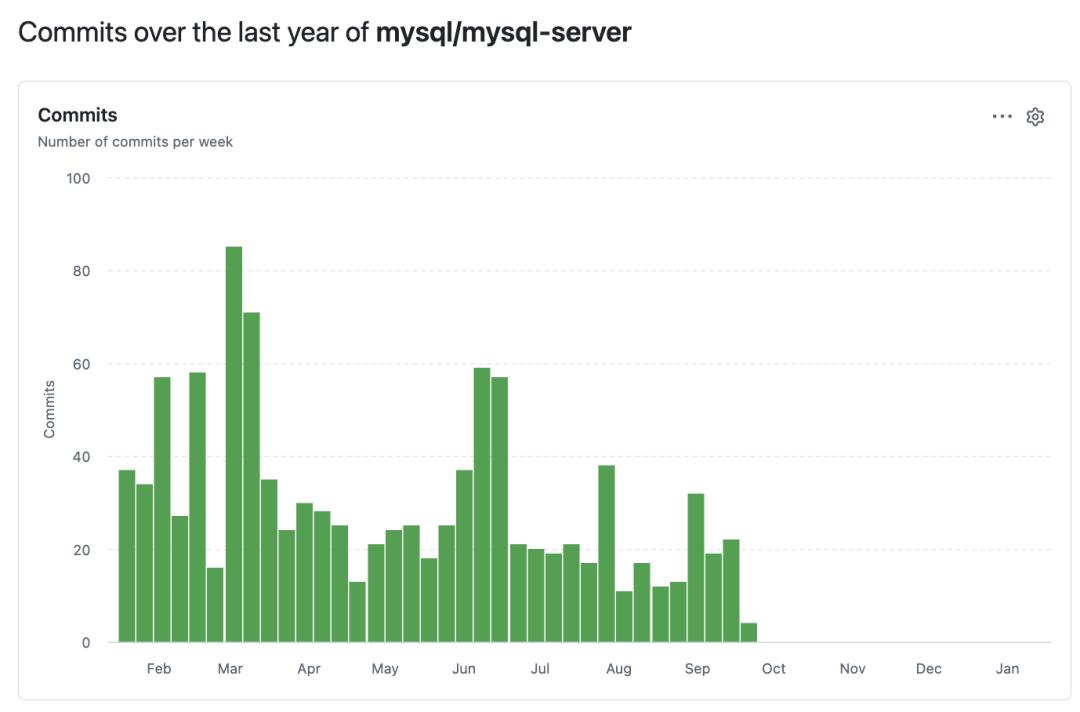
Core Viewpoint - MySQL, described as "the world's most popular open-source database," is facing an unprecedented development crisis, with a significant decline in code submissions and potential shifts in Oracle's focus towards proprietary products [1][3]. Group 1: Development Status - As of September 2025, the GitHub repository for MySQL Server has not seen any code submissions for over three months, coinciding with reports of layoffs within the MySQL team at Oracle [1]. - Since 2019, the volume of code submissions for MySQL has been declining annually, reaching its lowest point since the project's inception in 2000 in 2025 [1]. Group 2: Industry Insights - Percona's CEO stated that Oracle is "slowly killing the MySQL community edition," indicating a strategic shift towards proprietary versions like MySQL Enterprise Edition, Cluster Edition, and cloud-hosted Heatwave, which offer more direct revenue [3]. - Otto Kekäläinen, former CEO of the MariaDB Foundation, noted that MySQL is now only open-source in terms of licensing, suggesting developers should consider alternatives like MariaDB or PostgreSQL [3]. Group 3: Market Position - Despite its challenges, MySQL remains highly ranked in database popularity, holding the second position in DB Engines rankings and closely following PostgreSQL in the Stack Overflow developer survey [3]. - However, there is a consensus in the industry that if the stagnation of the open-source project continues, MySQL's market share will eventually be eroded by competitors [3].



裁员惹的祸?MySQL开源仓库被曝三个月无提交
3 6 Ke· 2026-01-14 12:17
Core Viewpoint - MySQL, owned by Oracle, has not seen any code commits in its GitHub repository for over three months, raising concerns about its future as an open-source project and its current status as a genuine open-source initiative [1][4]. Development Activity - MySQL's development activity has reached a historical low, with the total number of commits in 2025 dropping to the lowest level since the project's inception in 2000-2001, significantly below pre-2019 levels [5][9]. - The official MySQL Server repository has recorded zero commits as of now [7]. Impact of Workforce Changes - A significant workforce reduction occurred in September 2025, with approximately 70 core developers laid off, which coincides with the observed stagnation in MySQL's development [9]. - This mass layoff has been linked to Oracle's strategic shift away from the community version of MySQL, leading to concerns about the project's viability [10][11]. Strategic Shift of Oracle - Oracle is increasingly focusing on proprietary product lines, including enterprise versions and cloud services, while resources for the open-source community version are being reduced [11]. - The MySQL team has been integrated into Oracle's HeatWave business unit, indicating a shift towards cloud analytics and AI capabilities rather than traditional community version development [11]. Community Concerns - Industry experts express skepticism about Oracle's commitment to maintaining MySQL as a genuine open-source project, suggesting that it has become more of a nominal open-source initiative [12][16]. - Comparisons are drawn with MariaDB, which maintains a more active and transparent development process, highlighting the perceived decline of MySQL's community engagement [15][16]. User Experience and Technical Issues - Users have reported performance declines with newer MySQL versions, and significant bugs have persisted for extended periods, raising concerns about the software's reliability [16][17]. - The lack of substantial new releases since MySQL 8.0 in 2018 has led to dissatisfaction among users, with the next major version not expected until 2024 [17]. Future Outlook - Despite MySQL's current popularity and installation base, the stagnation of its open-source project may compel enterprises to reconsider their database choices, with a noticeable trend of users migrating to MariaDB [22]. - While MySQL is unlikely to disappear immediately, continued stagnation could lead to a decline in its usage [24].
突发!Oracle 狂砍 MySQL 核心团队,约 70 人被裁,MySQL 之父:“早有预感但还是很难过”
程序员的那些事· 2025-09-17 03:06
Core Viewpoint - Oracle is undergoing significant layoffs, particularly affecting the MySQL core development team, raising concerns about the future of MySQL and its community support [4][7]. Group 1: Layoffs and Impact - On September 3, 2025, Oracle announced layoffs affecting thousands globally, with confirmed numbers including 101 in Washington and over 250 in California [2]. - The MySQL core development team was notably impacted, with approximately 70 members laid off [4]. - Michael Widenius, the creator of MySQL, expressed his heartbreak over the layoffs, indicating a troubling direction for MySQL under Oracle's management [4]. Group 2: MySQL History and Development - MySQL, an open-source relational database management system, was launched in 1995 by MySQL AB, founded by Michael Widenius, David Axmark, and Allan Larsson [4][6]. - In the early 2000s, many emerging internet companies, including Twitter and Facebook, built their infrastructure on MySQL [5]. - MySQL AB was acquired by Sun Microsystems in 2008, which was subsequently acquired by Oracle in 2010 [6]. Group 3: Concerns Over MySQL's Future - Despite initial positive management by Oracle, there are growing concerns about its commitment to maintaining MySQL, especially as resources shift towards Heatwave, a proprietary database service [7]. - Oracle's MySQL team has been integrated into the Heatwave department, with a focus on AI, leading to speculation about the potential decline of the open-source MySQL community version [8]. - MariaDB, a fork of MySQL created by Widenius in 2009 due to concerns over Oracle's acquisition, offers a fully compatible and enhanced alternative, promising to remain open-source [8].

数据库工具哪家强?这个显眼包,一用就回不去!
菜鸟教程· 2025-07-16 02:14
Core Viewpoint - DBeaver is an open-source, cross-platform database management tool that supports nearly all mainstream databases, making it a versatile choice for database management and development needs [2][3][10]. Group 1: Product Overview - DBeaver supports a wide range of databases including MySQL, PostgreSQL, Oracle, SQL Server, SQLite, MongoDB, and many others, totaling over 80 supported databases [3][15]. - The tool is available in two versions: DBeaver Community (free) and DBeaver PRO (paid), with the PRO version offering advanced features and support for more databases [8][10]. - DBeaver runs on Windows, Linux, and macOS, providing flexibility for users across different operating systems [11]. Group 2: Features and Functionalities - The Community version includes essential features such as data editing, SQL editing, basic ER diagrams, and data import/export capabilities [9]. - The PRO version enhances security, supports more databases via ODBC, includes NoSQL database support, and offers cloud database integration [12]. - Advanced functionalities in the PRO version include a visual query builder, SQL AI assistant, performance visualization tools, and task scheduling capabilities [18][19]. Group 3: Installation and Usage - DBeaver can be easily downloaded from its official website, with installation instructions provided for various operating systems [6][20]. - Users can connect to databases through a user-friendly interface that allows for easy navigation and management of database connections [28].