Mate TV

Search documents
2026年中国AWE展观察:拥抱AI,智享生活
HTSC· 2026-03-16 07:05
证券研究报告 可选消费 2026 年中国 AWE 展观察: 拥抱 AI,智享生活 华泰研究 2026 年 3 月 15 日│中国内地 动态点评 趋势一:从"工具"到"伙伴",具身智能正重塑家电定位 以清洁电器为代表的家电,开始长出"脑子"(大模型),能理解场景与意 图;长出"感官"(视觉感知、语音交互),能感知人与环境;长出"手脚" (机械臂、仿生结构),能主动执行家庭场景中叠衣、烹饪等非结构化任务。 我们认为未来 10 年,将是机器人大规模商业化落地家庭场景的黄金时代。 石头科技旗下 G-Rover 在本次展会上首次亮相国内,产品通过搭载双机械 足实现楼梯清洁与复杂地形跨越,实现从二维地面到三维空间的清洁跨越。 科沃斯在本次展会上推出了首款搭载 OpenClaw 的家庭服务管家机器人"八 界",不仅能识别并收纳散落杂物,还能自主完成空间分区整理与物品归位。 趋势二:AI 赋能下,传统家电焕新机,智能硬件迭代加速 随着 AI 科技进阶,传统家电的产品逻辑发生转变,从过去被动接受用户指 令,到如今开始主动观察、理解并服务用户。华为旗下 Mate TV 允许用户 通过手势将手机端内容直接投放到电视端,并通过识别家 ...




彩电出货量或继续走低 Mini LED技术爆发 RGB成分水岭
Nan Fang Du Shi Bao· 2026-01-22 23:11
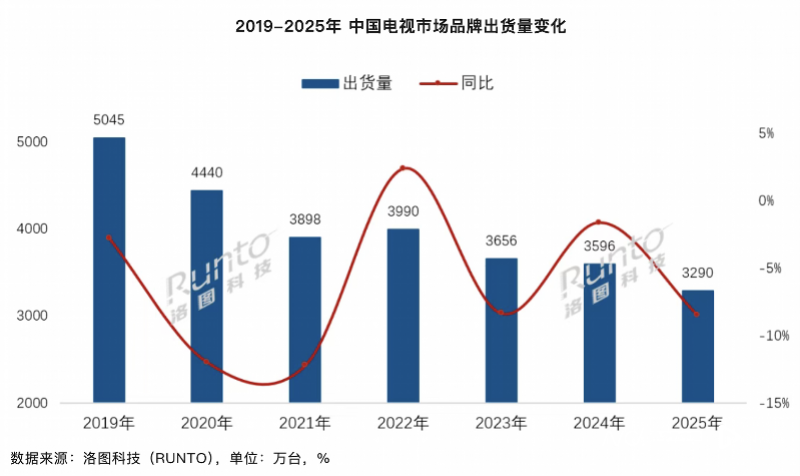
Industry Overview - The global TV industry is undergoing unprecedented adjustments, with significant market differentiation driven by large screen adoption, Mini LED technology proliferation, and AI integration [2] - Global TV shipments fell below 200 million units in 2025, marking a ten-year low, with a projected further decline of 5%-7% in 2026 [2] - China's TV market, as the largest consumer market, saw a shipment drop to 32.895 million units in 2025, a decline of 8.5%, the lowest in 16 years [2][3] Market Dynamics - The Chinese market showed a notable split in performance, with a slight increase of 1.4% in the first half of 2025 due to government subsidies, followed by a significant decline of 16.9% in the second half [2] - European markets are under pressure, with Western Europe expected to see a decline, while Eastern Europe may experience slight growth due to economic recovery [2][3] - North America remains relatively stable, supported by a solid consumer base and event marketing [2] Emerging Markets - Emerging markets in Asia-Pacific, Latin America, and the Middle East and Africa still hold growth potential, but price sensitivity may limit actual volume if prices rise due to memory cost increases [3] - The Indian market, despite strong demand, is dominated by local brands using low-price strategies, posing challenges for international brands [3] Technology Trends - Mini LED technology is expected to enter a phase of widespread adoption in 2026, with RGB-Mini LED shipments projected to exceed 300,000 units, becoming a new profit driver in the high-end market [6] - In 2025, China's Mini LED TV shipments surged by 92.8%, with a penetration rate of 28.9%, and are expected to exceed 10 million units in 2026 [6][7] Competitive Landscape - Chinese brands like Hisense and TCL are leading innovations in RGB-Mini LED and SQD-Mini LED technologies, respectively, with significant growth in global shipments [6][7] - International brands such as Samsung and Sony are entering the RGB technology space, but Chinese companies maintain advantages in technology iteration and cost control [8] - The competition is shifting from price wars to a comprehensive contest of technology, supply chain, and globalization capabilities [3][8] Consumer Trends - Large screen adoption is an irreversible trend, with 75-inch and larger TVs expected to account for 23% of the Chinese market in 2025, with further growth anticipated in 2026 [9] - AI technology is redefining the role of TVs as central to living spaces, with companies like Huawei and Skyworth investing heavily in AI capabilities for their products [9] Market Share - In 2025, the top three brands—Samsung, TCL, and Hisense—held over 43% of the global market share, with Samsung leading at 35.3 million units shipped [9] - TCL's growth of 5.4% positioned it as the most significant growing brand, while Hisense maintained a strong presence with 29.3 million units shipped [9] Strategic Partnerships - Sony and TCL have signed a memorandum of understanding for strategic cooperation in the home entertainment sector, which may impact market dynamics and competition [10]


全球黑电市场洗牌加剧,新显示技术与AI驱动新格局
Nan Fang Du Shi Bao· 2026-01-21 06:37
Core Insights - The global television industry is undergoing unprecedented adjustments in 2026, with significant market structural changes driven by large-screen demand, Mini LED technology proliferation, and AI integration [1] Group 1: Market Trends - Global television shipments fell below 200 million units in 2025, marking a ten-year low, with a projected further decline of 5%-7% in 2026 [2] - China's television market, as the largest consumer market, saw a shipment volume of 32.895 million units in 2025, down 8.5% year-on-year, the lowest since 2010 [2] - The first half of 2025 saw a slight increase of 1.4% in shipments due to government subsidies, but the second half experienced a significant decline of 16.9% due to policy effects waning and demand being pulled forward [4] Group 2: Regional Performance - The European market is under pressure, with Western Europe expected to decline, while Eastern Europe shows slight growth due to economic recovery [4] - North America remains relatively stable, supported by a solid consumer base and event marketing [4] - Emerging markets in Asia-Pacific, Latin America, and the Middle East and Africa still have growth potential, but rising memory chip prices may limit actual volume due to price sensitivity [4][5] Group 3: Technology and Innovation - Mini LED technology is expected to enter its popularization phase in 2026, with global shipments projected to exceed 300,000 units, becoming a new profit engine for the high-end market [7] - Chinese brands like Hisense and TCL are leading innovations in RGB-Mini LED and SQD-Mini LED technologies, with significant growth in shipments expected [7][8] - AI technology is redefining the role of televisions, with companies like Huawei and Skyworth investing heavily in AI capabilities to enhance user experience [12][13] Group 4: Competitive Landscape - The competition is shifting from price wars to a comprehensive comparison of technology, supply chain, and globalization capabilities [5] - In 2025, the top three brands—Samsung, TCL, and Hisense—held over 43% of the global market share, with Samsung leading at 35.3 million units shipped [13] - The partnership between Sony and TCL for future strategic cooperation in home entertainment is expected to further disrupt the market dynamics [14]
华为推出全屋智能套装售价 9999 元起
Xin Lang Cai Jing· 2025-12-22 11:24
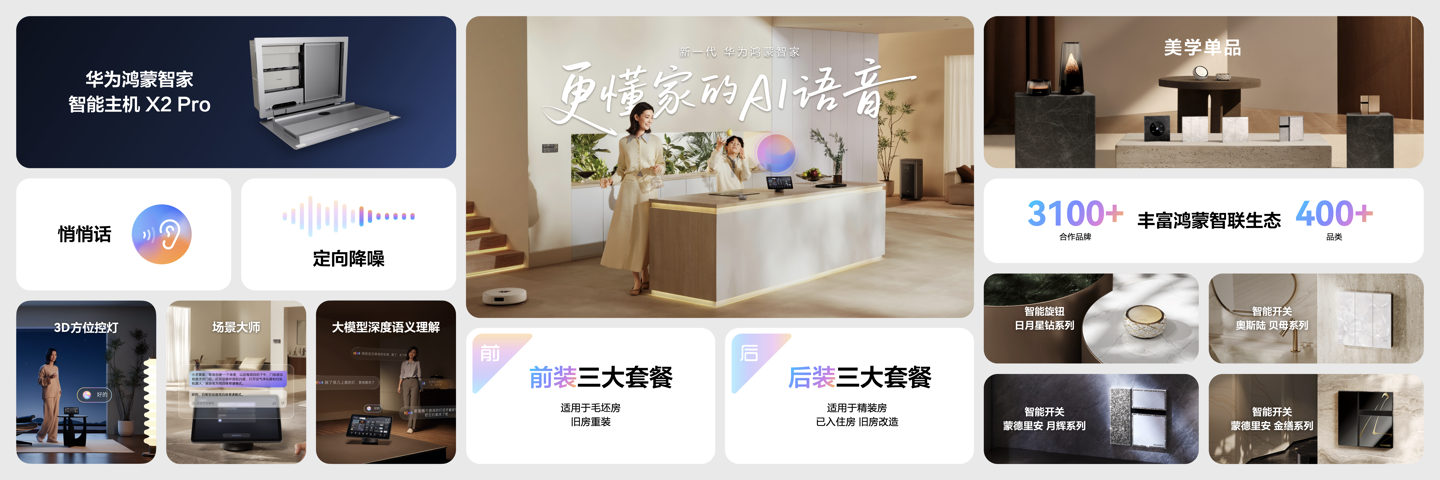
在前装市场,针对新房装修用户,华为推出了三款智装套餐:标准组合 29999 元、专业组合 59999 元和尊享组合 99999 元。 标准组合,构建完整的全屋智能基础设备,主要采用 PLC 连接技术,配备全屋 WiFi7 网络覆盖。方案支持出门灯光一键全关和客厅亮度色温、客厅和主卧 窗帘开合调节,在外可远程控制空调,一键暖房或凉房,配备华为智能门锁 2,厨房安装传感器能实时监测烟雾。用户可通过华为智慧生活 App、智慧语音 与中控屏 MINI 多种方式控制全屋设备。 IT之家 12 月 22 日消息,12 月 22 日,华为新品发布会上,华为鸿蒙智家发布多款产品及升级,推出全屋智能套装,售价 9999 元起。 华为鸿蒙智家推出的全屋智能套装套餐,分为后装套餐、前装套餐。其中后装智装套餐最低售价为 9999 元。 专业组合,在标准组合基础上,增加了餐厅、儿童房的灯光亮度色温调节以及儿童房智能窗帘,支持更多场景的光影氛围调节。通过四合一空气传感器和多 种空气设备,实现新居除醛、富氧通风、恒温恒湿多种功能,并新增支持燃气、水浸、烟雾三重监测,无感交互带来人来灯亮、起夜自动亮灯、睡眠监测和 入睡自动关灯的智慧进阶体验 ...