NASP

Search documents
Swedish Orphan Biovitrum (OTCPK:SWOB.Y) 2026 Capital Markets Day Transcript
2026-02-18 13:02
Summary of Swedish Orphan Biovitrum (Sobi) Capital Markets Day 2026 Company Overview - **Company**: Swedish Orphan Biovitrum (Sobi) - **Event**: Capital Markets Day 2026 - **Date**: February 18, 2026 - **Focus**: Progression of the company, development pipeline, and strategic outlook towards 2030 [1][2] Key Points Strategic Outlook - Sobi is transitioning from a focus on hemophilia to a more diversified portfolio, with significant growth in various therapeutic areas [4][5] - The company aims to double its size by 2030, building on a foundation of six major product launches planned by 2028 [24][43] - Sobi has achieved significant EBITDA growth and nearly doubled its business over the last five years, indicating strong operational resilience [8][9] Product Pipeline and Launches - **Current Products**: - Altuviiio (hemophilia A) - Gamifant (HLH) - Aspaveli (nephrology) - Tringalza (FCS) - **Upcoming Launches**: - NASP (uncontrolled gout) expected mid-year - Tringalza in SHDG, already launched in Germany and Austria - Posotenurad (gout) anticipated with the acquisition of Arthrosie Therapeutics [20][21][30][31] Therapeutic Areas - **Gout**: Sobi has two products in this area, with a focus on addressing high unmet medical needs [19][20] - **Sepsis**: The company is exploring interferon gamma-driven sepsis, which affects a significant patient cohort [36][37] - **Chronic Synovitis**: Sobi aims to improve joint health in hemophilia patients, addressing chronic complications through clinical trials [56][57] Market Expansion - Sobi has expanded its global footprint, now covering over 90% of the global rare disease market directly, with new organizations established in key markets like Japan, Korea, Australia, and Brazil [12][39] - The company anticipates that international business could exceed 20% of total revenue by 2030 [39] Commitment to Patients and Sustainability - Sobi ranked as the most reputable company in the rare disease space according to a survey of 518 patient organizations [47] - The company has set scientific-based targets to reduce its carbon footprint while increasing business operations [15][16] Research and Development - Sobi is currently running over 40 clinical trials globally, with a focus on regulatory approvals and scientific leadership [44][45] - The company has achieved 36 regulatory approvals in major markets over the past year, indicating strong growth potential [45][48] Financial Performance - Sobi's financial outlook remains positive, with expectations of sustained growth driven by new product launches and market expansion [3][24] Conclusion - Sobi is positioned for significant growth with a robust pipeline and strategic focus on rare diseases, aiming to double its size by 2030 while maintaining a commitment to patient care and sustainability [43][44]
Swedish Orphan Biovitrum (OTCPK:SWOB.Y) 2026 Earnings Call Presentation
2026-02-18 12:00
Sobi Capital Markets Day 2026 18 February 2026 Forward-looking statements In order to utilise the 'Safe Harbor' provisions of the United States Private Securities Litigation Reform Act of 1995, Swedish Orphan Biovitrum AB (publ) is providing the following cautionary statement. This presentation contains forward-looking statements with respect to the financial condition, results of operations and businesses of Swedish Orphan Biovitrum AB (publ), By their nature, forward-looking statements and forecasts invol ...
Swedish Orphan Biovitrum AB (publ) (SWOBY) Discusses on NASP and Uncontrolled Gout Call
Seeking Alpha· 2025-09-17 21:17
Core Insights - Sobi has received FDA acceptance for the filing package related to the NASP program for uncontrolled gout, indicating progress in their drug development efforts [1]. Group 1: Company Overview - Guido Oelkers serves as the CEO and President of Sobi, leading the discussion on the NASP program [1]. - The NASP program, formerly known as SEL-212, is a significant focus for Sobi, with key personnel involved in its development [4]. Group 2: Expert Involvement - Dr. Herbert Baraf, a Clinical Professor of Medicine and a senior clinical adviser, is participating in the discussion, bringing extensive experience from over 400 clinical trials, particularly in therapeutic gout [2][3]. - Dr. Rehan Azeem is the medical development lead for the NASP program, contributing to its research and development [4].


类脑计算,进入边缘AI
3 6 Ke· 2025-05-29 03:51
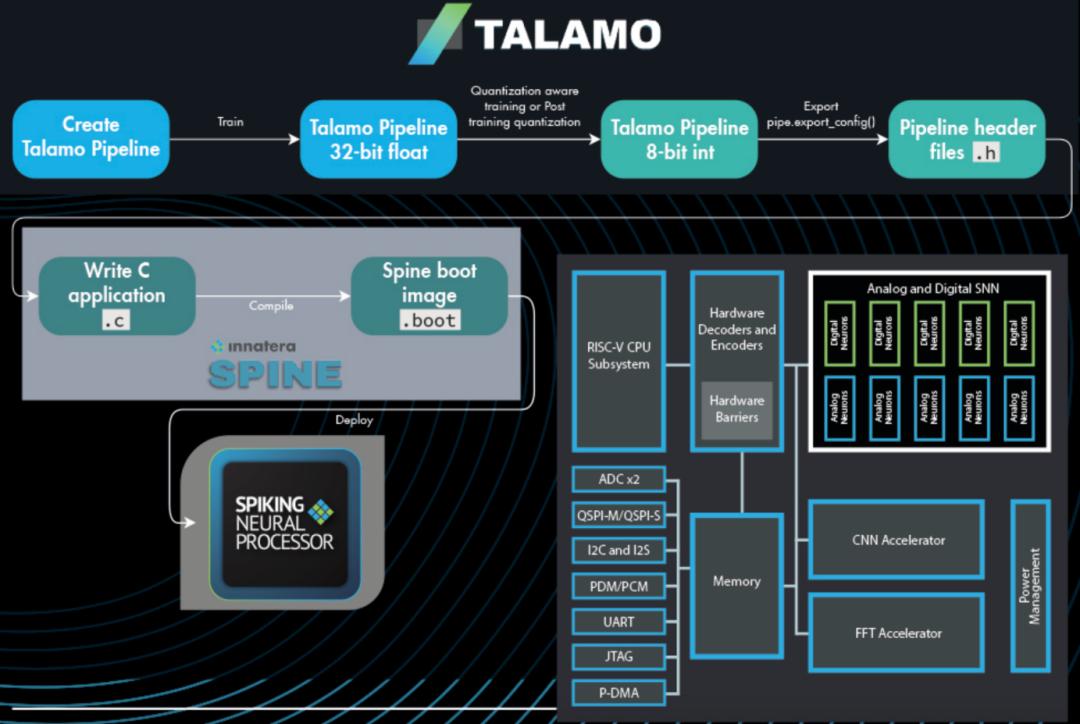
Group 1 - The traditional von Neumann architecture is facing limitations due to storage and power walls, prompting interest in neuromorphic computing as a potential solution [1] - Neuromorphic chips, which mimic human brain computation principles, are seen as a disruptive force in the edge AI industry due to their significantly lower power consumption, potentially achieving energy savings of up to 1000 times compared to traditional solutions [1] - IBM's NorthPole chip has demonstrated a fivefold increase in energy efficiency compared to Nvidia's H100 GPU, indicating the potential of neuromorphic computing in reducing power consumption [1] Group 2 - Innatera has launched its first commercial brain-like microcontroller, Pulsar, which is designed for high-efficiency edge AI inference, achieving a 100-fold reduction in latency compared to traditional AI processors [2] - Pulsar claims to have a power consumption that is 500 times lower than traditional AI processors, utilizing low-power PLL and software-controlled voltage domains to optimize energy use [2][4] - The architecture of Pulsar integrates fully programmable spiking neural networks (SNN) optimized for asynchronous and sparse data computation, supporting heterogeneous computing [2] Group 3 - Polyn Technology has successfully fabricated its first neuromorphic analog signal processing chip, NASP, which is expected to enter the market in Q2 2025 [5] - NASP operates at ultra-low power levels, with consumption below 100μW during signal inference, and can drop to 30μW in specific applications, making it suitable for power-constrained environments [6] - The NASP platform can reduce raw data volume by up to 1000 times, enhancing privacy and reducing reliance on cloud services, particularly in sensitive fields like healthcare [6] Group 4 - The SENNA chip developed by Fraunhofer IIS is designed for processing spiking neural networks (SNN) and can handle low-dimensional time series data efficiently, with a response time of just 20 nanoseconds [12][14] - SENNA's architecture allows for direct processing of spiking input and output signals, making it suitable for real-time evaluation of event-based sensor data [14] - The chip is fully programmable, allowing developers to modify SNN models and reprogram the chip post-manufacturing, enhancing its flexibility for various applications [15] Group 5 - Neuromorphic computing is characterized by its structure, which includes neuron computation, synaptic weight storage, and routing communication, primarily utilizing spiking neural networks (SNN) [17] - The technology is divided into three categories based on implementation: digital CMOS, mixed-signal CMOS, and new device-based systems like memristors, with digital CMOS being the most commercially viable [19][20] - Various companies and institutions, including Tsinghua University and Zhejiang University, are actively researching neuromorphic computing chips, focusing on edge AI applications [21] Group 6 - The edge AI landscape is being transformed by neuromorphic computing, which offers significant energy efficiency and parallel processing capabilities compared to traditional architectures [23] - Existing neuromorphic chips like Intel's Loihi and IBM's TrueNorth have shown great potential in edge AI scenarios, with commercial applications already being explored by various manufacturers [23]