
NEXO

Search documents
Hyundai Motor Group's HTWO Hydrogen Brand Debuts in Japan at H2&FC EXPO
Prnewswire· 2026-03-17 07:29
Core Insights - Hyundai Motor Group launched its dedicated hydrogen brand, HTWO, at the H2&FC EXPO in Japan, emphasizing its commitment to a sustainable hydrogen future [1][2]. Group Presentation at H2&FC EXPO - The exhibition runs from March 17 to 19, showcasing Hyundai's hydrogen leadership and featuring a comprehensive display of hydrogen technologies across the entire value chain [3]. - The all-new NEXO, Hyundai's flagship fuel cell electric vehicle (FCEV), is on display, with test drives available for registered participants [2][3]. HTWO Brand and Technologies - HTWO serves as an open platform for collaboration, integrating Hyundai's capabilities to provide end-to-end solutions in the hydrogen value chain [2]. - The brand's technologies include hydrogen refueling solutions, hydrogen trams, hydrogen burners, fuel cell electric buses and trucks, and the Automatic Charging Robot–Hydrogen (ACRH) [4]. Conference Participation - Duckwhan Kim, Vice President of Hydrogen and Fuel Cell Engineering Design Group 1, will present a lecture titled "Electrification Solution Powered by Fuel Cell Technology" on March 18 [4].


X @Santiment
Santiment· 2026-02-02 20:12
RT Santiment (@santimentfeed)🗣️ According to social data, these are the coins seeing the biggest interest Monday:🪙 Bitcoin $BTC: market behavior, investment strategies, and its role in crypto and financial markets. Reddit highlights Bitcoin's price volatility, institutional involvement, and long-term investment perspectives. Telegram texts focus on BTC-related flash financial products and trading services on wallets like Binance and MetaMask. Twitter reports significant Bitcoin acquisitions by Strategy, led ...

行业聚焦:全球储氢碳纤维复合储罐行业生产商排名及市场占有率(附TOP 3 企业介绍)
QYResearch· 2025-12-22 04:15
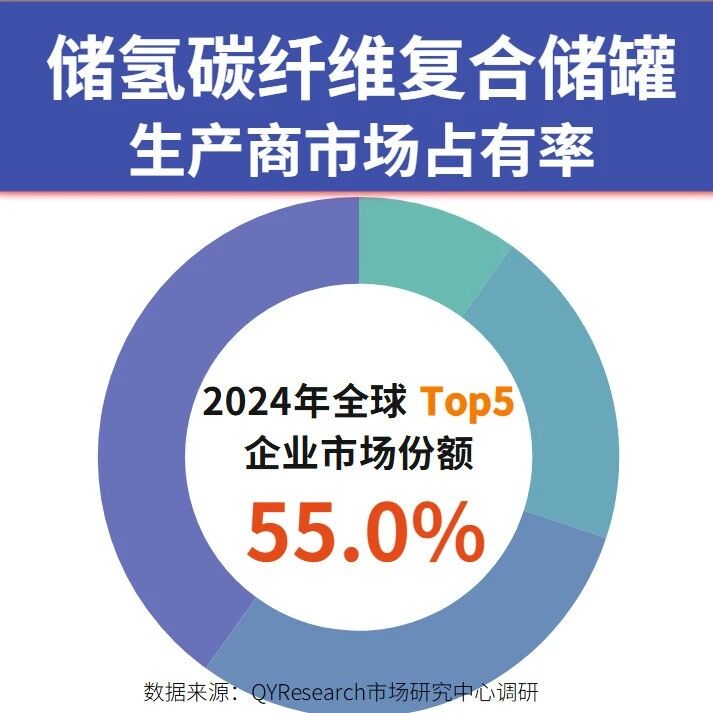
Core Viewpoint - Hydrogen storage carbon fiber composite tanks are critical equipment in the hydrogen energy industry, experiencing rapid growth amid global energy transition, with significant opportunities and challenges ahead [4][5]. Industry Development Overview - The hydrogen storage tank industry is currently dominated by Type III and Type IV tanks, primarily used in fuel cell vehicles. The industry is growing rapidly, with leading positions held by the US, Europe, Japan, and South Korea, while Chinese companies are catching up [4]. - The industry faces high technical barriers and cost pressures, with a diverse competitive landscape where international giants dominate the high-end market, and Chinese firms are gradually increasing their market share supported by government initiatives [4]. - The supply chain shows structural imbalances, particularly in high-performance carbon fiber production, which is heavily influenced by international trade policies. The manufacturing technology for hydrogen tanks is complex and requires high precision across multiple disciplines [4][9]. - Downstream applications are primarily in transportation but are expanding into fixed storage and gas distribution, with global tariff policy changes reshaping competitive dynamics and increasing uncertainty [4]. Market Demand Analysis - The demand for hydrogen storage tanks is closely linked to the sales performance of hydrogen fuel cell vehicles (FCEVs). However, the FCEV market is currently experiencing significant volatility, with global sales declining by 30.2% in 2023 and projected to drop another 21.6% in 2024 [6]. - In contrast, demand for hydrogen tanks in industrial, energy, and fixed transportation scenarios is showing a stable upward trend, indicating a shift away from reliance solely on FCEV sales [7]. Supply Chain Analysis - Key raw materials for hydrogen tanks include carbon fiber, valve components, and liner materials, with carbon fiber costs accounting for approximately 60%-70% of total production costs [9][10]. - Domestic companies in China are actively working to overcome technological barriers and accelerate the industrialization of carbon fiber to ensure supply chain security and reduce costs [10]. - The manufacturing segment is technology-intensive, with Type III and Type IV tanks being the primary products. Type IV tanks are expected to become the mainstream technology due to their advantages in lightweight and fatigue resistance [10]. Global Market Size and Company Rankings - The global hydrogen storage carbon fiber composite tank market is projected to reach $900 million by 2031, with a compound annual growth rate (CAGR) of 15.5% in the coming years [12]. - Major manufacturers in the global market include Hexagon Purus, ILJIN Hysolus, and Zhongcai Technology, with the top five companies holding approximately 55.0% of the market share [13]. - Type IV tanks currently represent about 50.2% of the market share, while commercial vehicles account for approximately 51.2% of demand [17][19].

X @Santiment
Santiment· 2025-10-09 14:30
🗣️ The top trending tokens in crypto, according to social volume, are:🪙 Binance Coin $BNB: Trending due to extensive discussions about Binance Coin (BNB) across Reddit, Telegram, and Twitter. On Reddit, conversations focus on BNB's price performance, market manipulation concerns, its centralized nature, utility in fee discounts, token burns, and comparisons with other cryptocurrencies like BTC, ETH, and SOL. Telegram highlights BNB's role in the Binance Smart Chain ecosystem, decentralized finance, trading ...
未泰铂业全球市场执行总裁:建设可盈利的氢能生态系统
2 1 Shi Ji Jing Ji Bao Dao· 2025-06-27 10:44
Group 1 - The core viewpoint of the articles highlights the strategic opportunity for platinum group metals (PGMs) in the accelerating global green energy transition, particularly in the hydrogen energy industry [1][2] - Valterra Platinum, formerly part of Anglo American, has been established as an independent company focusing solely on PGMs, allowing for more agile decision-making and a concentrated strategic focus [1] - The company aims to leverage nearly a century of expertise and resource advantages from Anglo American to provide high-quality products to clients worldwide [1] Group 2 - PGMs are critical materials in the hydrogen energy supply chain, widely used in fuel cells and electrolysis for hydrogen production, with China identified as a key strategic market due to its large automotive consumption [2] - The company recognizes the rapid maturation of China's fuel cell industry, noting the shift from reliance on imported components to domestic alternatives [2] - Challenges such as infrastructure and terminal product development are seen as barriers to the large-scale implementation of hydrogen transportation in China [2] Group 3 - The company plans to continue its global strategy around the hydrogen ecosystem, focusing on collaboration across the supply chain to create a closed-loop system of technology, capital, and market [3] - It aims to validate business models and accumulate industry experience in the Chinese market, which is driven by both policy and demand [3] - The establishment of a local team in Shanghai is part of the strategy to support the industrialization of PGMs in fuel cells and green hydrogen production [2][3]