
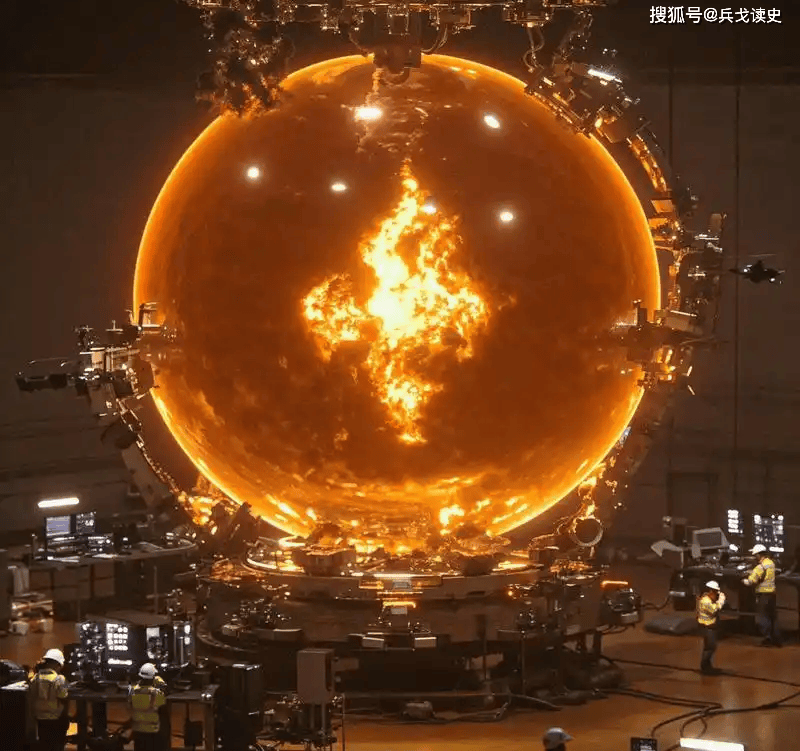
NIF装置

Search documents
够中国用2万年!我国攻克世界级难题,抢先美国打造“无限能源”。
Sou Hu Cai Jing· 2026-02-08 07:16
Core Insights - The article discusses China's advancements in controlled nuclear fusion, highlighting significant breakthroughs in technology and energy production [3][11]. Group 1: Technological Breakthroughs - China has achieved a world record with the EAST device, reaching a temperature of 100 million degrees Celsius and maintaining a stable energy gain of over 1.2 times the input energy for 1066 seconds [3]. - The country has developed a fully autonomous supply chain for controlled nuclear fusion, producing superconducting magnets with a magnetic field strength of 21.7 Tesla, surpassing similar products from the U.S. [5]. - The domestic production rate of core components has exceeded 96%, addressing previous reliance on imports due to international restrictions [5]. Group 2: Resource Availability - Deuterium, a key fuel for controlled nuclear fusion, is abundant in seawater, with each liter containing 0.03 grams, providing enough resources for China to sustain energy production for 20,000 years [7]. - The low extraction cost of deuterium positions China to achieve energy self-sufficiency once controlled nuclear fusion is commercialized [7]. Group 3: Global Positioning - China is leading global research in controlled nuclear fusion, with projects like the "Chinese Fusion Engineering Test Reactor" (CFETR) aiming for grid-connected power generation by 2035 [9]. - The U.S. is facing challenges in its fusion efforts due to fragmented technology and reliance on private capital, making it difficult to catch up with China's advancements [9]. Group 4: Implications for Energy Landscape - The breakthroughs in controlled nuclear fusion technology could transform China's energy landscape, potentially eliminating dependence on fossil fuels and enabling zero-carbon energy solutions [11]. - The commitment and resilience of Chinese researchers have been pivotal in overcoming significant challenges in nuclear fusion research, positioning the country as a key player in the future energy market [11].

可控核聚变新阶段,迈向终极能源第一步
Soochow Securities· 2025-06-13 07:48
Investment Rating - The report suggests a positive investment outlook for the controlled nuclear fusion industry, driven by policy and capital support, with significant potential for growth and commercialization in the coming years [4][30]. Core Insights - Controlled nuclear fusion is viewed as the ultimate energy solution due to its high energy density, abundant fuel supply, and superior safety [4][9]. - The current phase of controlled nuclear fusion is characterized by a dual drive of policy and capital, with numerous projects underway globally, particularly in China and the US, aiming for commercial viability by the 2030s to 2040s [4][30]. - Various technological pathways are emerging, including magnetic confinement (tokamak), inertial confinement (NIF), and magnetic inertial confinement, with significant advancements expected in the next few years [4][30]. Summary by Sections Part 1: What is Controlled Nuclear Fusion? - Controlled nuclear fusion involves the merging of lighter atomic nuclei to form a heavier nucleus, releasing significant energy, primarily using deuterium and tritium as fuel [9][10]. Part 2: Why is Now a New Phase for Controlled Nuclear Fusion? - The industry is experiencing a surge in support from governments worldwide, with China implementing multiple policies to foster development, including financial backing and international collaboration [30][33]. - The number of active fusion companies has increased significantly, with around 50 globally, 80% of which are private enterprises, indicating a robust investment landscape [40][41]. Part 3: Device Architecture Breakdown and Industry Cost Map - The report outlines the cost structure of fusion devices, with initial experimental tokamak investments around 15 billion yuan, and highlights the significant capital required for development [4][30]. Part 4: Competitive Cost of Fusion Power - The report estimates the cost of electricity from fusion devices, with projected costs of 0.31 and 0.27 yuan/kWh for low-temperature superconducting and linear magnetic inertial fusion devices, respectively, indicating competitive pricing compared to traditional energy sources [4][30]. Part 5: Investment Recommendations - The report recommends focusing on key suppliers in the fusion supply chain, including companies like Western Superconducting, Lianchuang Optoelectronics, and Antai Technology, as they are positioned to benefit from the anticipated growth in the fusion sector [4][30].


