
NeuroWorm(神经蠕虫)

Search documents
用一根 0.000001 毫米的针穿过大脑,会发生什么?
Xin Lang Cai Jing· 2026-01-10 14:22
(来源:科普中国) 转自:科普中国 - J D o l l 科科,还是太年轻~ 就让我来告诉你 00 U 为啥 根0.000001毫米的针穿过大脑 基本啥事没有? 首先 这根针实在是太太太细了 0.000001毫米 也就是1纳米 要知道 人的头发丝直径 大约在 30000纳米到100000纳米之间 看我用这根磨了七七四十九天 只有0.000001毫米粗的针 取你鸽命! plythirly http://ww B hunty winning my mill 走你! 刺! " " (11) 今天的风儿甚是喧嚣啊 ♪ U 1 � 3 怎么可能? ! 居然一点事都没有? ! ULTIFICA T 咦? 人呢? 日 1 ? U ८८ 也就是说 几万根针排成排 才有一根头发粗 这么细的针你能手搓出来 确实有点实力 那他是怎么捏住的? 剧情需要 不要在意这些细节 这么细的针扎进大脑里 也掀不起什么风浪来 人的神经元胞体 直径从5000到100000纳米不等 就连细胞膜的厚度都有5纳米 这根针扎进去再扎出来 对细胞来说也不过是在挠痒痒 刚是不是有什么东西 叮了我一下? 神经细胞 其次 大脑里其实有不少空腔 你可能以为大脑非常 ...



脑机接口新突破!科学家研发“动态电极”,可在颅内“游走”
Nan Fang Du Shi Bao· 2025-09-20 12:58
Core Viewpoint - The research team from Shenzhen Institute of Advanced Technology has developed a new type of neural electrode called NeuroWorm, which represents a paradigm shift in brain-machine interface technology by introducing a "dynamic electrode" that can move and adapt within biological tissues, overcoming the limitations of traditional static electrodes [1][5][10]. Group 1: Research and Development - The NeuroWorm is a soft, stretchable neural fiber electrode with a diameter of approximately 196 micrometers, featuring up to 60 independent electrode channels along its length [6][9]. - The development process took over five years and involved collaboration among multiple research teams, including contributions from academicians and researchers from various institutions [4][10]. Group 2: Technical Innovations - The electrode incorporates a small magnetic head at one end, allowing it to autonomously navigate within the body using a high-precision magnetic control system and real-time imaging technology [6][10]. - The research team successfully demonstrated the long-term stability of the NeuroWorm in the muscle of rats for over 43 weeks, showcasing its potential for dynamic monitoring and control [10]. Group 3: Applications and Implications - The NeuroWorm's applications extend beyond brain interfaces to include long-term implantation and stable operation in peripheral muscles, addressing the challenges posed by muscle movement and deformation [9][10]. - This innovation opens new possibilities for exoskeleton control, rehabilitation assistance, and human-machine collaboration in everyday environments [9][10]. Group 4: Industry Impact - The breakthrough in dynamic electrode technology signifies a major advancement in the field of bioelectronics, moving from passive fixed implants to actively controlled, intelligent responses that can work in tandem with biological tissues [10]. - The integration of AI, materials science, electronic engineering, and neuroscience is essential for the future development of brain-machine interface technologies, highlighting the need for interdisciplinary collaboration [10].
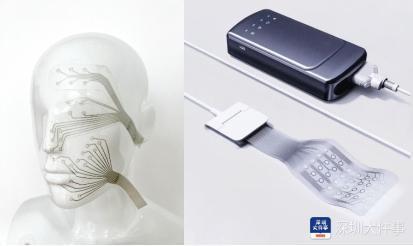
技术与政策助力传感器行业加速发展
Zheng Quan Ri Bao· 2025-09-19 16:07
Group 1: Industry Overview - The global sensor industry market size is projected to grow from 3.7 trillion yuan in 2020 to 5.5 trillion yuan in 2024, with a compound annual growth rate (CAGR) of 10.1% [2] - China's sensor industry market size is expected to increase from 0.8 trillion yuan in 2020 to 1.3 trillion yuan in 2024, achieving a CAGR of 13.3% [2] - The rise of artificial intelligence and robotics has injected strong momentum into China's sensor industry, particularly in the robotics sector where sensor performance is crucial for interaction precision and operational capability [2] Group 2: Technological Advancements - The development of NeuroWorm, a flexible and stretchable neural electrode, represents a significant breakthrough in bioelectronics, enabling active control and intelligent response in neural interfaces [1] - Future trends in the sensor industry include miniaturization, intelligence, and integration, with applications expanding into smart healthcare, autonomous driving, and robotic interaction [4] Group 3: Market Dynamics - Recent data indicates that 35 sensor-related listed companies have undergone institutional research in the past month, highlighting the market's focus on application implementation, mass production progress, and order status [5] - Companies like Zhejiang Fulai New Materials and Xiamen Guangpu Electronics are actively engaging in the development and application of flexible sensors in robotics, indicating a growing interest in this segment [5][6] Group 4: Policy and Collaboration - The establishment of the "Optics Valley Sensor Industry Innovation Alliance" aims to create a globally influential smart sensor industry hub by 2030, reflecting local government support for sensor technology development [3] - Policies from the Ministry of Industry and Information Technology and other agencies are promoting the application of smart sensors and digital transformation in various industries [2]