
PBAT产品

Search documents
彤程新材冲击港股IPO,传统业务已现疲态
Ge Long Hui A P P· 2026-02-25 07:58
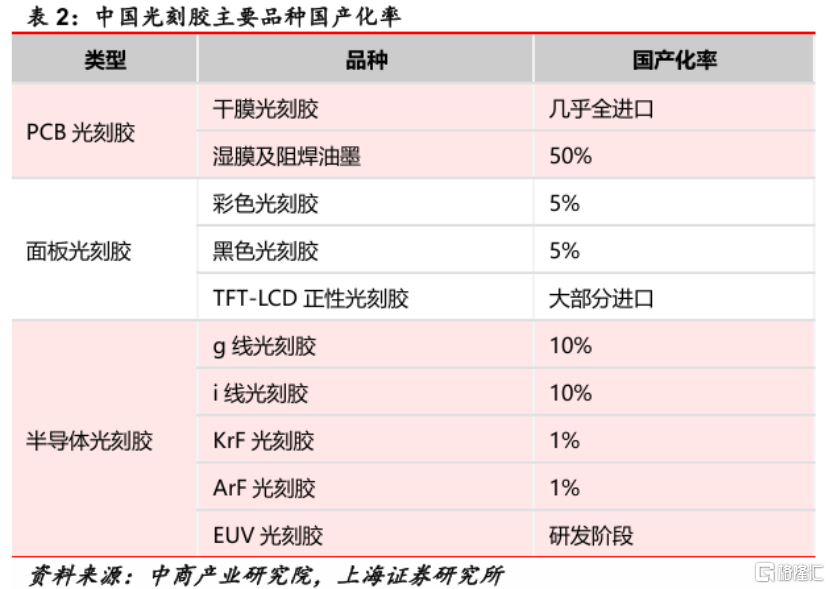
Group 1 - The domestic substitution of photoresists has become a key focus in the market, with China having a low domestic production rate and high-end technology being monopolized by Japan and the US [1] - In China's photoresist production, PCB photoresists account for 94%, panel photoresists for 3%, and semiconductor photoresists for only 2% [1] - Tongcheng New Materials has recently applied for a listing on the Hong Kong Stock Exchange, with its stock price at 58.91 yuan per share and a market capitalization of 36.29 billion yuan as of February 13, 2026 [3] Group 2 - Tongcheng New Materials was founded in August 1999 and has evolved from international trade in tire chemical materials to producing electronic chemicals and biodegradable materials [8] - The company has three main business segments: electronic materials, tire rubber additives, and fully biodegradable materials [10][12] - The revenue from the tire rubber additives segment has shown signs of stagnation, while the electronic materials segment is becoming the core growth driver due to increasing demand for semiconductor and display panel photoresists [13][17] Group 3 - The company's revenue for 2023, 2024, and the first nine months of 2025 was 2.937 billion yuan, 3.263 billion yuan, and 2.518 billion yuan, respectively, with net profits of 404 million yuan, 534 million yuan, and 522 million yuan [14] - The electronic materials segment's revenue share increased from 19.1% in 2023 to 27.8% in the first nine months of 2025 [17] - The company faces pressure from accounts receivable, with trade receivables and notes amounting to approximately 1.134 billion yuan as of September 2025 [19] Group 4 - The semiconductor photoresist market in China is projected to grow significantly, with a market size of approximately 1.3 trillion yuan in 2024 [23] - Tongcheng New Materials ranked seventh in semiconductor photoresist sales in China, with a sales amount of 290 million yuan in the first nine months of 2025 [26] - The company is the largest producer of phenolic resin rubber additives globally, with a market share in the tire rubber additives segment [32] Group 5 - The traditional tire rubber additives business is heavily reliant on the automotive industry's growth, which is showing signs of fatigue, while the company aims to leverage the growth in electronic materials for future expansion [34]


彤程新材,递交IPO招股书,拟赴香港上市,海通国际独家保荐
Xin Lang Cai Jing· 2026-02-09 10:20
Core Viewpoint - Red Avenue New Materials Group Co., Ltd. (彤程新材) has submitted its IPO application to the Hong Kong Stock Exchange, aiming for a listing on the main board [1][16]. Company Overview - Established in 1999, Red Avenue New Materials is a leading comprehensive new materials service provider in China, primarily engaged in the R&D, production, marketing, sales, and distribution of new chemical materials [3][18]. - The company operates in three main segments: electronic materials, tire rubber additives and other chemical products, and fully biodegradable materials [3][18]. Business Segments Electronic Materials - The product offerings include semiconductor materials (such as photoresists, CMP polishing pads, high-purity solvents, and EBR) and display panel materials (including photoresists for display panels, organic insulating films, and luminescent materials) [4][19]. - Red Avenue ranked first among Chinese suppliers in sales of semiconductor photoresists and TFT array photoresists in the Chinese market for the first nine months of 2025 [4][19]. Tire Rubber Additives and Other Chemical Products - Key products include rubber resins and additives, such as phenolic resins and PTBP, used in the production of automotive tires and other rubber products to enhance various performance characteristics [5][20]. - The company has established ongoing business relationships with many well-known domestic and international tire manufacturers, covering the top 20 global tire manufacturers, which collectively account for over 70% of the global tire market share [5][20]. - Red Avenue ranked first in sales of phenolic resin rubber additives in both the global and Chinese markets for the first nine months of 2025 [5][20]. Fully Biodegradable Materials - The main products include PBAT materials used for packaging and agricultural films, which have received food safety certifications from various regulatory bodies [6][21]. - These materials exhibit excellent barrier properties and transparency, making them an effective alternative to traditional polyethylene (PE) films [6][21]. Financial Performance - For the fiscal years 2023, 2024, and the first nine months of 2025, Red Avenue reported revenues of RMB 2.937 billion, RMB 3.263 billion, and RMB 2.517 billion, respectively [12][28]. - Corresponding net profits for the same periods were RMB 404 million, RMB 534 million, and RMB 522 million [12][28]. Shareholding Structure - Prior to the Hong Kong listing, the major shareholder is Mr. Zhang Qingsen, holding 45.27% of the shares, while Mr. Chen Junling holds 17.36% [8][24]. - The shareholding structure also includes Ms. Zhang Ning with 0.14%, and Red Avenue Investment, which is directly or indirectly owned by Ms. Zhang Ning, holding 47.81% [10][25]. Board of Directors - The board consists of 9 members, including 5 executive directors and 3 independent non-executive directors [12][27]. - Key executives include Ms. Zhang Ning (Chairman), Mr. Ding Lin (Vice Chairman and President), and Mr. Yu Yaoming (Vice President and CFO) [12][27].
新股消息 | 彤程新材递表港交所 2025年前九个月销售额于中国半导体光刻胶市场居中国供应商首位
智通财经网· 2026-02-08 13:26
Company Overview - Tongcheng New Materials Group Co., Ltd. is a leading comprehensive new materials service provider in China, focusing on advanced chemical products. The company is engaged in the research, production, marketing, sales, and distribution of new chemical materials [2][3] - The main business segments include (i) electronic materials, (ii) tire rubber additives and other chemical products, and (iii) fully biodegradable materials [2][3] Business Segments - The electronic materials segment includes semiconductor materials such as photoresists, CMP polishing pads, high-purity solvents, and EBR, primarily used in semiconductor and display panel production [3] - The tire rubber additives and other chemical products segment includes rubber resins and additives, such as phenolic resins and PTBP, used in the production of automotive tires and other rubber products to optimize performance [3] - The fully biodegradable materials segment focuses on PBAT products used in packaging materials and agricultural films [3] Financial Performance - Revenue for the fiscal years 2023 and 2024 is approximately RMB 2.937 billion and RMB 3.263 billion, respectively. For the first nine months of 2024 and 2025, revenue is approximately RMB 2.420 billion and RMB 2.517 billion, respectively [4][5] - Profit for the fiscal years 2023 and 2024 is approximately RMB 404 million and RMB 534 million, respectively. For the first nine months of 2024 and 2025, profit is approximately RMB 467 million and RMB 522 million, respectively [4][5] Market Position - In the electronic materials sector, the company ranks first among Chinese suppliers in the semiconductor photoresist market and the TFT array photoresist market for the first nine months of 2025 [3] - In the tire rubber additives segment, the company ranks first in both the global and Chinese markets for phenolic resin rubber additives sales for the first nine months of 2025 [3] Industry Overview - The semiconductor photoresist market in China is expected to grow significantly, with ArF photoresist sales projected to increase from RMB 1 billion in 2020 to RMB 2.6 billion in 2024, representing a compound annual growth rate (CAGR) of 26.6% [6][7] - The CMP polishing pad market is also expected to grow, with sales projected to rise from RMB 1 billion in 2020 to RMB 2.3 billion in 2024, reflecting a CAGR of 22.8% [12] - The rubber additives market in China is projected to experience slight fluctuations, with total output expected to grow from RMB 20.2 billion in 2020 to RMB 21.5 billion in 2024, with a CAGR of 1.5% [13][14]
纸浆模塑行业专题报告:下游需求高景气,中国企业引领全球扩张
GUOTAI HAITONG SECURITIES· 2026-02-06 13:24
Investment Rating - The report does not explicitly state an investment rating for the industry Core Insights - The demand for pulp molding products is primarily driven by the need to replace rigid, cushioning, and breathable products such as plates, food containers, and egg trays, with limitations in producing hollow, transparent, and refined products like straws and films compared to PLA, which offers better thermoplasticity, transparency, and ductility [3] - The U.S. remains the largest market for China's pulp molding exports, accounting for 41.3% of the total export value, indicating strong domestic demand [8] - The growth in pulp molding exports to the U.S. post-2020 is attributed to policy-driven demand, consumer preferences, and improvements in supply-side technology and processes [8] Summary by Sections Pulp Molding vs. PLA Applications - Pulp molding is suitable for making rigid containers that can hold food, while PLA excels in producing thin-walled, flexible dining accessories [7] - Pulp molding products are more environmentally friendly and have lower degradation difficulty compared to PLA, which requires specific conditions for composting [19] - Pulp molding products are generally more cost-competitive than PLA, with lower raw material costs leading to higher profit margins for manufacturers [23] Market Trends and Policies - The U.S. has implemented stricter plastic regulations since 2020, promoting the use of pulp molding products [14][16] - The introduction of Extended Producer Responsibility (EPR) in various U.S. states places the onus of waste management on producers, further encouraging the shift towards sustainable materials [16] - In contrast, China's plastic policies are less stringent, focusing more on promotion rather than strict regulations [16] Production Capacity and Growth - By 2025, China's pulp molding production capacity is expected to exceed 2.5 million tons, representing 56.8% of global capacity, with a significant increase in production rates [51][56] - The production process has evolved from dry pressing to include semi-dry and direct pressing technologies, enhancing efficiency and reducing energy consumption [39][40] Competitive Landscape - U.S. companies focused on pulp molding are facing challenges due to high production costs, leading to exits from the market by several firms [58] - Footprint, a leading pulp molding company, faced significant financial losses, leading to its failed IPO attempt, highlighting the financial pressures within the industry [76]
