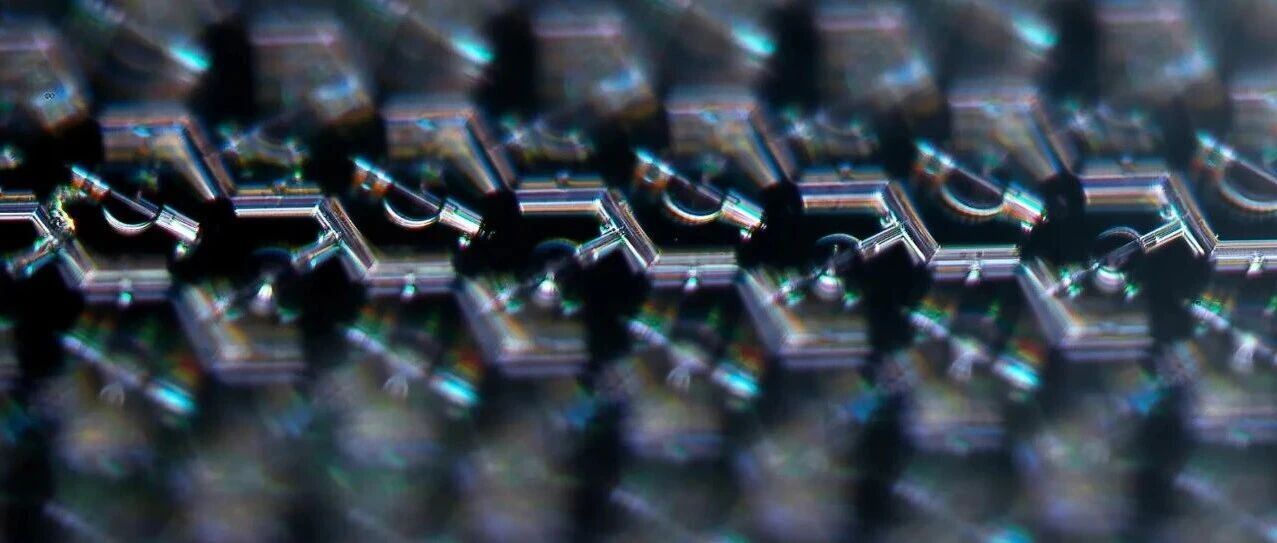
PRIMA视网膜植入系统

Search documents
未来产业周报第12期(2026/3/1-2026/3/7):未来产业风险分担机制确立,5G-A与卫星组网加速共筑6G底座-20260309
Shenwan Hongyuan Securities· 2026-03-09 06:46
Policy Dynamics - The 2026 government work report emphasizes the establishment of a future industry risk-sharing mechanism, aiming to support the development of quantum technology, future energy, embodied intelligence, brain-computer interfaces, and 6G [5][6] - The report indicates a shift towards a collaborative model where state-owned enterprises lead and social capital follows, with national funds directly covering initial R&D losses [5][6] Quantum Technology - Huawei launched the "Galaxy AI Network Flux Integration Solution" at the 2026 World Mobile Communication Conference, significantly reducing the deployment costs and barriers for quantum encryption technology [7][8] - French quantum computing company Pasqal is set to go public via SPAC, with a valuation of $2 billion, showcasing the commercial competitiveness of the neutral atom approach [9][10] - A Chinese research team achieved breakthroughs in solid-state quantum light sources, developing a high-efficiency dual-photon emitter, which aids in the domestic production of optical quantum computers [11] Hydrogen Energy and Nuclear Fusion - The Baowu Clean Energy (Yangjiang) green hydrogen industrial park has officially launched, exploring the direct hydrogen production model from offshore wind power, with a total investment of 11 billion yuan [12][13] - The "14th Five-Year Plan" outlines a trillion-level future industry layout, emphasizing nuclear fusion and green hydrogen alongside major energy projects [14] Brain-Computer Interfaces - Science Corporation has accelerated the commercialization of its PRIMA retinal implant system, raising $230 million in Series C funding to help restore vision for patients with macular degeneration [15][16] Embodied Intelligence - Honor has released its first humanoid robot and "robot phone," which features innovative design and capabilities for physical perception and execution [19] 6G and Commercial Aerospace - The global communication industry is transitioning from 5G-A to 6G, with Huawei and ZTE promoting the large-scale commercial use of the U6GHz frequency band [20][21] - SpaceX plans to launch 1,200 second-generation "Starlink" satellites by the end of 2027, aiming for global seamless coverage, which aligns with the 6G vision of comprehensive connectivity [27][28]
未来产业周报第12期:未来产业风险分担机制确立,5G-A与卫星组网加速共筑6G底座-20260309
Shenwan Hongyuan Securities· 2026-03-09 03:49
Policy Dynamics - The 2026 government work report emphasizes the establishment of a risk-sharing mechanism for future industries, particularly focusing on quantum technology, future energy, embodied intelligence, brain-computer interfaces, and 6G [5][6] - The report indicates a shift towards a collaborative model where state-owned enterprises lead and social capital follows, with national funds covering initial R&D losses [5] Quantum Technology - Huawei launched the "Galaxy AI Network Flux Integration Solution" at the 2026 World Mobile Communication Conference, significantly lowering the deployment costs and barriers for quantum encryption technology [7][9] - French quantum computing company Pasqal plans to go public via SPAC on NASDAQ, with a valuation of $2 billion, showcasing the commercial competitiveness of the neutral atom approach [10][11] - A Chinese research team achieved breakthroughs in solid-state quantum light sources, developing a high-efficiency dual-photon emitter, which aids in the domestic production of quantum computers [12] Hydrogen and Nuclear Fusion - The Baowu Clean Energy (Yangjiang) green hydrogen industrial park has officially launched, exploring the direct hydrogen production model from offshore wind power with a total investment of 11 billion yuan [14][15] - The "14th Five-Year Plan" outlines a trillion-level future industry layout, emphasizing nuclear fusion and green hydrogen alongside major energy projects [16] Brain-Computer Interfaces - Science Corporation has accelerated the commercialization of its PRIMA retinal implant system, completing a $230 million Series C funding round to enhance production capacity and develop new technologies [18][19] Embodied Intelligence - Honor has released its first humanoid robot and "robot phone," which features innovative design and capabilities for physical perception and execution [21][22] 6G and Commercial Space - The global communication industry is transitioning from 5G-A to 6G, with companies like Huawei and ZTE promoting the commercial use of the U6GHz frequency band [23][26] - SpaceX plans to launch 1,200 second-generation "Starlink" satellites by the end of 2027, aiming for global seamless coverage, which aligns with the 6G vision of comprehensive connectivity [30][31] Future Industry Catalysts - A table summarizing key catalytic events for six future industries in 2026 is provided, highlighting important milestones and conferences [33]

16亿C轮!脑机接口赛道再现大额融资
思宇MedTech· 2026-03-07 01:10
Core Insights - Science Corporation, a U.S. neurotechnology company, completed a $230 million Series C funding round, bringing its total funding to nearly $490 million since its establishment in 2021 [2] - The company focuses on a visual restoration implant device rather than a traditional brain-computer interface (BCI), positioning itself to potentially be one of the first BCI companies to achieve commercialization [2] - This funding indicates a shift in investor interest towards commercially viable applications within the neurotechnology sector [2] Company Overview - Founded in 2021 and headquartered in Alameda, California, Science Corp was co-founded by Max Hodak, a notable figure from Neuralink [3] - The company acquired key technology through the purchase of assets from French visual neurointerface company Pixium Vision, gaining the PRIMA retinal implant system [3] Technology and Product Details - The PRIMA system consists of three components: a camera that captures images, a microchip implanted under the retina that stimulates retinal nerve signals, and a processing system [4][6] - This system operates at the retinal level rather than directly in the brain, which may facilitate regulatory approval and enhance safety [5] - The PRIMA system has received FDA Breakthrough Device designation and is pursuing CE certification in Europe [5] Market Trends - The BCI industry has seen a notable increase in funding over the past two years, with a trend shifting from conceptual BCI to clinically viable products [17] - Science Corp's funding will primarily support the commercialization of the PRIMA system and the development of its next-generation Biohybrid neural interface technology [18] - Other companies in the sector, such as Neuralink and Paradromics, have also secured significant funding, indicating a growing interest in neurotechnology [20] Implications for the Chinese Market - The BCI sector in China is rapidly developing, with several companies emerging in areas like brain signal acquisition and neuroregulation [22][23] - However, most Chinese BCI companies are still in the research or early clinical stages, with few products ready for large-scale medical application [24] - Science Corp's approach of targeting specific diseases rather than pursuing a general BCI could serve as a valuable model for Chinese companies [25]