
PU

Search documents
油价涨了,冲锋衣要危险了
36氪· 2026-03-26 04:35
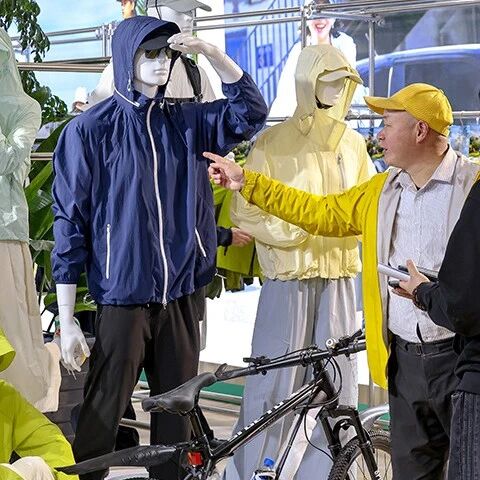
Core Viewpoint - The article discusses the impact of rising oil prices on the cost of various consumer goods, particularly focusing on the relationship between oil prices and the price of clothing items like jackets, highlighting that the increase in oil prices can lead to higher production costs for synthetic fibers used in these garments [5][63]. Group 1: Oil Price Impact on Consumer Goods - The recent conflict in the Middle East has led to a significant increase in oil prices, which in turn raises the costs of imports and fuel in China [5][7]. - The article draws parallels between the price of pork affecting the cost of down jackets and the rising oil prices potentially increasing the price of jackets [9][11]. - The relationship between oil prices and clothing costs is attributed to the reliance on synthetic fibers, which are derived from petroleum [20][52]. Group 2: Synthetic Fibers and Their Importance - Synthetic fibers account for nearly 62% of global fiber consumption, with polyester contributing over 52% of that figure [23][24]. - The article emphasizes that synthetic fibers, particularly those derived from oil, are widely used in the textile industry due to their low cost and high durability [22][28]. - The main materials used in jackets, such as polyester and nylon, are heavily reliant on oil, making them sensitive to fluctuations in oil prices [31][45]. Group 3: Market Dynamics and Brand Responses - The rising costs of raw materials are expected to be passed down to consumers, although this process may not be immediate due to existing inventory [54][70]. - Brands with lower profit margins, particularly mid-tier and smaller brands, may face more significant challenges in absorbing these costs compared to high-end brands [57][60]. - There is speculation that if raw material prices continue to rise, prices for new collections in the fall/winter of 2026 may increase [61][62].

明新旭腾20251030
2025-10-30 15:21
Summary of Mingxin Xuteng Conference Call Company Overview - **Company**: Mingxin Xuteng - **Industry**: Synthetic leather and advanced materials Key Points Financial Performance - **September Profitability**: Achieved single-month profitability in September, with Q4 expected to show positive trends driven by demand for genuine leather and PU products, with significant contributions from clients like Xiaopeng, NIO, and Seres, although joint venture brands still hold a large share [2][5] - **Q3 Revenue**: Recorded the largest quarterly revenue since listing at 440 million RMB, but profit margins were impacted by excessive price cuts in Q2 and new product introductions [4] - **Gross Margin**: Q3 gross margin was 15.5%, below the reasonable range due to mid-to-low-end product impacts, but improvements were noted in September. Expected to return to a reasonable range in Q4 and potentially recover to 20-25% by 2026 [2][6][9] Product and Market Insights - **Material Performance**: PU materials are anticipated to become a growth point in 2026, with genuine leather performing well. Key clients include Xiaopeng, Huawei Seres, and Changan [3][17] - **Gross Margin by Material**: - Genuine leather margin around 23-24%, expected to recover to 25-30% in Q4 - Suede microfiber maintained above 30%, approximately 32% in Q3 - PUPVC business nearing breakeven, expected to achieve profitability in Q4 [8][9] Future Outlook - **2026 Projections**: Overall gross margin expected to stabilize around 25%, with high-end materials potentially reaching 28%. Revenue growth is anticipated based on current order conditions [9][10] - **Mexico Facility**: Initial investment of 9.8 million USD for a production capacity of 2 million square meters per year, aiming for breakeven and slight profitability by 2026 [10][15] Legal and Development Updates - **Litigation Outcome**: Won the first instance in a lawsuit against Guoli, with the second instance scheduled for November 12, 2025. Expected to recover funds in 2026 if victorious [2][14] - **Electronic Skin Development**: Demo planned for late November 2025, utilizing PU surface materials and piezoresistive flexible sensor technology. Focus on product quality and customer engagement during development [12][21] Strategic Initiatives - **Client Engagement**: Currently engaging with various automotive clients, including notable brands, while maintaining confidentiality on specific partnerships [13] - **Investment Strategy**: Future capital expenditures will focus on humanoid robots and related products, with a cautious approach to ensure core business stability before expanding into new sectors [22] Competitive Landscape - **Market Competition**: The seat project with Xiaomi is competitive, but the company is actively pursuing further collaboration opportunities [18] Additional Notes - **Lightweight Materials**: Collaborating with a partner specializing in modified plastics to achieve weight reduction of 30-50% for robotic joints, with applications expected to launch soon [25][26] This summary encapsulates the essential insights from the conference call, highlighting the company's financial performance, product developments, future outlook, and strategic initiatives within the synthetic leather and advanced materials industry.

明新旭腾: 明新旭腾2025年半年度报告
Zheng Quan Zhi Xing· 2025-08-27 11:07
Core Viewpoint - Mingxin New Material Co., Ltd. reported a significant decline in net profit and total profit for the first half of 2025, attributed to decreased gross margins and increased depreciation costs, despite a rise in revenue from automotive interior materials [3][10]. Financial Performance - Revenue for the first half of 2025 reached approximately 602.83 million RMB, a 29.26% increase compared to 466.37 million RMB in the same period last year [3]. - Total profit decreased by 644.92%, resulting in a loss of approximately 34.22 million RMB, compared to a profit of 6.28 million RMB in the previous year [3]. - Net profit attributable to shareholders was approximately -29.39 million RMB, a decline of 393.49% from 10.01 million RMB [3]. - The company's net assets decreased by 1.14% to approximately 1.65 billion RMB, while total assets increased by 2.43% to approximately 3.62 billion RMB [3]. Business Overview - The company specializes in the research, development, and sales of new materials for automotive interiors, focusing on environmentally friendly production techniques [9]. - Products include genuine leather, suede-like microfiber, PU, and PVC materials, primarily used in various automotive interior applications [9][10]. - The company operates 13 subsidiaries and one branch, enhancing its responsiveness to customer needs through proximity to OEMs [9]. Industry Trends - The automotive market in China showed positive growth in the first half of 2025, with production and sales increasing by 12.5% and 11.4%, respectively [8]. - The demand for new energy vehicles continues to rise, contributing to industry transformation and growth [8]. - The company is positioned to benefit from ongoing policies supporting automotive consumption and the transition to new energy vehicles [8]. Strategic Initiatives - The company is expanding its product offerings to include innovative materials such as water-based PU leather and environmentally friendly PVC, aiming to cover a full range of product categories [10][11]. - A new subsidiary, Mingxin Zhiyuan, has been established to focus on the development of bionic electronic skin, leveraging the company's expertise in automotive functional materials [11]. - The company emphasizes sustainable development and has improved its ESG rating from A to AA, reflecting its commitment to environmental responsibility [12][17].