PVA纤维

Search documents
一波三折后杉杉股份重整迎新主,谁是安徽皖维?
Bei Ke Cai Jing· 2026-02-09 08:35
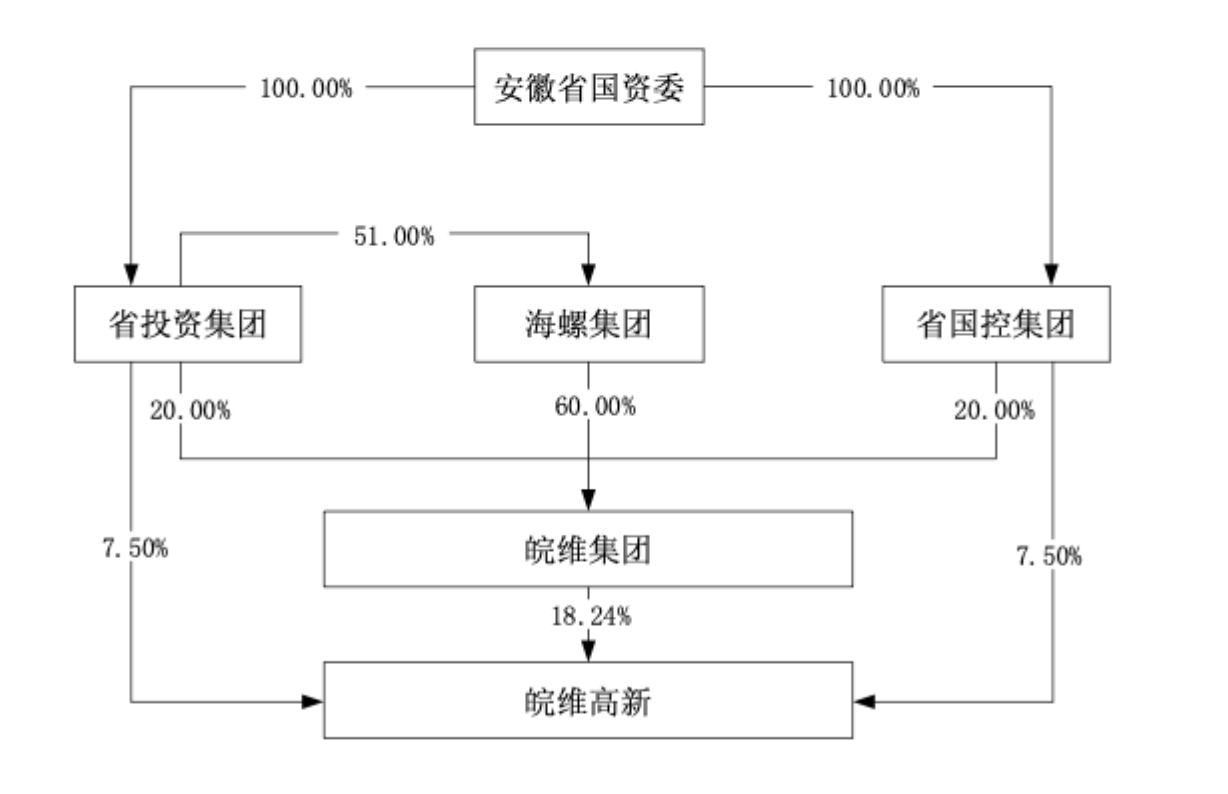
Core Viewpoint - The restructuring of the Shanshan Group has reached a significant milestone ahead of the Lunar New Year, with a new investment consortium selected for the process [1][2]. Group 1: Restructuring Progress - On February 8, Shanshan Co., Ltd. announced the restructuring progress of its controlling shareholder, Shanshan Group, and its wholly-owned subsidiary, Ningbo Pengze Trading Co., Ltd. [2] - A consortium consisting of Anhui Wanwei Group, Anhui Conch Group, and Ningbo Financial Asset Management Co., Ltd. has been selected as the new investors, with an investment agreement signed on February 6 [3]. - If the restructuring is successful, the controlling shareholder of Shanshan Co. will change to Wanwei Group, and the actual controller of the listed company will be the State-owned Assets Supervision and Administration Commission of Anhui Province [4]. Group 2: Investment Details - The total investment amount for the restructuring is capped at approximately 7.156 billion yuan, which will be used for direct stock acquisition and bankruptcy service trust rights [9]. - Wanwei Group plans to acquire 13.50% of Shanshan Co.'s shares at a price of approximately 16.42 yuan per share, totaling about 4.987 billion yuan, which is over 40% higher than the previous restructuring agreement price of 11.44 yuan per share [10]. Group 3: Wanwei Group Background - Wanwei Group is fully owned by the Anhui Provincial Government and is a significant player in the chemical, chemical fiber, building materials, and new materials sectors [11]. - In 2024, Wanwei Group reported revenues of 9.235 billion yuan, a net profit of 398 million yuan, and total assets of 16.33 billion yuan [12]. - The group is undergoing restructuring with other Anhui provincial enterprises, aiming to enhance its market position and operational efficiency [13]. Group 4: Industry Synergy Potential - Wanwei Group aims to focus on new materials and new energy sectors, leveraging strategic mergers and collaborations to enhance industry synergy and risk resilience [18]. - The integration of Wanwei Group's PVA production capabilities with Shanshan Co.'s core business in polarizers could create significant upstream and downstream linkages, enhancing operational efficiency [19].


聚乙烯醇PVA发展现状:高端替代加速,谁是下一个增长引擎?(含PVA纤维)
材料汇· 2025-11-11 14:35
Core Viewpoint - The PVA industry in China is at a transformative crossroads, with the potential for high-end product domestic substitution and new green business opportunities arising from environmental regulations [2][9]. Group 1: PVA Industry Overview - PVA is a water-soluble polymer material with excellent properties such as adhesion, fiber formation, and biodegradability, widely used in various industries including fine chemicals, green construction, and pharmaceuticals [6][8]. - The production of PVA is technology-intensive, with major production methods including calcium carbide acetylene method, petroleum ethylene method, and natural gas acetylene method, with China primarily using the calcium carbide method [7][30]. Group 2: Development History of PVA Industry - The PVA industry in China began in the 1960s, with initial production capacity of 20,000 tons, but faced challenges such as low product quality and limited application fields [8][9]. - Since the 12th Five-Year Plan, increasing environmental standards have accelerated the exit of outdated production capacity, leading to a consolidation of the industry [9]. Group 3: Domestic Substitution Opportunities - The domestic PVA market is primarily composed of conventional products, with high-value specialty PVA products still reliant on imports, indicating a strong potential for domestic substitution [10]. - The demand for high-value PVA products in emerging sectors such as automotive, construction, and pharmaceuticals is rapidly increasing, presenting significant market potential [10][11]. Group 4: Supply and Demand Analysis - Global PVA consumption was approximately 134.3 million tons in 2015, with China accounting for about 50% of global consumption [23][25]. - The domestic PVA apparent consumption fluctuated, with a notable increase to 68.4 million tons in 2020, driven by recovery in downstream market demand [23][25]. Group 5: Market Supply Situation - Global PVA production capacity is around 1.85 million tons, with China holding approximately 60% of this capacity, making it the largest producer [26][27]. - The domestic PVA industry has seen a gradual increase in production and operating rates, with a projected capacity of 1.076 million tons and an operating rate of 81% by 2024 [27]. Group 6: Competitive Landscape - The global PVA market is concentrated in a few countries, with major players including Japan and the USA, while the domestic market is dominated by companies like Sinopec and Wanhua Chemical [34][35]. - The domestic PVA industry has undergone significant consolidation, with leading companies gaining competitive advantages [39]. Group 7: Investment Logic - The PVA industry has shifted from "incremental competition" to "value reconfiguration," focusing on technological innovation and high-value product substitution [63]. - Key investment themes include high-value product substitution, green demand driven by environmental policies, and integrated supply chain advantages [64][65]. Group 8: Future Outlook - The PVA industry is expected to experience a value reassessment, with a focus on high-end product development and green applications, creating new market opportunities [68][69].