PaperYY

Search documents
这届毕业生,快被AI检测逼疯了
虎嗅APP· 2025-06-26 10:42
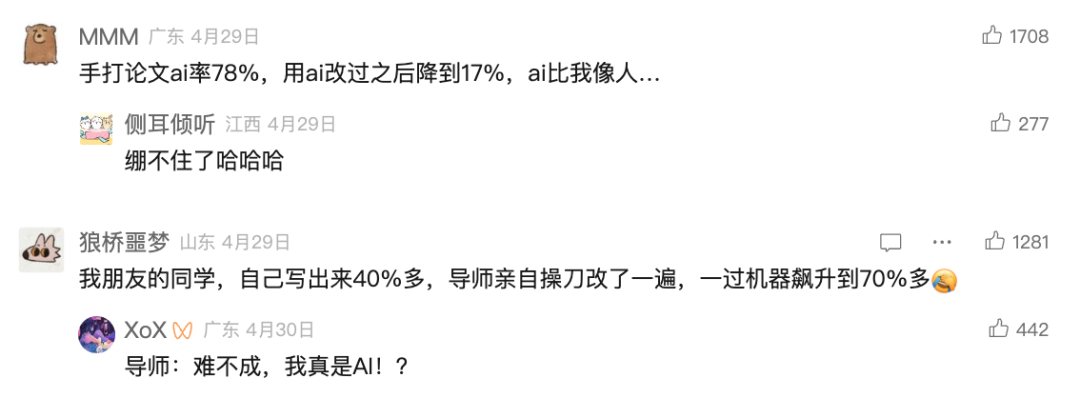
Core Viewpoint - The article discusses the challenges faced by students in proving their work is not generated by AI, particularly in the context of AIGC (Artificial Intelligence Generated Content) detection systems, which have become a new hurdle in academic writing [3][4][7]. Group 1: AIGC Detection Challenges - Many universities are now requiring AIGC detection results as a criterion for thesis approval, leading to a stressful cycle of detection and modification for students [4][6]. - The AIGC detection process is criticized for its inconsistency, where original human-written content can be flagged as AI-generated, causing confusion and frustration among students [5][10]. - A case study of a student, Burrel, illustrates the severe consequences of AIGC detection, where her original work was initially deemed AI-generated, leading to a significant impact on her academic performance [8][9][10]. Group 2: AIGC Detection Logic - The article explains that traditional plagiarism detection compares texts against existing literature, while AIGC detection operates more like a "black box" with unclear standards, often resulting in arbitrary suspicion levels [15][16]. - AIGC detection systems provide a "suspected value" rather than a definitive judgment, which can lead to students being unfairly penalized based on these ambiguous metrics [17][21]. - The detection process involves multiple stages, including information volume difference detection and multi-feature analysis, to assess the likelihood of AI generation [21]. Group 3: Strategies for Reducing AIGC Detection Rates - The article explores various methods for reducing AIGC detection rates, including using AI tools to rewrite content, but results vary significantly across different platforms [23][36]. - Testing revealed that while some AI rewriting tools increased the AIGC detection rate, others surprisingly reduced it to 0%, highlighting the inconsistency in effectiveness [40][47]. - The article emphasizes that the focus on reducing AIGC detection rates often compromises the quality and integrity of academic writing, shifting the emphasis from genuine expression to merely passing detection tests [50][51]. Group 4: Implications for Academic Writing - The pressure to conform to AIGC detection standards may stifle creativity and critical thinking in students, as they become preoccupied with meeting arbitrary metrics rather than engaging in meaningful writing [51][52]. - Experts suggest that the academic community needs to adapt to the presence of AI in writing, advocating for a balance between utilizing AI tools and maintaining the integrity of human expression in academic work [52][54].


这届毕业生,快被AI检测逼疯了
Hu Xiu· 2025-06-23 06:42
Group 1 - The core issue is the introduction of AIGC detection as a new hurdle for students, alongside traditional plagiarism checks, which has led to significant stress and confusion among graduates [1][2][3] - Many universities are now requiring AIGC detection results as a criterion for thesis approval, indicating a shift in academic standards [2][6] - The AIGC detection process is criticized for its inconsistency, where original content can be flagged as AI-generated, leading to a frustrating cycle of revisions for students [4][5][50] Group 2 - A case study involving a student, Burrel, highlights the potential consequences of AIGC detection, where her original work was deemed AI-generated, resulting in a zero score until she provided extensive proof of her writing process [8][10][11] - The detection tools, such as those provided by Turnitin, are questioned for their reliability, as they can produce varying results across different platforms [4][18] - There is a growing movement among students to petition against the use of AIGC detection tools, reflecting a broader concern about the implications of AI in academic settings [14] Group 3 - The mechanics of AIGC detection are described as a "black box," lacking transparency in how AI-generated content is identified, which complicates the process for students trying to prove their work is original [18][19] - Traditional methods of plagiarism detection do not apply effectively to AIGC detection, leading to confusion and frustration among students [16][17] - The article discusses various methods and tools available for reducing AIGC detection rates, with mixed results, indicating a lack of reliable solutions [29][37][41] Group 4 - The emphasis on proving work is not AI-generated has shifted the focus away from the quality of writing and critical thinking, potentially stifling creativity and self-expression among students [50][54] - Experts suggest that the current approach to AIGC detection may require a reevaluation of academic standards and practices to better integrate AI into the educational framework [55][56] - The article concludes that while AI can enhance writing capabilities, the true value of academic work should be measured by the depth of thought and sincerity in writing, rather than arbitrary detection scores [55][56]