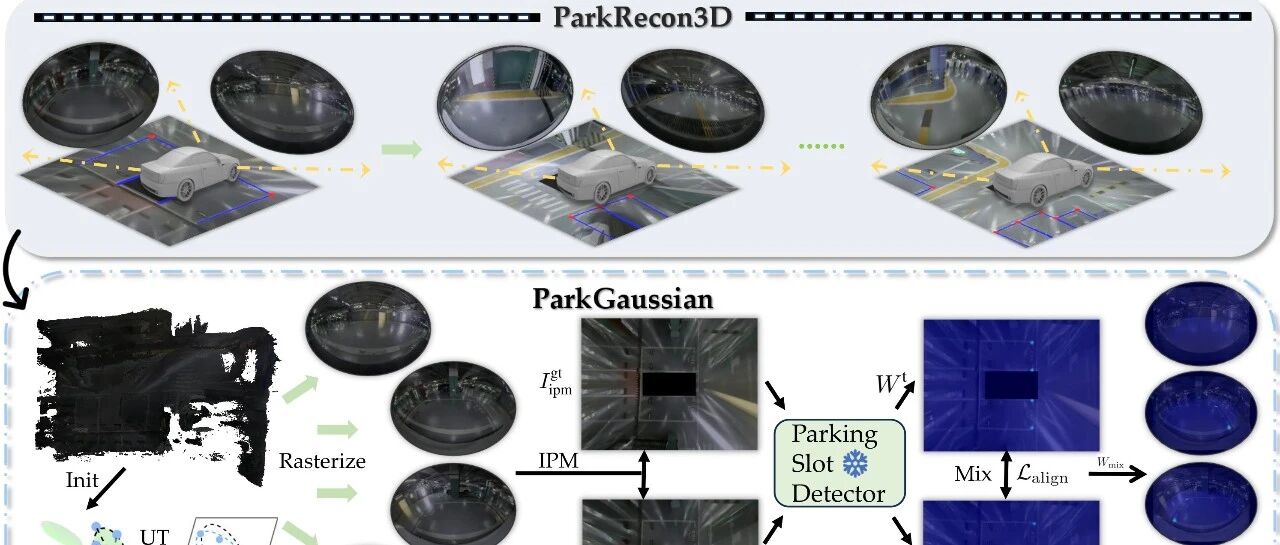
ParkGaussian

Search documents
摸底GS重建在自动驾驶业内的岗位需求
自动驾驶之心· 2026-01-24 02:55
Core Viewpoint - The article discusses the growing demand for algorithm teams in the field of 3DGS (3D Gaussian Splatting) for autonomous driving, highlighting the need for skilled professionals and the development of a comprehensive training course to address this gap [2][3]. Group 1: Industry Demand and Job Roles - Companies are looking to invest in headcount (HC) for testing and closed-loop simulation in the autonomous driving sector, indicating a clear need for algorithm teams ranging from 5 to 20 members to support optimization in closed-loop simulations [2][3]. - The demand for cloud data production is also noted, particularly for static road surface reconstruction, which requires a minimum team size of around 10 people to meet basic functional needs [3]. Group 2: 3DGS Development and Learning Path - The article outlines a structured learning path for 3DGS, starting from static reconstruction to dynamic reconstruction and surface reconstruction, culminating in mixed scene reconstruction and feed-forward GS [3]. - A course titled "3DGS Theory and Algorithm Practical Tutorial" has been developed to provide a detailed roadmap for understanding 3DGS technology, covering principles and practical applications [3]. Group 3: Course Structure and Content - The course consists of six chapters, covering topics such as background knowledge, principles and algorithms of 3DGS, technical explanations for autonomous driving, important research directions, and feed-forward 3DGS [6][8][9][10][11][12]. - Each chapter is designed to build upon the previous one, ensuring a comprehensive understanding of 3DGS and its applications in the industry [8][9][10][11][12]. Group 4: Target Audience and Prerequisites - The course is aimed at individuals with a background in computer graphics, visual reconstruction, and related technologies, as well as those familiar with Python and PyTorch [17]. - Participants are expected to have a foundational understanding of probability theory and linear algebra, which are essential for mastering the 3DGS technology stack [17].

摸底GS重建在自动驾驶业内的岗位需求......
自动驾驶之心· 2026-01-19 09:04
Core Viewpoint - The article discusses the growing demand for algorithm teams in the field of 3DGS (3D Geometric Scene) for autonomous driving, emphasizing the need for skilled professionals to support closed-loop simulation and scene reconstruction [2][3]. Group 1: Industry Demand and Job Roles - Companies are looking to hire 5-20 algorithm team members to support the optimization of closed-loop simulations [3]. - There is a specific need for cloud data production roles, such as static road surface reconstruction from a BEV perspective, indicating a growing market for these skills [3]. - The field is relatively new, making it challenging for beginners to find effective learning resources, highlighting a gap in the market for educational programs [3]. Group 2: Educational Initiatives - The article introduces a course titled "3DGS Theory and Algorithm Practical Tutorial," designed to provide a comprehensive learning path for 3DGS technology [3]. - The course covers various aspects of 3DGS, including background knowledge, principles, algorithms, and important research directions, aiming to equip participants with a solid understanding of the technology stack [8][9][10][11][12]. Group 3: Course Structure and Content - The course is structured into six chapters, starting with foundational knowledge in computer graphics and progressing to advanced topics like feed-forward 3DGS [8][9][10][11][12]. - Each chapter includes practical assignments and discussions to enhance understanding and application of the concepts learned [10][11][12]. - The course is set to begin on December 1st and will last approximately two and a half months, featuring offline video lectures and online Q&A sessions [15]. Group 4: Target Audience and Prerequisites - The course is aimed at individuals with a background in computer graphics, visual reconstruction, and programming, particularly those familiar with Python and PyTorch [17]. - Participants are expected to have a foundational understanding of probability and linear algebra, ensuring they can engage with the course material effectively [17].
小米&杭电提出ParkGaussian:业内首个泊车场景重建算法,效果还不错
自动驾驶之心· 2026-01-07 09:44
Core Viewpoint - The article discusses the development of ParkGaussian, a framework designed for 3D reconstruction of parking scenarios, which significantly enhances the quality of parking space detection and reconstruction in autonomous driving systems [2][8][57]. Group 1: Background and Importance - Autonomous parking is a critical component of autonomous driving systems (ADS), facing unique challenges in environments with limited GPS signals and complex spatial geometries [3][4]. - Existing research has primarily focused on 2D parking space perception and mapping, with insufficient exploration in 3D reconstruction, which is essential for capturing the intricate geometries of parking scenarios [2][3]. Group 2: ParkRecon3D Dataset - The ParkRecon3D dataset is the first benchmark specifically designed for 3D reconstruction in parking scenarios, containing over 40,000 frames of synchronized sensor data and 60,000 accurately labeled parking spaces [5][11][8]. - The dataset was collected in an underground parking lot using four calibrated fisheye cameras, providing a comprehensive resource for training and evaluating 3D reconstruction models [11][5]. Group 3: ParkGaussian Framework - ParkGaussian integrates 3D Gaussian Splatting (3DGS) with a parking space perception reconstruction strategy, enhancing the fidelity of reconstructed parking areas [8][6]. - The framework utilizes a novel approach to align the reconstruction process with downstream perception tasks, ensuring that the generated data is consistent with real-world parking space detection [6][20]. Group 4: Experimental Results - Experiments demonstrate that ParkGaussian achieves state-of-the-art reconstruction quality on the ParkRecon3D dataset, outperforming existing methods that focus solely on visual fidelity [48][49]. - The integration of the parking space perception strategy significantly improves detection performance, with both DMPR-PS and GCN-Parking networks achieving near-real-world detection accuracy [49][50]. Group 5: Limitations and Future Work - The ParkRecon3D framework faces inherent challenges in underground parking environments, such as mirror reflections, repetitive textures, and motion blur under low light conditions, which will be addressed in future research [55][57].