Ponte Vecchio

Search documents
英特尔的先进封装,太强了
Xin Lang Cai Jing· 2026-01-17 09:33
Core Viewpoint - Intel's EMIB interconnect solution demonstrates advantages over traditional 2.5D technology in advanced chip packaging design, showcasing its application in various products and its potential for next-generation chips [1][14]. Group 1: EMIB Technology and Applications - Intel's EMIB technology has been implemented in several of its products, including Ponte Vecchio, Sapphire Rapids, Granite Rapids, Sierra Forest, and the upcoming Clearwater Forest series [1]. - The company emphasizes its advanced packaging capabilities, which include large-scale packaging using EMIB and other proprietary technologies, specifically designed for data center solutions [1][12]. - EMIB technology allows for efficient and cost-effective connections between multiple complex chips, supporting both 2D and 3D expansions, which traditional 2.5D methods cannot achieve [12][14]. Group 2: Comparison with Competitors - Competitors like TSMC utilize 2.5D and 3D packaging technologies that rely on silicon interposers and TSV (Through-Silicon Vias) for interconnections, which can increase design complexity and costs [3][7]. - Intel points out the drawbacks of 2.5D packaging, such as additional costs for silicon used solely for interconnections and limitations in chip size and flexibility [7]. Group 3: Future Prospects and Industry Position - Intel's advancements in EMIB, including the "T" type packaging and Foveros packaging, have attracted attention from industry giants, intensifying competition in the chip manufacturing sector previously dominated by TSMC [14][15]. - The company aims to leverage its advanced packaging solutions to establish a foothold in the foundry business, particularly with the 14A process node designed for third-party customers [28]. - Intel's upcoming products, such as the Jaguar Shores and Crescent Island GPU, are critical for regaining market share, with a focus on securing orders from third parties [30].


英特尔的先进封装,太强了
半导体行业观察· 2026-01-16 01:48
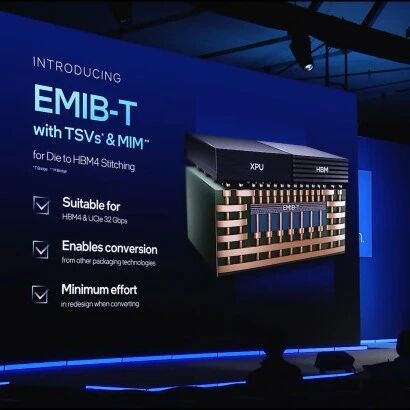
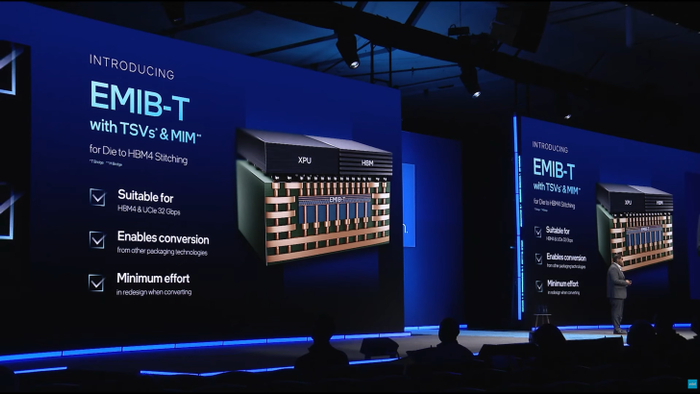
Core Viewpoint - Intel's EMIB interconnect solution demonstrates advantages over traditional 2.5D technology in advanced chip packaging design, showcasing its application in various products and its potential for next-generation chip production [1][17]. Group 1: EMIB Technology and Comparison - Intel's EMIB technology has been applied in several products, including Ponte Vecchio, Sapphire Rapids, Granite Rapids, Sierra Forest, and the upcoming Clearwater Forest series [1]. - Competitors like TSMC utilize 2.5D and 3D packaging technologies, which involve silicon interposers and TSV (Through-Silicon Vias) for interconnections, contrasting with Intel's smaller interconnect bridges [3]. - 2.5D packaging has drawbacks, such as additional costs for silicon interposers and increased complexity and reduced yield with larger chip sizes [8]. Group 2: Advantages of EMIB - EMIB technology eliminates the need for silicon interposers between chips and packages, allowing for flexible chip placement and integration [11]. - The key advantages of EMIB include improved layout flexibility, support for 2D and 3D scaling, cost-saving opportunities, and simplified design processes [14][16]. - Intel's EMIB-T technology enhances bandwidth and chip integration by incorporating TSVs, making it suitable for high-performance applications [13][20]. Group 3: Future Developments and Market Position - Intel is increasing investments in wafer fabrication and aims to establish a new era of advanced chip production in the U.S. with its 14A technology [17][31]. - The company showcased its scalable packaging capabilities with multi-chip products using 18A/14A nodes, Foveros 3D, and EMIB-T technology, setting standards for high-performance computing and AI [18][20]. - Intel's advanced packaging solutions are expected to intensify competition with TSMC's CoWoS solutions, which also integrate multiple HBM chips [18]. Group 4: Industry Collaboration and Customer Focus - Intel is developing a diverse ecosystem participation plan to accelerate product launch and enhance supply chain resilience [29]. - The recent advanced packaging chip demonstration targets external customers, particularly highlighting the advantages of the 14A process node designed for third-party clients [31]. - The success of Intel's advanced packaging technology will depend on securing orders from third parties, which is crucial for the adoption of its 14A technology [33].