Python系统培训课程

Search documents
“月入4万,大厂离职”?律师:警惕这类人设套路
Xin Hua Wang· 2025-09-21 01:50
Core Viewpoint - The article reveals a fraudulent scheme where a company uses fake "resignation bloggers" to promote its skill training courses, misleading consumers and violating legal standards [1][10]. Group 1: Fraudulent Activities - A company in Changsha, Hunan, directed employees to create fake resignation posts on social media to attract users to a Python training course priced at 7,880 yuan [1]. - The court ruled that the company must publish a statement to mitigate the negative impact of its actions and pay 50,000 yuan in damages [1]. - Despite the court ruling, similar fraudulent posts continue to appear on social media, indicating a persistent issue in the industry [2][3]. Group 2: Tactics and Strategies - The involved companies utilize uniform scripts and downloaded or fabricated images to create low-cost fake accounts and resignation posts [3]. - Different personas are crafted for various courses, such as falsely claiming to be former employees of major firms like Huawei or Deloitte to sell training programs [6]. - The "resignation blogger" phenomenon has expanded to include various fields, with many claiming to have left companies like Pop Mart and MiHoYo to sell illustration courses [8]. Group 3: Impact on Genuine Employees - Genuine employees who have left their jobs are affected by the proliferation of fake resignation posts, which mislead the public and damage their reputations [8]. - A real former employee from Pop Mart reported that his identity was misused by fake bloggers, causing confusion among users who believed the fraudulent accounts [8]. Group 4: Legal and Regulatory Concerns - The court identified the company's actions as misleading consumers regarding their qualifications, constituting false advertising and harming fair market competition [10]. - Legal experts emphasize the need for stricter regulations and penalties against fraudulent practices that deceive consumers and undermine trust in the industry [12].

虚假离职成新“流量密码”!法院判决揭露网络黑灰产
Mei Ri Jing Ji Xin Wen· 2025-09-16 22:47
Core Points - The rise of fake resignation stories on social media platforms like Xiaohongshu and Douyin has created a new flow of traffic, often linked to a complete false advertising industry chain [1][2] - A recent court ruling in Changsha recognized the deceptive practices of a local education technology company that used fake posts to attract users for their training courses [2][4] Group 1: Legal Actions and Court Rulings - The Changsha court found that the defendant, a local education technology company, engaged in unfair competition by instructing employees to impersonate former ByteDance employees and post misleading content on Xiaohongshu [2][4] - The court ruled that the defendant must publish a statement to eliminate the negative impact and compensate Douyin for economic losses and reasonable expenses totaling 50,000 yuan [4] Group 2: Social Media Trends and User Behavior - The trend of "big factory resignation" posts has garnered significant attention, with the topic reaching 970 million views and 6.078 million discussions on Xiaohongshu, while Douyin's resignation topic has 360,000 participants and 13.77 billion views [6] - The phenomenon reflects a complex mindset among contemporary workers, balancing the desire to escape high-pressure environments with the allure of alternative lifestyles showcased by successful influencers [6] Group 3: The Broader Context of Deceptive Practices - The allure of major companies has led to a surge in fraudulent activities, including paid internship scams and fake internship certificates, with some agencies charging up to 20,000 yuan for guaranteed placements [8][10] - ByteDance has previously issued warnings about these scams, emphasizing that they do not offer paid internships and that many advertised positions are fraudulent [10]

“月薪X万离开大厂”,成为新“流量密码”!法院一纸判决揭开这个网络黑灰产
Mei Ri Jing Ji Xin Wen· 2025-09-16 16:51
Core Insights - The rise of posts claiming "monthly salary X leaving big companies" on social media platforms like Xiaohongshu and Douyin has created a new trend, but these may be part of a deceptive marketing scheme [1][2] Group 1: Legal Case and Findings - A recent court ruling in Changsha recognized a case where an education technology company was found guilty of false advertising by instructing employees to impersonate former ByteDance employees to promote their courses [2][4] - The court determined that the actions of the defendant constituted unfair competition, leading to a ruling that required them to publish a statement to mitigate the impact and pay Douyin 50,000 yuan in damages [7][9] Group 2: Social Media Trends - The hashtag "I quit" has garnered 970 million views and 6.078 million discussions on Xiaohongshu, while the "resignation" topic on Douyin has 360,000 participants and 13.77 billion views, indicating a significant public interest in these narratives [9] - The phenomenon reflects a complex mindset among contemporary workers, balancing a desire to escape high-pressure environments with the allure of alternative lifestyles showcased by successful influencers [9][10] Group 3: Broader Implications of Deceptive Practices - The trend of false resignation posts is intertwined with a larger gray market, where training institutions exploit the reputations of major companies to attract customers [3][11] - There are also reports of scams related to job placements, where intermediaries charge fees for supposed internship opportunities at major firms, further complicating the job market landscape [11][12] - The existence of fake internship certificates and the promotion of non-existent positions highlight the ongoing challenges in regulating the online job market, necessitating continuous efforts from platforms to combat these fraudulent activities [13][14]
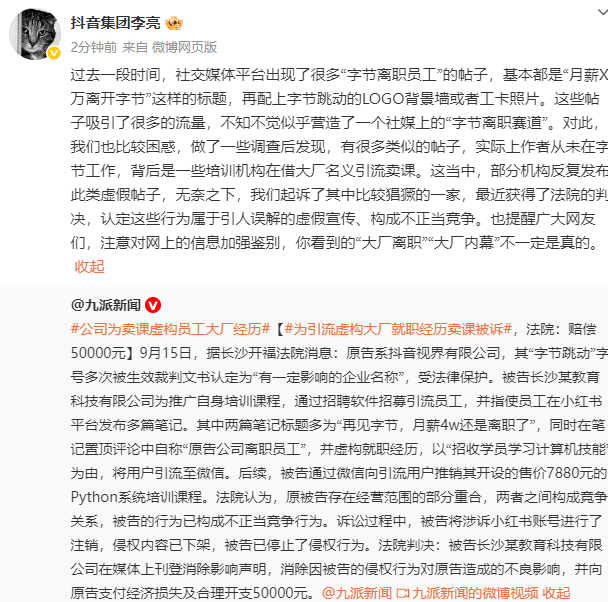
抖音副总裁回应社媒平台出现“月薪X万离开字节”帖子:系培训机构引流卖课,已起诉
Sou Hu Cai Jing· 2025-09-15 15:32
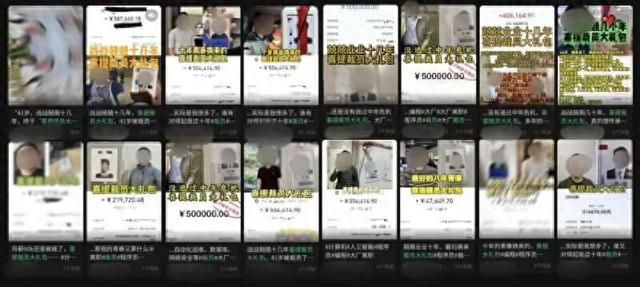
Core Viewpoint - The Vice President of Douyin, Li Liang, addressed the rise of posts on social media claiming to be from "ByteDance employees" who left for high salaries, stating that these are often fabricated by training institutions to attract customers for their courses. Legal action has been taken against one particularly rampant entity, resulting in a court ruling against their misleading practices [1][6][7]. Group 1 - Numerous posts on social media falsely claim to be from former ByteDance employees, often featuring titles like "Left ByteDance for a monthly salary of X" [1]. - Investigations revealed that many authors of these posts had never worked at ByteDance, and the posts were part of a strategy by training institutions to leverage the company's name for marketing [1][4]. - A court ruling determined that the actions of the accused training institution constituted misleading advertising and unfair competition, leading to a requirement for them to issue a public statement and pay damages of 50,000 yuan [6][7]. Group 2 - The case involved Douyin Shijie Co., Ltd. as the plaintiff, with the court recognizing "ByteDance" as a legally protected name due to its significant influence [6]. - The defendant, a certain education technology company, was found to have engaged in unfair competition by using deceptive practices to promote their training courses, including falsely claiming to be former employees of ByteDance [6][7]. - The defendant's actions included creating misleading posts on platforms like Xiaohongshu to attract users to their paid Python training course priced at 7,880 yuan [7].