RAVC.442174.002TU光刻系统

Search documents
俄罗斯自研350纳米光刻机
国芯网· 2026-03-18 11:33
Core Viewpoint - The article discusses Russia's advancement in semiconductor manufacturing through the development of a new photolithography system, marking a significant step towards establishing an independent semiconductor ecosystem and overcoming Western technology restrictions [2][4]. Group 1: Photolithography System Development - A new photolithography system, model RAVC.442174.002TU, has been officially included in Russia's national industrial equipment catalog, indicating a shift from laboratory research to industrial deployment [2]. - The system features a resolution of 350 nanometers (0.35 microns) and utilizes a 365-nanometer wavelength i-line ultraviolet light source, capable of processing standard 200-millimeter wafers with an alignment accuracy of approximately 90 nanometers [2][4]. - Despite being less advanced than current global technologies (3nm or 5nm), the 350nm process is still valuable for various applications, including power management, automotive electronics, aerospace control, and embedded systems [2][4]. Group 2: Strategic Implications - The project, initiated in 2021 and funded by the Russian Ministry of Industry and Trade, is a collaboration between the Zelenograd Nanotechnology Center (ZNTC) and Belarusian semiconductor equipment manufacturer Planar [4]. - The inclusion in the GISP catalog serves as a "passport" for domestic market access, prioritizing local products for government and state-owned enterprise procurement, which will enhance the production capacity of mature process chips [4]. - The demand for mature process chips remains stable and significant in modern industrial systems, particularly for applications in electric vehicles, industrial robotics, and missile guidance systems, which prioritize reliability and supply stability over extreme miniaturization [4]. Group 3: Future Development Goals - Following the successful mass production of the 350nm equipment, ZNTC aims to develop the next generation of technology targeting the 130nm node, which would broaden the applicability of Russian-made chips to more complex communication and computing needs [5].

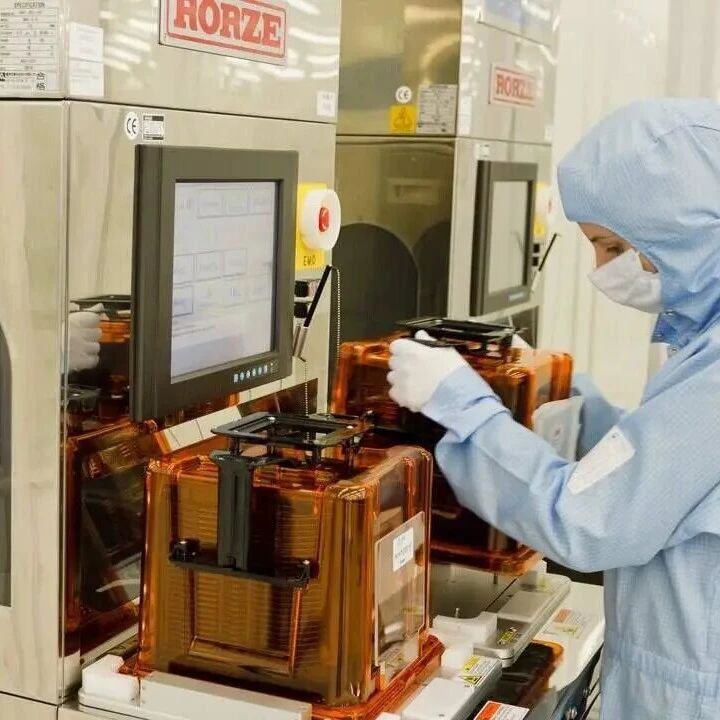
俄罗斯自研光刻机,正式推出
半导体行业观察· 2026-03-16 01:11
Core Viewpoint - Russia has integrated a new lithography system into its National Industrial Information System (GISP), enhancing its domestic semiconductor manufacturing capabilities. This system, developed by the Zelenograd Nanotechnology Center (ZNTC), is designed for transferring circuit patterns onto semiconductor wafers with a resolution of 350 nanometers, marking a significant step in building a self-sufficient microelectronics manufacturing ecosystem in Russia [2][4][21]. Group 1: Technology and Capabilities - Lithography technology is crucial for semiconductor manufacturing, allowing manufacturers to project microscopic circuit patterns onto silicon substrates using ultraviolet light [3]. - The ZNTC-designed system is specifically for projection exposure, improving accuracy by projecting the mask image onto the wafer rather than direct contact, which enhances precision in circuit pattern replication [3][6]. - The system can process 200 mm diameter semiconductor wafers, a standard size in the industry, and operates with a resolution of 350 nanometers, suitable for various industrial applications despite being less advanced than current leading-edge technologies [6][10]. Group 2: Development and Collaboration - The lithography system was developed in collaboration with Belarusian company Planar, reflecting ongoing technical cooperation in microelectronics manufacturing between Belarus and Russia [8]. - The project, initiated in 2021 and funded by the Russian Ministry of Industry and Trade, aims to create a lithography tool that supports domestic chip manufacturing [8]. Group 3: Strategic Importance - The integration of this lithography system into the GISP is part of Russia's broader strategy to enhance technological independence in the semiconductor industry, especially as access to foreign precision manufacturing equipment has become increasingly restricted [12][21]. - The development of domestic lithography equipment is a significant achievement for countries pursuing technological autonomy in microelectronics, helping to maintain existing production lines and reduce reliance on imports [13]. Group 4: Future Prospects - The next phase of development aims to achieve a resolution of approximately 130 nanometers, bringing the technology closer to nodes widely adopted in the early 21st century [17]. - The emergence of domestic lithography equipment underscores the strategic significance of semiconductor technology and the intensifying global competition for control over this critical industry [21].