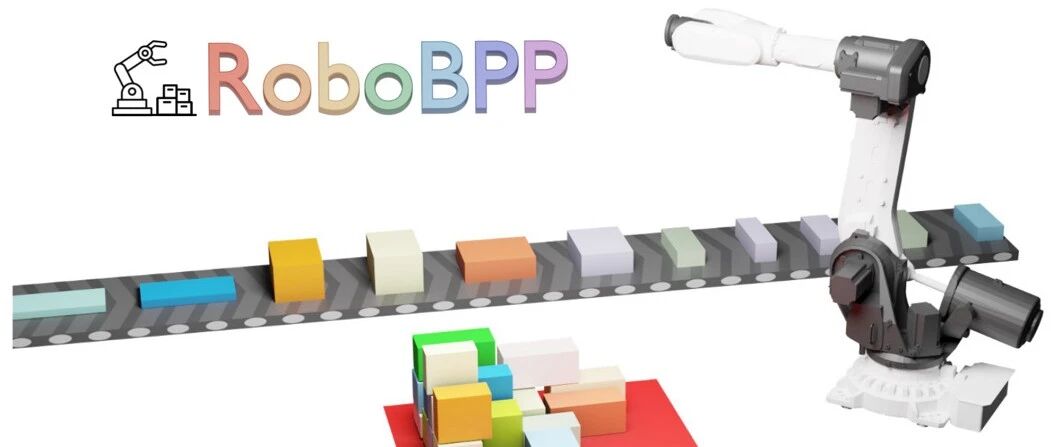
RoboBPP

Search documents
基于真实数据和物理仿真,国防科大开源具身在线装箱基准RoboBPP
具身智能之心· 2025-12-20 01:02
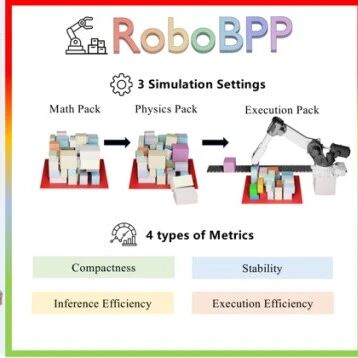
Core Viewpoint - The article discusses the introduction of RoboBPP, a comprehensive benchmarking system for robotic online bin packing, which integrates real industrial data, physics-based simulation, and embodied execution evaluation, addressing the limitations of existing research in the field [4][28]. Group 1: RoboBPP Overview - RoboBPP is developed by a collaboration between National University of Defense Technology, Institute of Industrial Artificial Intelligence, Wuhan University, and Shenzhen University [2][4]. - It features a highly realistic physics-based simulation environment to assess the physical feasibility and embodied executability of online bin packing algorithms [4][10]. - The system includes three large-scale diverse datasets derived from real industrial processes, which are essential for systematic benchmarking [4][13]. Group 2: Testing and Evaluation Framework - The project employs a scientifically designed multi-level testing setup, progressing from pure mathematical evaluations to physical constraint simulations and finally to robotic execution [15][16]. - Three distinct testing settings are established: Math Pack (pure geometric placement), Physics Pack (introducing physical effects), and Execution Pack (full robotic execution) [16][18]. - A multi-dimensional evaluation metric and normalization scoring system are implemented to provide a comprehensive analysis of algorithm performance across different scenarios [19][20]. Group 3: Experimental Results - The team conducted extensive experiments across three testing settings and three datasets, ranking algorithms based on their overall performance scores [22][23]. - Specific algorithms such as PCT and TAP-Net++ excel in highly repetitive production environments, while transformer-based reinforcement learning strategies are effective in diverse logistics scenarios [24][29]. - The analysis of individual metrics like Occupancy, Trajectory Length, and Collapsed Placement reveals performance characteristics that are not captured in overall scores, guiding algorithm selection for practical packing tasks [24][30]. Group 4: Practical Implications - The findings suggest that algorithms prioritizing compact and efficient space utilization tend to achieve higher occupancy rates [26]. - Stability-related metrics are evaluated for their effectiveness in guiding learning-based methods towards more robust and physically feasible strategies [27][30]. - RoboBPP provides a reproducible and scalable foundation for future research and industrial applications in robotic online bin packing [28].

基于真实数据和物理仿真,国防科大开源具身在线装箱基准RoboBPP
机器之心· 2025-12-19 03:42
Core Insights - The article discusses the importance of physical feasibility and embodied executability in the 3D bin packing problem (3D-BPP) for modern industrial logistics and robotic automation, highlighting the need for a unified benchmark system to evaluate algorithm performance and real-world applicability [2][31] - RoboBPP, a comprehensive benchmarking system developed by several academic institutions, aims to address existing challenges by utilizing real industrial data, physical simulation, and embodied execution modeling [3][31] Benchmark System Overview - RoboBPP includes a physics-based high-fidelity simulator that replicates the industrial bin packing process using real-scale boxes and industrial robotic arms, allowing for effective evaluation of algorithms under realistic conditions [3][12] - The system features multiple categories of benchmarks, including overall algorithm performance rankings and detailed metrics across various test settings and datasets [7] Testing Framework - The testing framework consists of three progressive settings: Math Pack (pure geometric placement), Physics Pack (introducing physical constraints), and Execution Pack (full embodied execution with robotic operations) [18] - Each setting is designed to assess algorithm adaptability and robustness under increasing levels of physical realism [17] Evaluation Metrics - A multidimensional evaluation system has been established, incorporating traditional metrics and new execution-related indicators such as Collapsed Placement and Dangerous Operation, which reflect potential risks during the placement process [21][22] - The scoring system normalizes all metrics to provide a comprehensive score, facilitating systematic comparisons of different algorithms [21] Experimental Results - The team conducted extensive experiments across three test settings and three datasets, ranking algorithms based on their overall scores and analyzing performance across different industrial scenarios [24][25] - Algorithms that prioritize compact and efficient space utilization tend to achieve higher occupancy rates, while those that focus on stability and physical feasibility exhibit lower collapse rates [28][33] Dataset Diversity - The real industrial datasets used in RoboBPP capture the diversity of item sizes, shapes, and arrival sequences, which are critical for evaluating the embodied executability of algorithms [15] - Three representative task scenarios were identified: Repetitive Dataset (consistent item sizes), Diverse Dataset (varied item sizes), and Wood Board Dataset (irregular shapes) [15] Conclusion - RoboBPP represents the first comprehensive benchmarking system for robotic online 3D bin packing tasks, combining real industrial data, physical simulation, and embodied execution assessment, thus providing a reliable and realistic evaluation framework for future research and industrial applications [31]