Runway Aleph

Search documents
2026 年,商业变革者将面对什么?a16z 的最新趋势观察
3 6 Ke· 2026-01-29 10:58
Group 1: AI Capabilities and Paradigms - Vertical AI is transitioning from information retrieval to "multi-agent mode," enabling unprecedented growth in industries like healthcare, legal, and housing, with companies achieving over $100 million in annual revenue [2] - By 2026, vertical AI will unlock "multi-agent mode," allowing for collaboration across various roles in industries, enhancing efficiency and understanding of complex workflows [3] - The emergence of "Agent-native" infrastructure will be crucial, as systems evolve to handle intelligent agent-driven workloads, requiring a redesign of control planes to manage high-frequency tool calls and complex concurrency [6][7] Group 2: Education and Talent Development - The first AI-native university is expected to emerge by 2026, focusing on real-time learning and self-optimizing educational systems, with courses and academic guidance adapting based on data feedback [4][5] - This AI-native university will train graduates proficient in system orchestration, addressing the talent gap in the new economy [5] Group 3: Content Creation and Media - 2026 is anticipated to be a pivotal year for multi-modal content creation, where AI can generate and edit content across various formats, enhancing creative control for users [8][9] - Video content will evolve into interactive environments, allowing for dynamic storytelling and user engagement, blurring the lines between creator and audience [10] Group 4: AI in Business Operations - The traditional metric of "screen time" as a value delivery indicator will be replaced by more complex ROI measures, focusing on outcomes rather than usage time [11] - Companies will increasingly adopt multi-agent systems to manage complex workflows, leading to a rethinking of organizational structures and roles [19][20] Group 5: Consumer AI and Personalization - Consumer-grade AI products will shift from productivity tools to enhancing personal connections and self-awareness, with a focus on understanding users' complete life contexts [21] - The trend towards personalized products will redefine how companies approach consumer engagement, moving from mass production to individualized experiences [13] Group 6: Research and Development - AI will play a significant role in accelerating scientific discovery through autonomous laboratories capable of conducting experiments and iterating research directions [15] - The integration of AI in research workflows will foster a new style of inquiry, emphasizing the relationships between ideas and enabling novel discoveries [22][23] Group 7: Data Privacy and Security - The need for transparent and auditable data access controls will become critical as AI systems operate autonomously, necessitating a shift towards "secrets as a service" to protect sensitive information [25] Group 8: Startup Ecosystem - A new wave of startups will emerge, focusing on providing services to newly established companies, leveraging the current AI product cycle to achieve scalability [26]
畅想2026:第一部分
3 6 Ke· 2026-01-17 00:03
Infrastructure - The chaos of unstructured, multimodal data is a significant bottleneck for companies, with 80% of enterprise knowledge residing in unstructured formats, leading to a decline in data real-time, structuredness, and authenticity [2] - AI will automate much of the repetitive work in cybersecurity, addressing the recruitment challenges faced by Chief Information Security Officers (CISOs) as the number of cybersecurity job vacancies has increased from under 1 million to 3 million from 2013 to 2021 [3] - The rise of "agent-native" infrastructure will be crucial as businesses transition from human-speed traffic to agent-speed loads, necessitating a redesign of backend systems to accommodate rapid, recursive tasks [4][5] Growth - By 2026, traditional record systems will lose their core status as AI shortens the distance between intent and execution, transforming ITSM and CRM systems into autonomous workflow engines [9] - Vertical AI is evolving from information retrieval to a "multi-party collaboration" model, with companies in sectors like healthcare and finance rapidly increasing their annual recurring revenue (ARR) to over $100 million [10][11] Bio + Health - A new customer segment termed "Healthy Monthly Active Users" (MAUs) will emerge, focusing on regular health monitoring rather than reactive treatment, representing a significant market opportunity [15][16] Speedrun - AI-driven world models will revolutionize storytelling through interactive virtual environments, merging gaming mechanics with natural language programming, leading to the creation of a "generative multiverse" [17] - The trend towards personalized products will become prominent, with AI tailoring educational experiences and health plans to individual needs, marking a shift from mass production to customization [18][19] Education - The first AI-native university is anticipated to emerge, designed to adapt in real-time based on data feedback, with a focus on producing graduates skilled in collaborating with AI systems [20][21][22]
速递| Runway跨界机器人领域,获超5亿美元融资,AI世界模型成模拟现实训练新引擎
Z Potentials· 2025-09-02 03:58
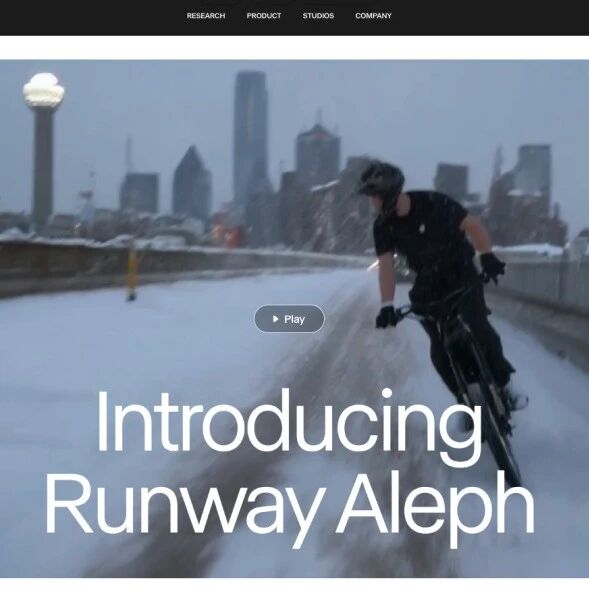
Core Insights - Runway has shifted its focus from solely creative industries to exploring opportunities in the robotics sector, receiving over $500 million in funding and achieving a valuation of $3 billion [3][4] - The company is known for its AI models that generate videos and images, with recent releases including the Gen-4 video generation model and the Runway Aleph video editing model [3][4] - Runway's technology is being utilized by robotics and autonomous vehicle companies for training simulations, which are more cost-effective and scalable compared to real-world training [4][5] Funding and Valuation - Runway has raised more than $500 million from investors such as Nvidia, Google, and General Atlantic, leading to a valuation of $3 billion [3] Technology and Applications - The company’s world models are designed to create realistic simulations, which are now attracting interest from robotics and autonomous vehicle sectors [3][4] - Runway's models allow for detailed testing of specific variables and scenarios without altering other factors in the environment, making it easier to simulate different operational outcomes [5] Future Directions - Runway does not plan to develop a completely separate product line for robotics and autonomous vehicles but will refine existing models to better serve these industries [5][6] - The core philosophy of the company revolves around the concept of simulation, which can be applied across various markets and industries as the capabilities of generative models improve [6]