SHP2抑制剂

Search documents
未知机构:加科思panKRAS价值重估空间巨大panKRAS抑制-20260304
未知机构· 2026-03-04 02:45
Summary of Conference Call Notes Company and Industry Involved - The notes pertain to **加科思 (Gakos)**, focusing on its **pan-KRAS inhibitors** and related drug development efforts in the oncology sector. Core Points and Arguments - **Progress of pan-KRAS Inhibitors**: The clinical data for RMC-6236 is reported as excellent, leading to a market capitalization increase of over **$20 billion** for Revolution [1] - **Initial Data for JAB-23E73**: The preliminary data for Gakos' pan-KRAS inhibitor JAB-23E73 shows significant safety advantages, with no grade 3 toxicity observed at the escalated dose level. The incidence of skin toxicity is reported at **10%**, all classified as grade 1, compared to RMC-6236, which has a **90%** incidence of skin toxicity with **8%** at grade 3 [1] - **Collaboration with AstraZeneca**: A collaboration worth **$2 billion** with AstraZeneca is expected to accelerate global progress through a combination treatment approach (IO/ADC) [1] - **Next-Generation ADC Platform**: The next-generation ADC platform is noted to have multi-target and multi-indication expansion potential, with the first candidate drug, EGFRG12DitADC, having its PCC confirmed and an IND submission expected in the second half of **2026** [1][2] - **HER2-STINGiADC Development**: The first candidate drug for iADC, HER2-STINGiADC, has also confirmed its PCC, with an IND submission anticipated in the second half of **2026** [2] - **KRAS G12C Inhibitor**: The KRAS G12C inhibitor, Goretinib, has entered insurance coverage and is rapidly gaining traction, with ongoing registration clinical trials in combination with SHP2 inhibitors for pancreatic and colorectal cancers [2] - **Valuation and Rating**: Based on risk-adjusted DCF calculations, the company is valued at **HKD 8.912 billion**, corresponding to a target price of **HKD 11.26**, with a "strong buy" rating assigned [2] Other Important but Possibly Overlooked Content - The emphasis on safety profiles and the absence of severe toxicity in the new drug candidates may indicate a strategic advantage in competitive positioning within the oncology market [1] - The collaboration with AstraZeneca could enhance the credibility and market reach of Gakos' products, potentially leading to increased investor confidence and market valuation [1] - The anticipated IND submissions for both ADC candidates in **2026** suggest a timeline for future growth and revenue generation, which may be critical for investors to consider [1][2]
未知机构:加科思panKRAS价值重估空间巨大panKRAS抑制剂-20260304
未知机构· 2026-03-04 02:45
Summary of Conference Call Notes Company and Industry Involved - The notes pertain to **加科思 (Gakos)**, focusing on its **pan-KRAS inhibitors** and advancements in the **oncology** sector. Core Points and Arguments - **Progress of pan-KRAS Inhibitors**: The clinical data for RMC-6236 is reported as excellent, leading to a market capitalization increase of over **$20 billion** for Revolution [1] - **Initial Data for JAB-23E73**: The preliminary data for Gakos' pan-KRAS inhibitor JAB-23E73 shows significant safety advantages, with no grade 3 toxicity observed at the escalated dose level and a skin toxicity incidence of **10%** (all grade 1). In comparison, RMC-6236 has a skin toxicity rate of **90%** with **8%** grade 3 toxicity [1] - **Collaboration with AstraZeneca**: A collaboration worth **$2 billion** with AstraZeneca is expected to accelerate global progress through combination therapy approaches (IO/ADC, etc.) [1] - **Next-Generation ADC Platform**: The next-generation ADC platform is noted to have multi-target and multi-indication expansion potential, with the first candidate drug, EGFRG12DitADC, having its PCC confirmed and an IND submission expected in **H2 2026** [1] Additional Important Content - **iADC Candidate Drug**: The first candidate drug for iADC, HER2-STINGiADC, has also confirmed its PCC, with an IND submission anticipated in **H2 2026** [2] - **KRAS G12C Inhibitor**: The KRAS G12C inhibitor, Goretinib, has entered the medical insurance coverage, showing rapid volume growth. Clinical registrations are ongoing for its combination with SHP2 inhibitors in pancreatic and colorectal cancers [2] - **Valuation and Rating**: Based on risk-adjusted DCF calculations, the company is valued at **HKD 8.912 billion**, corresponding to a target price of **HKD 11.26**, with a "strong buy" rating [2]
2026年中国SHP2抑制剂行业政策、产业链、市场规模预测、竞争格局、代表企业及发展趋势研判:成为国内外多家药企争相布局的焦点,发展迅速[图]
Chan Ye Xin Xi Wang· 2026-02-12 01:21
Core Viewpoint - SHP2 inhibitors are emerging as a significant target for cancer treatment, with rapid development in the industry, particularly in China, which is becoming a notable player in the global market [1][6][9]. Industry Overview - SHP2, a protein tyrosine phosphatase, plays a crucial role in regulating various cellular functions, including growth, differentiation, and oncogenic transformation [2][6]. - The global market for SHP2 inhibitors is projected to start existing from 2027, reaching approximately $329 million by 2029, and is expected to grow to $4.821 billion by 2033 [1][7][9]. Market Size - The Chinese SHP2 inhibitor market is anticipated to grow to $206 million by 2029 and reach $784 million by 2033 [9][10]. Industry Chain - The SHP2 inhibitor industry chain includes upstream components such as protein reagents, specific antibodies, small molecule building blocks, testing kits, and experimental models; midstream involves drug research and production; downstream consists of large oncology specialty hospitals and comprehensive hospital oncology departments [11][12]. Development Environment - Recent policies in China have been implemented to encourage the pharmaceutical industry, particularly in the development and production of innovative drugs, including cancer therapies, by shortening clinical application and approval times [13][14]. Competitive Landscape - Major companies in the SHP2 inhibitor space include Innovent Biologics, CanSino Biologics, Junshi Biosciences, and others, with significant progress in developing SHP2 inhibitors, although no drugs have yet been approved for commercialization [15][16]. - Notable companies include: - **QinHao Pharmaceutical**: Focused on developing innovative candidates targeting the RAS signaling pathway, with its lead candidate GH21 in Phase II clinical trials [15][16]. - **Nuocheng Jianhua**: Known for its BTK inhibitor, it is also developing a new SHP2 inhibitor, ICP-189, in collaboration with ArriVent Biopharma [16][17]. Future Outlook - The SHP2 inhibitor sector is one of the hottest areas in pharmaceutical research, with significant advancements in the development of allosteric inhibitors and ongoing clinical trials showing promising results [17][18].



艾力斯:针对C797S突变NSCLC患者的治疗,公司有新一代的EGFR-TKI处于I期临床试验阶段
Mei Ri Jing Ji Xin Wen· 2026-01-12 10:35
Core Viewpoint - The company,艾力斯 (688578.SH), emphasizes its commitment to innovation as a core competitive advantage and outlines its strategic focus on the development of its key product,伏美替尼, along with other innovative drug candidates [2]. Group 1: Product Development - The company is conducting in-depth research on伏美替尼, exploring multiple application scenarios beyond the already approved indications for second-line and first-line treatments [2]. - Ongoing clinical registrations for伏美替尼 include auxiliary treatment for classic EGFR mutations, second-line and first-line treatments for 20 exon mutations, PACC mutation indications, brain metastasis indications, and auxiliary treatment for non-classic EGFR mutations [2]. - The NDA application for the second-line treatment of the 20 exon mutation has been accepted and prioritized for review, while the PACC mutation NSCLC first-line treatment indication is expected to be classified as a breakthrough therapy by December 2025 [2]. Group 2: New Product Introductions - In August 2024, the company introduced the KRAS G12C inhibitor,戈来雷塞, and the SHP2 inhibitor, taking full responsibility for their subsequent development [2]. - The second-line treatment indication for戈来雷塞 in NSCLC was officially approved in May 2025, and ongoing studies are being conducted for its use in pancreatic cancer and other solid tumors [2]. - Clinical trials are progressing smoothly for the combination of戈来雷塞 with the SHP2 inhibitor for first-line treatment of KRAS G12C mutation non-small cell lung cancer [2]. Group 3: Research and Development Enhancements - The company is advancing its new drug discovery platform, enhancing its capabilities in both large and small molecule research, and strengthening team development [2]. - Several innovative drugs are currently in the preclinical research stage, indicating a robust pipeline for future growth [2]. - The company is committed to promoting the internationalization of its products, aiming to make innovative drugs accessible to patients worldwide [2].


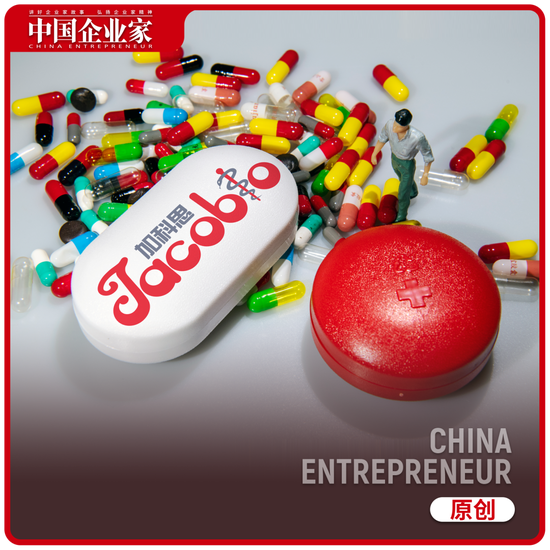
河北老板135亿卖“神药”,股价却跌麻了
Xin Lang Cai Jing· 2025-12-31 00:17
Core Viewpoint - The stock price of Jacob Pharma continues to decline despite a significant licensing agreement with AstraZeneca, raising concerns in the industry about the low upfront payment relative to the total deal value [2][22]. Group 1: Licensing Agreement Details - Jacob Pharma announced a global exclusive licensing agreement with AstraZeneca for its KRAS inhibitor, with an upfront payment of $100 million and a total deal value of up to $1.915 billion, including tiered royalties on net sales outside of China [2][22]. - The agreement is considered the largest collaboration for a small molecule anti-cancer drug in clinical stages in China, yet the stock fell by 13.58% on the first trading day after the announcement [2][22]. Group 2: Market Reaction and Company Strategy - The market's reaction to licensing deals has been generally cold this year, with other biotech companies like Rongchang Biotech and Innovent Biologics also experiencing stock declines post-announcement [6][26]. - Jacob Pharma's business model is heavily reliant on licensing out, which was established from its inception, and the company aims to focus on "First in class" products, avoiding "Best in class" options [6][27]. Group 3: Financial Position and Future Outlook - As of June 30, 2025, Jacob Pharma reported cash and cash equivalents of approximately RMB 1.07 billion, indicating a relatively strong cash position despite the challenging capital environment [8][28]. - The company plans to have ten products in clinical trials that rank among the top three globally by 2024, which could lead to more licensing opportunities [38][39]. Group 4: Leadership and Vision - CEO Wang Yinxiang emphasizes the importance of maintaining a balance between research and market presence, advocating for a robust production and sales system to avoid being solely reliant on external financing [39][40]. - Wang's background includes founding Jacob Pharma after a successful tenure at Betta Pharmaceuticals, where he recognized the potential for innovation in the Chinese pharmaceutical market [30][31].