Smartwatches

Search documents
Here's Why Garmin Stock Soared in February
Yahoo Finance· 2026-03-07 14:56
Core Insights - Garmin's business is experiencing significant growth, with a 25.4% stock increase in February following a strong fourth-quarter financial update and optimistic 2026 guidance [1][2] Financial Performance - Garmin's fitness segment has become the largest, achieving 42% year-over-year growth in Q4 and averaging 32% growth each quarter over the past two years [4] - The company reported record revenue across all five segments last year, with aviation and marine also showing double-digit growth in Q4. Overall revenue surged 15%, nearly double the initial 8% growth forecast [5] - Management is predicting a 9% revenue growth for the upcoming year, despite tough comparisons from a standout 2025 [2][6] Shareholder Returns - Garmin plans to increase its quarterly dividend from $0.90 to $1.05 per share, representing a 17% increase [7] - The company initiated a new $500 million share repurchase plan, replacing a previous plan with only $56 million remaining [7] - Garmin generated $1.36 billion in free cash flow in 2025 and ended the year with approximately $4.1 billion in cash and marketable securities, with no debt on the balance sheet [8]

Omdia: Xiaomi Reclaims Wearable Band Crown for the First Time Since 2020
Businesswire· 2026-02-27 14:27
Market Overview - Global wearable device shipments surpassed 200 million units in 2025, marking a 6% year-on-year growth [1] - The market is experiencing increased consolidation among top vendors, with Xiaomi leading at 18% market share, followed by Apple at 17% and Huawei at 16% [1][5] Competitive Landscape - The competition in the wearables market is shifting from hardware-driven to ecosystem-led, emphasizing cross-device integration and monetizable data services [2] - Xiaomi's growth is attributed to a multi-category strategy, while Apple maintains a premium position through advanced health features and 5G connectivity [2] - Huawei is focusing on professional sports and medical-grade health applications to strengthen its market presence [2] Revenue Models - AI and subscription services are becoming essential revenue drivers, transforming from optional features to critical components for growth and profitability [3] - Subscription services are increasingly vital for vendors with higher-priced portfolios, providing a buffer against hardware margin compression due to rising component costs [3] Future Outlook - The global wearables market is expected to see modest single-digit growth in 2026, driven by advancements in on-device AI and demand for professional-grade health management [4] - Key physiological metrics, such as blood glucose and blood pressure monitoring, will be crucial for growth among leading smartwatch vendors [4] - Smartwatches are projected to show the strongest momentum, integrating advanced sensing and AI analytics for enhanced ecosystem connectivity [4]




新年换新品!江苏2026年消费品以旧换新活动启动
Xin Lang Cai Jing· 2026-01-01 00:18
Core Points - The Jiangsu province will launch a "trade-in" subsidy program for consumer goods starting January 1, 2026, aimed at encouraging residents to upgrade their vehicles, home appliances, and digital products [4][18] Group 1: Vehicle Subsidies - The program offers a maximum subsidy of 20,000 yuan for trading in old vehicles for new ones, applicable to both new energy and fuel vehicles [4][7] - For scrapping old gasoline vehicles registered before June 30, 2013, or diesel vehicles registered before June 30, 2015, a subsidy of 12% of the new vehicle price is available, capped at 20,000 yuan [7] - For trading in old vehicles, a subsidy of 8% of the new vehicle price is available for new energy vehicles, with a maximum of 15,000 yuan, and 6% for fuel vehicles with a maximum of 13,000 yuan [10] Group 2: Home Appliance Subsidies - A subsidy of 15% of the final price, capped at 1,500 yuan, is available for upgrading home appliances such as refrigerators, washing machines, televisions, air conditioners, water heaters, and computers, provided they meet energy efficiency standards [14] Group 3: Digital Product Subsidies - For digital products like smartphones, tablets, smartwatches, and smart glasses, a subsidy of 15% of the final price is available, with a maximum of 500 yuan per item, applicable to items priced under 6,000 yuan [17] Group 4: Participation Requirements - To qualify for vehicle subsidies, both the old and new vehicles must be registered under the same individual's name, and the new vehicle's invoice and registration must be issued in Jiangsu [17] - For home appliances and digital products, the applicant, payer, and recipient must be the same person, and their information must match [17] Group 5: Implementation and Information Access - The "Jiangsu Consumption Trade-in Platform" will provide comprehensive support for the subsidy application process, and participating merchants will be listed by local business authorities [17][18] - Residents are encouraged to stay updated on specific implementation details and participating merchants through local official notifications [17]

2026年“两新”政策部署来了!“国补”有这些新变化
Xin Hua Cai Jing· 2025-12-31 00:10
Core Viewpoint - The 2026 "Two New" policy aims to enhance equipment updates and consumer goods replacement, addressing public concerns and promoting high-quality development through targeted subsidies and support measures [1][2]. Group 1: Policy Changes - The 2026 "Two New" policy expands support to include the installation of elevators in old residential areas, equipment updates in elderly care institutions, and updates for commercial facilities like shopping centers and supermarkets [2][4]. - The policy continues to support the replacement of old vehicles and household appliances, including cars, washing machines, and refrigerators, while also expanding subsidies for digital and smart products [2][3]. Group 2: Subsidy Standards - The subsidy standards for equipment updates have been optimized, with differentiated subsidies based on the number of floors for old elevators, potentially easing financial burdens for high-rise residential buildings [4][5]. - For automotive subsidies, the policy shifts from fixed amounts to percentage-based subsidies, with support for new energy vehicles at 12% of the vehicle price (up to 20,000 yuan) and for fuel vehicles at 10% (up to 15,000 yuan) [5][6]. Group 3: Implementation Mechanism - The policy introduces an optimized project application and review process, lowering investment thresholds and increasing support for small and medium-sized enterprises [7]. - A unified subsidy standard will be implemented nationwide for vehicle replacements and household appliances, addressing regional disparities in subsidy amounts [7].
625亿首批“国补”已下达!2026年汽车、家电换新福利来了
2 1 Shi Ji Jing Ji Bao Dao· 2025-12-31 00:05
Core Viewpoint - The Chinese government is launching a substantial subsidy program for 2026, aimed at promoting the replacement and upgrading of consumer goods, including vehicles and home appliances, with a total of 625 billion yuan allocated for the first phase of subsidies [1]. Group 1: Automotive Subsidies - Two main directions for automotive subsidies: scrapping old vehicles for new ones or trading in old vehicles for new purchases [2]. - For scrapping, buyers of new energy vehicles can receive a subsidy of 12% of the vehicle price, up to 20,000 yuan, while buyers of fuel vehicles with an engine size of 2.0 liters or less can receive a subsidy of 10%, up to 15,000 yuan [2]. - For trade-ins, new energy vehicles receive an 8% subsidy, capped at 15,000 yuan, and fuel vehicles receive a 6% subsidy, capped at 13,000 yuan [2]. Group 2: Home Appliance and Digital Product Subsidies - The subsidy program focuses on six major home appliances: refrigerators, washing machines, televisions, air conditioners, computers, and water heaters, with a 15% subsidy on the purchase price, capped at 1,500 yuan per item [3]. - Digital products such as smartphones, tablets, smartwatches, and smart glasses are eligible for a 15% subsidy, with a maximum of 500 yuan per item, provided the price does not exceed 6,000 yuan [3]. - The program emphasizes high energy efficiency, green technology, and smart products, aiming to encourage consumer upgrades and industry advancements [3]. Group 3: Broader Policy Implications - The policy also extends to the upgrading of facilities in old residential areas, nursing homes, and fire rescue equipment, with lowered investment thresholds for project applications, allowing more small and medium-sized enterprises to benefit from the subsidies [3]. - The overall message encourages consumers to take advantage of the subsidies for significant purchases and upgrades, focusing on energy-efficient and smart products [3].
X @Bloomberg
Bloomberg· 2025-12-01 03:10
Policy Change - Singapore to ban smartphones and smartwatches in secondary schools starting January [1]
Dixon to Tata Electronics: How India’s electronics manufacturers are rewiring strategies
MINT· 2025-11-14 09:36
Core Insights - India's electronics manufacturing sector is experiencing aggressive expansion through new product categories and acquisitions, despite facing thin margins [1][2][19] - Companies are focusing on increasing margins by venturing into industrial electronics, which offers higher value-added margins compared to high-volume electronics assembly [2] Company Summaries Dixon Technologies - Dixon reported ₹14,855 crore in revenue for the September quarter and achieved a 6.2% operating margin, up from 2.8% a year ago [4] - The company invested ₹803 crore in two acquisitions and a joint venture, including ₹553 crore for a joint venture with Kunshan Q Tech Microelectronics and ₹250 crore for a 74% stake in a joint venture with Chongqing Yuhai [5][6] - Dixon plans to invest ₹3,000 crore in display and camera modules, having applied for incentives under the electronics components manufacturing scheme [7][8] - The company anticipates increasing smartphone camera module production from 40 million units to 190-200 million units annually, with revenues projected to rise to ₹6,000-7,000 crore [9] Syrma SGS - Syrma SGS spent ₹235 crore to acquire a 60% stake in Elcome Integrated Systems, which specializes in electronics systems for defense and maritime clients [10] - The company expects this acquisition to contribute ₹100 crore to its top line this fiscal year, with an operating margin of 7.8% during the July-September quarter, up from 6% a year ago [11] Kaynes Technology - Kaynes Technology raised ₹1,575 crore from institutional investors and plans to allocate ₹160 crore for acquisitions [12] - The company recorded a 16.7% operating margin for Q2FY26, an increase from 14.8% a year ago, as it focuses on backward integration into PCB manufacturing and semiconductor packaging [13] Amber Enterprises - Amber Enterprises generated ₹1,647 crore in revenue for the quarter ended September, with electronics manufacturing accounting for a quarter of this revenue [14] - The company spent ₹693 crore on two acquisitions, including a 40% stake in Unitronics for ₹431 crore and ₹262 crore in Power-One Micro Systems [15] - Amber's operating margin was 2.2% in Q2, down from 4.4% a year ago, indicating a need for margin improvement [15] Tata Electronics and Foxconn - Tata Electronics reported ₹66,602 crore in revenue for FY25, making it the largest player in the industry, and announced a ₹91,000 crore investment in semiconductor manufacturing [16][17] - Foxconn's India arm, Bharat FIH, is expanding into electronics components manufacturing with a ₹15,000 crore investment [17] Industry Outlook - The overall electronics production in India is projected to reach ₹11 trillion by the end of 2025 and scale up to ₹44 trillion by 2030 [20] - Companies are increasingly focusing on component manufacturing as a key driver for future growth, with joint ventures and acquisitions being essential strategies [19]
Como viver cada instante na era dos ecrãs? | Matilde Sobral | TEDxHorta
TEDx Talks· 2025-11-10 16:52
Problem Statement & Impact - Technology, specifically screens with video games and social media, can blind and block individuals from seeing reality [7] - The interference of technology in human relationships is called "tecnoference" [10] - Excessive dopamine activation from persuasive design in technology can overpower impulse control, potentially leading to addiction [12] - The mere presence of a phone reduces cognitive capacity, focus, and concentration, impacting productivity and relationships [23] Effects on Children & Adolescents - Children and adolescents are more vulnerable to technology's effects due to their still-developing brains, making it an unequal battle [14][15] - Human relationships are fundamental for children's brain development, requiring time and full attention without interference [16][17][18] - Adolescence isn't made for smartphones, and a basic phone is sufficient, reflecting on parents' need for control [23][24] Solutions & Personal Path - The speaker founded Mirabilis to raise awareness about the blinding effects of screens [7] - The speaker emphasizes the need for silence, nature, art, and family time [23] - The speaker uses a dual-chip setup with a basic phone for nights, weekends, and vacations as a shield and example [23] Call to Action - Individuals should reflect on how technology is affecting them and identify their shields and spaces of freedom [28] - Individuals should consider the last time they experienced extended periods of silence, fun with friends without digital distractions, or time in nature without "tecnoference" [29][30] - Disconnecting from smartphones and embracing real-world experiences is presented as a modern adventure [31]

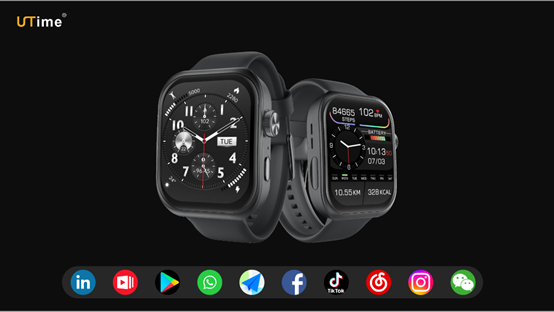
UTime Limited Actively Expands Global Smart Wearable Device Market
Globenewswire· 2025-11-05 14:15
Core Insights - UTime Limited is actively promoting its smart wearable devices in international markets through existing global distribution channels and partnerships [1][3] - The company is leveraging its experience in supply chain management and product development from the mobile device sector to introduce health-focused smart wearables, including smartwatches and smart rings [3][5] - The CEO of UTime Limited highlighted the growing consumer focus on personal health management as a significant market opportunity, indicating plans to explore new partnerships and markets [5] Company Overview - UTime Limited trades under the NASDAQ ticker WTO and is involved in the design, development, production, sales, and brand operation of mobile devices both in China and globally [5] - The company aims to provide cost-effective products and serves a broad customer base, emphasizing a balance of functional design and cost-effectiveness to enhance competitiveness in the international market [3][5]
Has boAt Found Its Rhythm Again?
Inc42 Media· 2025-11-02 05:30
Core Insights - boAt is preparing for its IPO with a focus on profitability and growth, having adjusted its expectations from an initial target of INR 3,500 Cr to INR 1,500 Cr [2][3] - The company has shifted its strategy towards domestic manufacturing and reducing its reliance on imports, which has contributed to improved profitability [5][8] Company Strategy - boAt started as a consumer audio brand in 2015 and has since diversified into various electronics, including smartwatches and chargers [4] - The company has reduced its product offerings to focus on quality and localization, with a target of 50% of products assembled in India by FY26 [7][20] - Gross margins improved from 22.6% in FY23 to 29.23% in FY25, while EBITDA margins increased from 2.7% to 4.64% during the same period [8] Financial Performance - boAt achieved positive cash flow from operations of INR 441.5 Cr in FY25, a significant turnaround from a negative cash flow of INR 18.1 Cr in FY23 [8][11] - Revenue from wearables peaked at INR 901 Cr in FY23 but has since declined significantly, impacting overall revenue growth [16][17] Market Position - boAt holds a 26% value share and a 34% volume share in the Indian audio accessories market as of FY25, but faces increasing competition from both global and domestic brands [22] - The company’s audio segment accounts for approximately 84% of total revenue, indicating a heavy reliance on this category [20][26] Challenges Ahead - The company must navigate intensifying competition and a market shift towards lower-priced alternatives, particularly in tier II and III markets [22][23] - boAt's dependence on online sales remains high, with nearly 70% of sales coming from e-commerce platforms, which poses risks related to pricing control and market fluctuations [24][25] - Limited product diversification could hinder long-term growth, as the company needs to explore premium categories to enhance margins [26][28]