
Tablets

Search documents
Huaqin Co., Ltd.(H0040) - Application Proof (1st submission)
2026-03-22 16:00
The Stock Exchange of Hong Kong Limited and the Securities and Futures Commission take no responsibility for the contents of this Application Proof, make no representation as to its accuracy or completeness and expressly disclaim any liability whatsoever for any loss howsoever arising from or in reliance upon the whole or any part of the contents of this Application Proof. Application Proof of Huaqin Co., Ltd. 華勤技術股份有限公司 (the "Company") (A joint stock company incorporated in the People's Republic of China w ...
Here’s How YCG’s Strategy of Buying Cyclically Unprofitable Stock, Apple (AAPL), Has Paid Off
Yahoo Finance· 2026-03-09 15:53
Core Insights - YCG LLC's fourth quarter 2025 investor letter indicates a market environment favoring speculation and high-risk behavior, particularly in AI-themed stocks, where unprofitable companies are outperforming profitable ones [1] - The firm emphasizes a long-term investment strategy focused on high-quality stocks, which have historically shown strong recovery after downturns, supporting their patient investment approach [1] - YCG Investments highlights Apple Inc. as a significant holding, noting its recent performance and market capitalization, while also discussing strategic trading decisions involving Apple and other stocks [2][3] Market Overview - The S&P 500 Index returned 2.66% and the S&P Global Broad Market Index returned 3.22% in the fourth quarter of 2025 [1] - The current market trend is characterized by a momentum-driven environment with a decline in high-quality stocks and alpha generation from heavily shorted stocks [1] Company Focus: Apple Inc. - Apple Inc. experienced a one-month return of -6.25% but gained 13.18% over the last 52 weeks, closing at $257.46 per share with a market capitalization of $3.79 trillion as of March 06, 2026 [2] - YCG Investments has strategically adjusted its holdings by trimming Apple shares to buy more of Verisk, demonstrating a tactical approach to capitalize on market volatility [3] Hedge Fund Interest - Apple Inc. ranks 10th among the 40 Most Popular Stocks Among Hedge Funds heading into 2026, with 169 hedge fund portfolios holding the stock, an increase from 166 in the previous quarter [5] - While acknowledging Apple's potential, YCG Investments suggests that certain AI stocks may offer greater upside potential with less downside risk [5]

春节期间,烟台接续实施消费品以旧换新相关举措
Qi Lu Wan Bao· 2026-02-09 11:19
Core Viewpoint - Yantai City has introduced measures to boost consumer spending and stabilize production during the Spring Festival period, focusing on trade-in incentives for vehicles and appliances [1] Group 1: Vehicle Trade-in Incentives - Consumers who trade in old vehicles for new ones can receive subsidies of up to 20,000 yuan for scrapping and 15,000 yuan for replacement [1] - For vehicle replacement, the maximum subsidy is 15,000 yuan or 13,000 yuan depending on the specific policy [1] Group 2: Appliance and Electronics Subsidies - Consumers purchasing energy-efficient appliances such as refrigerators, washing machines, televisions, air conditioners, water heaters, and computers can receive subsidies up to 1,500 yuan [1] - For digital and smart products like smartphones, tablets, smartwatches, and smart glasses priced under 6,000 yuan, consumers can receive a maximum subsidy of 500 yuan [1] Group 3: Implementation Timeline - The measures are effective from the date of issuance until February 28, 2026 [1]
以园聚产 以产促城
Xin Lang Cai Jing· 2026-01-18 18:28
Core Viewpoint - The article highlights the rapid development of industrial parks in the Wudang District of Guizhou Province, focusing on the health and medical industry, food production, and the integration of industrial and tourism sectors to drive economic growth. Group 1: Industrial Development - The Wudang District has implemented a new development strategy centered on industrial parks, achieving a 93.4% contribution of industrial output value from these parks during the 14th Five-Year Plan period [7] - The Guizhou Li Shizhen Miao Medicine Co., Ltd. has established a health food production base in the National Medicine Western Medical Industry Park, with an expected annual output value exceeding 500 million yuan [8] - The district aims to gather over 40 health and medical enterprises by 2025, with the health and medical output value projected to reach approximately 25% and 42.3% of the provincial and municipal totals, respectively [9] Group 2: Food Industry and Tourism Integration - The Huicheng Food Baking Factory in the Huoshipo Specialty Food Industrial Park has adopted an "industrial + tourism" model, attracting families for interactive baking experiences [10] - The Huicheng Specialty Food Ecological Park's second phase, with an investment of nearly 800 million yuan, is set to open in July 2024, offering food production, leisure, and educational activities [11] - The Huoshipo Specialty Food Industrial Park has attracted over 40 food enterprises, with an expected industrial output value of 560 million yuan by 2025 [11] Group 3: Industrial Space Optimization - The Wudang District has developed a clear industrial spatial layout, focusing on the New Tian Electronic Information Industrial Park and the Health Medicine Industrial Belt [13] - The district has established several specialized parks, including the Dongfeng Pharmaceutical Industrial Park and the Huoshipo Specialty Food Industrial Park, to attract over 1,000 enterprises [13] - The economic output of the Wudang District is projected to increase from 17.251 billion yuan to 25.108 billion yuan by 2024, with industrial contributions to economic growth remaining above 35% [14]

Apple (AAPL): Trailing in AI Spending or Exploring a Different Path?
Yahoo Finance· 2026-01-13 12:37
Core Viewpoint - Fundsmith Equity Fund underperformed the MSCI World Index in 2025, returning 0.8% compared to the index's 12.8% return, attributing this to index concentration, growth of assets in Index Funds, and dollar weakness [1] Group 1: Fund Performance - The T Class Accumulation shares of Fundsmith Equity Fund returned 0.8% in 2025, while the MSCI World Index returned 12.8% in sterling with dividends reinvested [1] - Since inception, the fund has outperformed the index by 1.7% per annum [1] - The fund's underperformance in 2025 is linked to index concentration and the increasing popularity of Index Funds [1] Group 2: Apple Inc. Insights - Fundsmith Equity Fund highlighted Apple Inc. (NASDAQ:AAPL) in its fourth-quarter 2025 investor letter, noting a one-month return of -5.23% and a 52-week gain of 11.56% [2] - As of January 12, 2026, Apple Inc. shares closed at $260.25, with a market capitalization of $3.85 trillion [2] - The fund expressed skepticism about the guaranteed returns from investments in artificial intelligence, despite its potential impact on lives and employment [3]
重庆新一轮消费品以旧换新补贴开启
Xin Lang Cai Jing· 2026-01-04 16:56
Group 1 - The Chongqing government will launch a comprehensive subsidy policy for vehicle scrapping and replacement, as well as for home appliances and digital products starting January 1, 2026 [2] - The first batch of subsidies for 2026 includes 210 million yuan for vehicle scrapping, 555 million yuan for vehicle replacement, 450 million yuan for home appliances, and 301 million yuan for digital and smart products [2] Group 2 - Consumers can receive a one-time subsidy of up to 20,000 yuan for scrapping eligible gasoline and diesel vehicles registered before specific dates and purchasing qualifying new energy or low-displacement fuel vehicles [3] - The subsidy for scrapping eligible fuel vehicles and purchasing new energy vehicles is set at 12% of the new vehicle sales price, while the subsidy for low-displacement fuel vehicles is 10%, with maximum amounts of 20,000 yuan and 15,000 yuan respectively [3][4] Group 3 - For vehicle replacement, consumers can receive a one-time subsidy of up to 15,000 yuan for purchasing qualifying new energy vehicles and up to 13,000 yuan for low-displacement fuel vehicles [5] - The subsidy for new energy vehicles is 8% of the new vehicle sales price, while for low-displacement fuel vehicles, it is 6% [5] Group 4 - Consumers can receive a 15% subsidy on the sales price of energy-efficient home appliances, with a maximum of 1,500 yuan per item, and can claim one subsidy per category [6] - For digital products like smartphones and tablets, a 15% subsidy is also available, capped at 500 yuan per item, with a limit of one subsidy per category [6] Group 5 - The subsidy policy will be effective from January 1, 2026, to December 31, 2026, and will operate on a "total amount control, balanced use, and first-come, first-served" basis [6]
“国补”继续!买车、家电、手机都能省
Xin Lang Cai Jing· 2026-01-03 08:59
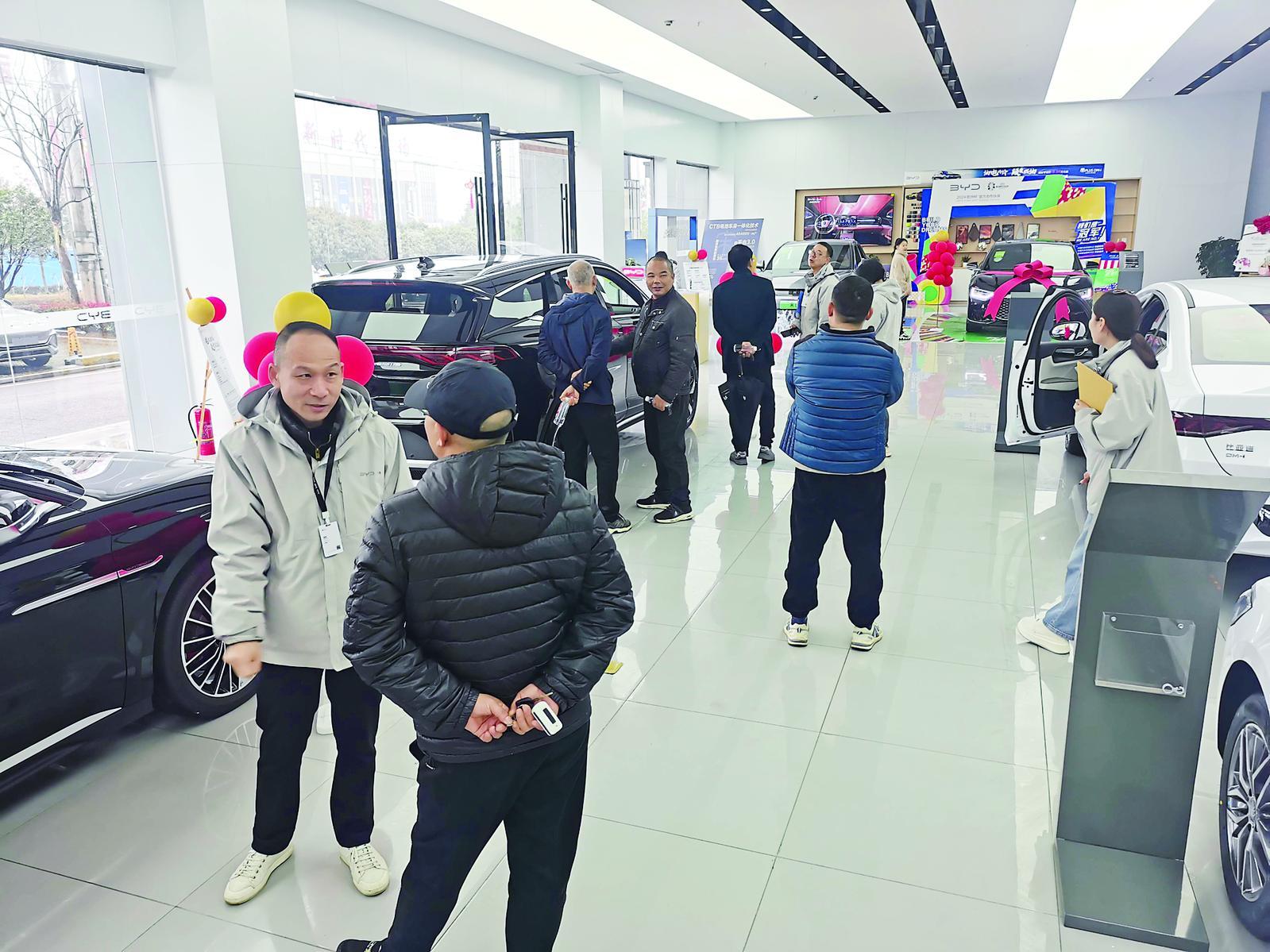
Core Viewpoint - The 2026 Hainan Province subsidy policy for replacing old vehicles and electronic products will continue, providing financial incentives for consumers to upgrade their automobiles and household appliances, effective from January 1, 2026 [1][2][3]. Vehicle Replacement Subsidy - The subsidy for scrapping old vehicles can reach up to 20,000 yuan for gasoline vehicles and 15,000 yuan for diesel vehicles, with specific eligibility criteria based on the registration date of the old vehicle [1][2]. - For scrapping eligible old vehicles and purchasing new energy vehicles, a subsidy of 12% of the new vehicle's sales price (up to 20,000 yuan) will be provided, while for fuel vehicles with an engine size of 2.0 liters or less, a subsidy of 10% (up to 15,000 yuan) will be available [1][2]. - Consumers can only choose one type of subsidy (either scrapping or replacing) and can only apply for it once during the policy period [2]. Household Appliances and Digital Products Subsidy - The subsidy for household appliances and digital products will also be implemented, providing 15% of the final sales price as a subsidy, with specific limits on the amount per item [2][3]. - For household appliances, consumers can receive up to 1,500 yuan for each eligible product, including refrigerators, washing machines, televisions, air conditioners, computers, and water heaters [2][3]. - For digital products like smartphones and tablets, a subsidy of up to 500 yuan per item will be available, with a maximum sales price of 6,000 yuan [3]. Application Process - Consumers can apply for subsidies through the Cloud Flash Payment platform, either online or offline, ensuring that they only pay the amount after the subsidy is deducted [4]. - The application process requires consumers to download the Cloud Flash APP, bind their bank accounts, and complete identity verification before making purchases [4].
国补新政来袭!这些变化影响你买单→
Xin Lang Cai Jing· 2026-01-02 04:04
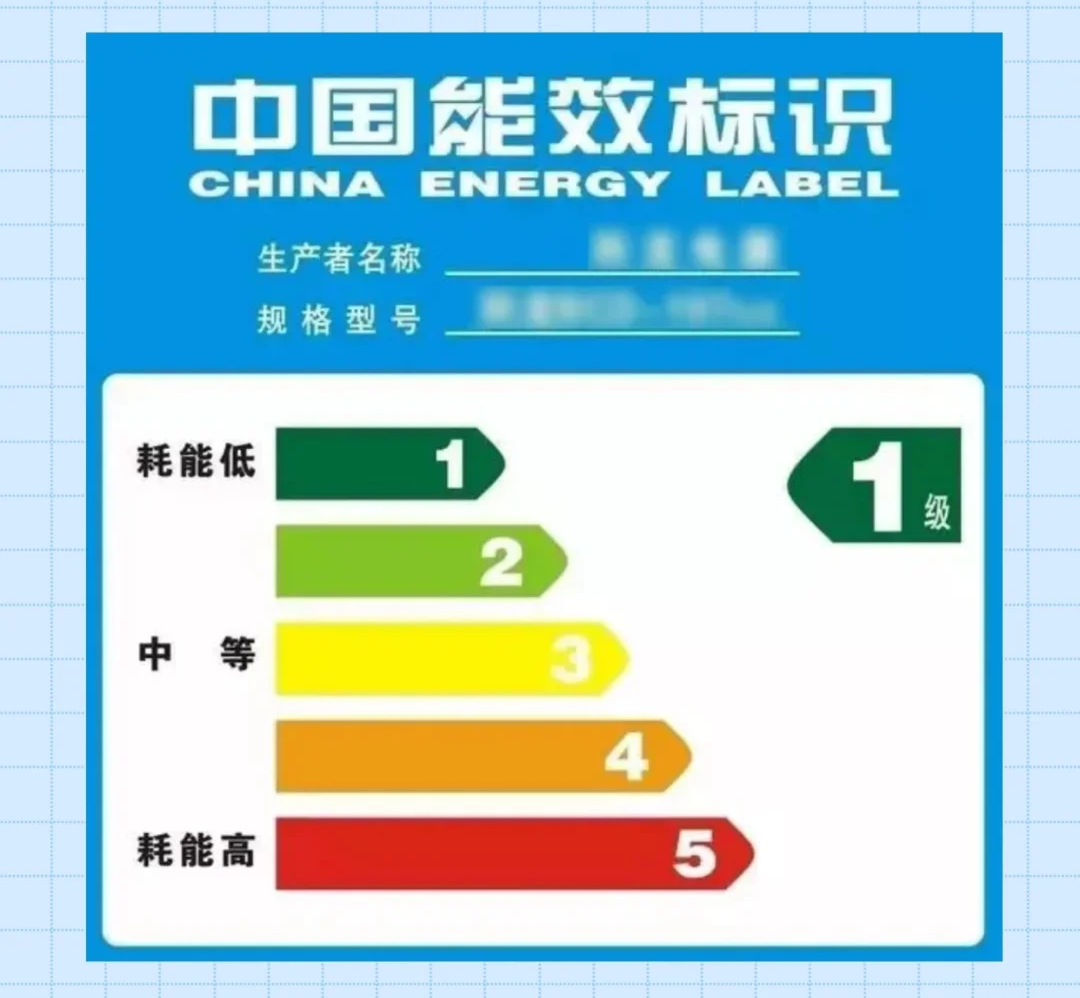
Core Viewpoint - The new round of "National Subsidy" has officially begun, with a total of 625 billion yuan allocated for 2026, focusing on consumer goods replacement and increased support for equipment updates [1]. Group 1: Digital and Smart Products - Digital and smart products will continue to receive a 15% subsidy, with a maximum of 500 yuan per item, maintaining the same standards as in 2025. The product categories have been expanded to include smart glasses alongside existing items like smartphones and smart home products [1][2]. Group 2: Home Appliances - Subsidies for home appliances will focus solely on products that meet 1st-level energy efficiency or water efficiency standards. Categories eligible for subsidies include refrigerators, washing machines, televisions, air conditioners, computers, and water heaters, with a maximum subsidy of 1500 yuan per item [3][5]. Group 3: Automotive Subsidies - The automotive subsidy program has been adjusted to provide a fixed percentage of the new car sales price as a subsidy, with a maximum of 20,000 yuan for eligible vehicles. The criteria for old vehicle registration dates have been clarified to expand the support range [5][6][7]. Group 4: Equipment Updates - The support for equipment updates will generally continue the scope established in 2025, with additional focus on areas such as old community elevator installations, equipment updates for elderly care institutions, and safety equipment [8][12]. Group 5: Application Process - Consumers can apply for subsidies through designated platforms for different product categories, including automotive and home appliances, ensuring a streamlined process for accessing the benefits [10][13]. Group 6: Fraud Prevention - The implementation of the 2026 "National Subsidy" policy will include measures to combat fraud and ensure that the subsidy benefits reach a broad consumer base, enhancing the effectiveness of the program [15].
2026年河北“国补”政策来了!
Xin Lang Cai Jing· 2026-01-01 12:37
Core Viewpoint - Hebei Province will implement a large-scale consumer goods trade-in policy in 2026 to enhance the quality of life for residents and stimulate consumption [1] Group 1: Policy Implementation - The trade-in program will officially start on January 1, 2026, and end on December 31, 2026 [1] - The program aims to meet the high-quality living needs of the public as per national directives [1] Group 2: Scope of Policy - **Automobile Scrapping and Replacement**: - Subsidies will be provided for scrapping gasoline vehicles registered before June 30, 2013, diesel vehicles before June 30, 2015, and new energy vehicles before December 31, 2019 [2] - A subsidy of 12% of the new car price (up to 20,000 yuan) for scrapping eligible old cars and purchasing new energy vehicles, and 10% (up to 15,000 yuan) for fuel vehicles with an engine size of 2.0 liters or less [2] - **Automobile Trade-in**: - Subsidies for selling personal vehicles and purchasing new energy or fuel-efficient vehicles [3] - 8% subsidy (up to 15,000 yuan) for new energy vehicles and 6% (up to 13,000 yuan) for fuel vehicles [3] - **Home Appliances Trade-in**: - Consumers purchasing energy-efficient home appliances will receive a 15% subsidy on the final sales price, capped at 1,500 yuan per item [4] - **Digital and Smart Products**: - A 15% subsidy on the final sales price for purchasing eligible digital products, capped at 500 yuan per item [4] Group 3: Funding Rules - The subsidy funds will be controlled by annual total amounts and allocated monthly, with a "first come, first served" mechanism for each month [6] Group 4: Additional Information - The specific implementation plan will be released later, and any discrepancies with national guidelines will defer to the national documents [7] - A unified consultation service platform will be established for consumer inquiries regarding the trade-in policy [8]
新年换新品!江苏2026年消费品以旧换新活动启动
Xin Lang Cai Jing· 2026-01-01 00:18
Core Points - The Jiangsu province will launch a "trade-in" subsidy program for consumer goods starting January 1, 2026, aimed at encouraging residents to upgrade their vehicles, home appliances, and digital products [4][18] Group 1: Vehicle Subsidies - The program offers a maximum subsidy of 20,000 yuan for trading in old vehicles for new ones, applicable to both new energy and fuel vehicles [4][7] - For scrapping old gasoline vehicles registered before June 30, 2013, or diesel vehicles registered before June 30, 2015, a subsidy of 12% of the new vehicle price is available, capped at 20,000 yuan [7] - For trading in old vehicles, a subsidy of 8% of the new vehicle price is available for new energy vehicles, with a maximum of 15,000 yuan, and 6% for fuel vehicles with a maximum of 13,000 yuan [10] Group 2: Home Appliance Subsidies - A subsidy of 15% of the final price, capped at 1,500 yuan, is available for upgrading home appliances such as refrigerators, washing machines, televisions, air conditioners, water heaters, and computers, provided they meet energy efficiency standards [14] Group 3: Digital Product Subsidies - For digital products like smartphones, tablets, smartwatches, and smart glasses, a subsidy of 15% of the final price is available, with a maximum of 500 yuan per item, applicable to items priced under 6,000 yuan [17] Group 4: Participation Requirements - To qualify for vehicle subsidies, both the old and new vehicles must be registered under the same individual's name, and the new vehicle's invoice and registration must be issued in Jiangsu [17] - For home appliances and digital products, the applicant, payer, and recipient must be the same person, and their information must match [17] Group 5: Implementation and Information Access - The "Jiangsu Consumption Trade-in Platform" will provide comprehensive support for the subsidy application process, and participating merchants will be listed by local business authorities [17][18] - Residents are encouraged to stay updated on specific implementation details and participating merchants through local official notifications [17]
