SpaceX星链

Search documents
金融时报:马斯克的太空数据中心,梦想还是现实?
Feng Huang Wang· 2026-02-10 09:11
Core Viewpoint - Elon Musk is betting on the future of AI in space by merging SpaceX with the struggling xAI, aiming to create a $1.25 trillion giant and potentially launch an IPO, with a focus on building data centers in space powered by solar energy and cooled by the vacuum of space [1] Group 1: Feasibility and Industry Perspectives - Industry executives and researchers believe that Musk's timeline for launching data centers in space is ambitious but increasingly feasible due to declining launch costs and rising AI computing demands [2] - Will Marshall, CEO of Planet, states that the project is timely and not just a publicity stunt for Musk's IPO, as they are already collaborating with Google on a pilot project for orbital data centers [2] - The concept of generating computing power in space dates back to Isaac Asimov's 1941 short story, with modern innovations focusing on using solar energy to power AI chips and transmitting processed data back to Earth via satellite networks [3] Group 2: Competitive Landscape - Other tech leaders, including Jeff Bezos, are also pursuing similar concepts, with Bezos predicting the construction of "giant gigawatt data centers" in space [4] - Google plans to collaborate with Planet to launch prototype satellites equipped with AI chips by early 2027 as part of its "Project Sunroof" [4] - Startups like Starcloud and Aetherflux aim to launch GPU chips into space within the next 12 months, driven by the rising energy consumption associated with AI [4] Group 3: Cost and Technical Challenges - The former CEO of SES, Steve Collar, acknowledges that while Musk's ideas may be ahead of their time, they align with future trends, particularly the efficient use of solar energy in the cold environment of space [5] - Philip Johnston, co-founder of Starcloud, asserts that the technology will be validated within two to three years, predicting that all computing power will be built in space within the next decade [6] - However, the economic viability of this concept hinges on several unproven assumptions, including significant reductions in launch costs and the ability of current AI hardware to withstand space conditions [6][7] Group 4: Future Outlook - A report from Google suggests that if launch costs can drop from at least $1,000 per kilogram to below $200 per kilogram, the operational costs of space data centers could become comparable to those on Earth [6] - Some believe that advancements in reusable rockets, such as SpaceX's Starship and Blue Origin's New Glenn, could change the economic calculations for launching satellites [7] - Despite the optimism, many in the tech industry remain skeptical about overcoming the technical and economic hurdles, with concerns about the weight and complexity of server racks in space [8]
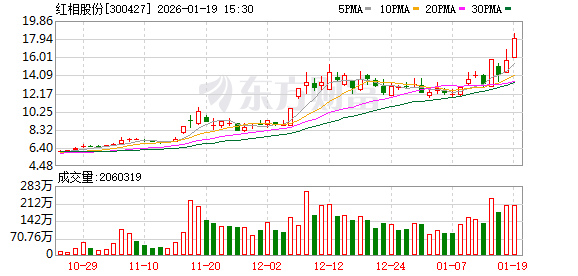
红相股份:子公司不存在为SpaceX星链、“千帆星座”、“G60星座”供货的情况
Di Yi Cai Jing· 2026-01-19 07:56
Group 1 - The core viewpoint of the article is that Hongxiang Co., Ltd. has clarified its business operations and product offerings through its subsidiary, Xingbo Communication, which specializes in the research, production, sales, and service of RF/microwave devices, components, subsystems, and hybrid circuit modules [2] - The microwave products developed by the company cover a frequency range from DC to 40GHz, indicating a broad capability in high-frequency applications [2] - Currently, the company does not supply products to SpaceX's Starlink, "Thousand Sails Constellation," or "G60 Constellation," which may impact market perceptions regarding its involvement in satellite communication projects [2]