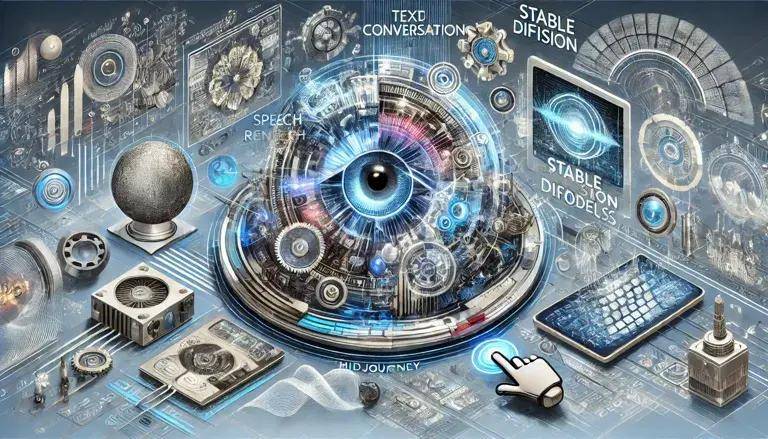
StableDiffusion

Search documents
字节一款AI产品爆火,黑神话之父冯骥:地表最强没有之一
2 1 Shi Ji Jing Ji Bao Dao· 2026-02-09 14:06
Core Insights - The AI video generation model Seedance 2.0 from ByteDance has gained significant attention for its ability to create "movie-quality videos from text/images" during its limited testing phase [1][3] - The model has been praised by industry experts, including Tim from Yingshi Juifeng, who described it as the "strongest video generation model" currently available [1][3] - The launch of Seedance 2.0 has led to a surge in stock prices within the media sector, with companies like Zhongwen Online and Zhangyue Technology experiencing significant gains [1] Technical Advancements - Seedance 2.0 utilizes a dual-branch diffusion transformer architecture, enabling simultaneous video and audio generation, allowing users to create multi-scene videos with native audio in just 60 seconds [3] - The model has achieved breakthroughs in four key capabilities: self and split camera movement, comprehensive multi-modal thinking, audio-visual synchronization, and multi-scene narrative ability, providing users with director-level control precision [3][6] Market Impact - The introduction of Seedance 2.0 is seen as a significant addition to ByteDance's competitive edge in the AI space, with expectations that AI video technology will reshape the content production industry [6] - The model is anticipated to find widespread application in short content areas like AI dramas and short films, addressing challenges such as high costs and long production cycles in traditional methods [6] Industry Challenges - Concerns have been raised regarding the training data used for Seedance 2.0, particularly the implications of using publicly available data, which has sparked discussions about copyright and data authorization issues [10][11] - Experts have noted that the rapid advancement of AI technology often outpaces the establishment of regulatory frameworks, highlighting the need for a balance between innovation and compliance [12] Company Measures - ByteDance has implemented risk control measures for Seedance 2.0 during its testing phase, including restrictions on certain model functionalities to prevent misuse of AI technology [12]

字节一款AI产品爆火 黑神话之父冯骥:地表最强没有之一
2 1 Shi Ji Jing Ji Bao Dao· 2026-02-09 14:03
Core Insights - The AI video generation model Seedance 2.0 from ByteDance has gained significant attention for its ability to create "movie-level videos from text/images" during its limited testing phase [1] - The model has been praised by industry leaders, including Tim from Yingshi Juifeng, who described it as the strongest video generation model available [1][8] Market Impact - Following the introduction of Seedance 2.0, the media sector in the A-share market saw a surge, with stocks like Zhongwen Online and Zhangyue Technology hitting their daily limits [4] - The model's capabilities are expected to reshape the content production industry, reducing costs and production times, particularly in short content areas like AI dramas and short films [7] Technological Advancements - Seedance 2.0 utilizes a dual-branch diffusion transformer architecture, allowing it to generate videos and audio simultaneously within 60 seconds based on user prompts or images [5] - It has achieved breakthroughs in key capabilities such as self-camera movement, multi-modal thinking, audio-visual synchronization, and multi-scene narrative generation, providing users with director-level control [6] Competitive Landscape - The launch of Seedance 2.0 adds a significant asset to ByteDance's AI portfolio, as the maturity of AI video technology is expected to lead to a restructuring of the content production value chain [7] - The competition in the AI video generation space is intensifying, with various companies expected to differentiate themselves based on specific application scenarios [6] Ethical Considerations - Concerns have been raised regarding the training data used for Seedance 2.0, particularly regarding the use of publicly available data and the implications for copyright and personal privacy [11][12] - ByteDance has implemented risk control measures during the testing phase, including restrictions on certain model functionalities to prevent misuse [12]



字节一款AI产品爆火,黑神话之父冯骥:地表最强没有之一
21世纪经济报道· 2026-02-09 13:48
Core Viewpoint - The article highlights the significant impact of ByteDance's AI video generation model Seedance 2.0, which has gained attention for its ability to create high-quality videos from text or images, marking a potential turning point in the AI video industry [1][6]. Group 1: Technology Breakthroughs - Seedance 2.0 utilizes a dual-branch diffusion transformer architecture, enabling simultaneous video and audio generation, allowing users to create multi-scene videos with native audio in just 60 seconds [6]. - The model has achieved breakthroughs in four key capabilities: self and split camera movement, comprehensive multimodal thinking, audio-visual synchronization, and multi-scene narrative ability, providing users with director-level control precision [6]. - The model's unique features include the ability to generate coherent multi-scene sequences and maintain character and visual style consistency without manual editing [8]. Group 2: Market Impact - The launch of Seedance 2.0 has energized the media sector in the A-share market, with stocks like Zhongwen Online and Zhangyue Technology experiencing significant price increases [3]. - Industry experts believe that as AI video technology matures, the content production chain will undergo a transformation, with AI playing a crucial role in all stages from creative planning to distribution [7]. - Seedance 2.0 is expected to find widespread application in short content areas such as AI dramas and short films, addressing challenges like high costs and long production cycles in traditional methods [7]. Group 3: Industry Challenges - The rapid advancement of Seedance 2.0 has raised concerns regarding the sources and authorization of training data, highlighting a common issue in the AI industry where technological progress outpaces legal frameworks [11][12]. - The use of publicly available data for training large models is a widespread practice, but the specificity of audio and video data raises more significant concerns regarding privacy and copyright [12][13]. - ByteDance has implemented risk control measures for Seedance 2.0, including functionality limitations to prevent misuse of the technology, indicating a responsibility to balance innovation with compliance [13].

2026年中国人工智能生成内容(AIGC)产业链、用户规模及竞争现状,行业加速向垂直行业深度渗透[图]
Chan Ye Xin Xi Wang· 2026-02-03 01:35
Core Insights - The AIGC (Artificial Intelligence Generated Content) industry is experiencing explosive growth in China, with revenue expected to rise from approximately 440 million yuan in 2020 to 544.55 billion yuan by 2032, positioning China as a potential global leader in this market [1][10]. Group 1: AIGC Industry Overview - AIGC is defined as a new content production method utilizing AI technology to automatically generate content, categorized as a type of content from the producer's perspective [2]. - The core infrastructure of the AI industry consists of computing power, algorithms, and data, which are essential for the innovation and development of the AIGC sector [2]. Group 2: AIGC Industry Advantages - AIGC significantly reduces costs and increases efficiency by automating repetitive content production tasks, thus shortening the overall content creation cycle and lowering labor and time costs [3][4]. - The technology enables multi-modal creation, allowing for cross-media conversion of different content forms, enhancing creativity and broadening the scope of content presentation [3][4]. - AIGC offers high customization accuracy, deeply analyzing user inputs to generate tailored content that meets diverse user needs [4]. Group 3: AIGC Industry Policies - Since 2023, China has been establishing a multi-layered policy framework for AIGC, progressing from basic regulations to comprehensive empowerment and safety governance [5]. - Policies encourage innovation in AIGC technology across various fields, aiming to create a robust application ecosystem [5]. Group 4: AIGC Industry Chain - The upstream of the AIGC industry includes data collection, cleaning, and labeling, which provide high-quality data support for AI model training [7]. - The downstream involves various applications that utilize AI models to solve specific problems, including the development and operation of applications that automatically generate images, text, and music [7]. Group 5: AIGC Industry Development Status - Since 2023, advancements in large model capabilities and decreasing operational costs have accelerated the development of AIGC, with commercial products like ChatGPT and Midjourney emerging [8][9]. - The global AIGC market is projected to grow from approximately $2.3 billion in 2020 to about $19.5 billion by 2024, with a compound annual growth rate of 70.6% [9]. Group 6: AIGC User Growth - The user base for AIGC in China is expected to reach 515 million by June 2025, driven by the expansion of application scenarios and increased product usability [11][12]. - The demographic profile shows that young and middle-aged groups constitute the majority of users, reflecting the adoption patterns of emerging internet technologies [12]. Group 7: AIGC Competitive Landscape - Major international players in the AIGC space include OpenAI, Microsoft, Google, and Meta, while Chinese companies like Baidu, Alibaba, and Tencent are also significant competitors [13][14]. - The competition is shifting from technical parameter comparisons to the ability to implement and commercialize solutions across various scenarios [14]. Group 8: AIGC Industry Development Trends - AIGC technology is evolving towards systematic upgrades, with multi-modal integration breaking down barriers between different types of data [17]. - The industry is moving towards deeper penetration into vertical sectors, creating tailored solutions that meet specific needs [17].




我和AI谈恋爱,我用AI留住“爸爸”,我被AI论文搞崩溃……
3 6 Ke· 2026-01-04 11:44
Group 1 - The year 2025 marks a significant turning point for AI, with widespread integration into daily life, leading to both technological advancements and collective anxieties [1][2] - AI is reshaping industries, creating a divide between large corporations with substantial resources and smaller startups struggling to survive in a competitive landscape [3][10] - Companies are increasingly relying on AI for efficiency, with significant investments in computational power and model training, which are essential for maintaining competitive advantages [4][5][6] Group 2 - The fashion industry is experiencing a transformation where AI plays a central role in design processes, drastically increasing output while reducing traditional human labor [4][6] - Startups are facing immense pressure from larger firms, which dominate the market with their resources and talent, making it challenging for smaller players to compete directly [9][10] - The education sector is grappling with the impact of AI-generated content on academic integrity, leading to conflicts between traditional academic standards and the convenience offered by AI tools [12][13][14] Group 3 - Emotional conflicts arise as AI technologies penetrate personal relationships, with many individuals turning to AI for companionship, leading to ethical dilemmas regarding human interaction [31][32] - The job market is undergoing a transformation, with AI replacing certain roles, prompting discussions about the future of employment and the necessity for workers to adapt to new technologies [40][41] - The gaming industry is particularly affected, with companies reducing costs by leveraging AI for design tasks, resulting in job losses for many designers [42][45][46]

【七彩虹教育】最好用的AI是什么?语音助手?大语言模型?文生图?
Sou Hu Cai Jing· 2025-07-15 13:37
Group 1 - The recent years have seen a small explosion in artificial intelligence, with various tools for voice recognition, meeting summaries, and interactive text models emerging, as well as image generation technologies like Midjourney and StableDiffusion [1] - There is a growing sentiment that these AI tools may not be as user-friendly as initially thought, which can be analyzed through the basic unit of "information" [3] Group 2 - In terms of voice, humans can understand speech at a rate of approximately 150 to 200 words per minute, equating to about 1600 bits of information per minute [4] - For images, a person can theoretically process about 189 MB of image information per minute, assuming one image of 1024x1024 pixels is understood per second [6] - The average reading speed for text is estimated at 250 to 300 words per minute, resulting in an information flow of about 10,000 bits per minute [8][9] Group 3 - Overall, the information transmission capacity is ranked as follows: voice has the least information content at 1600 bits per minute, text is in the middle at 10,000 bits per minute, and images have the highest capacity at 189 MB per minute [11] - AI applications in voice recognition and generation have reached or exceeded human levels, with tools like CosyVoice and SenseVoice performing well [11] - Text-based AI models, particularly after the advent of ChatGPT, are also approaching human-level performance, with models like QWen2 achieving top-tier status [11] - However, image generation and recognition still lag behind, primarily due to the significantly higher information content in images compared to voice and text [11]