TX5系列芯片

Search documents
IPO周报 | 清微智能正式启动A股IPO;乐动机器人获上市备案通知书
IPO早知道· 2026-03-08 12:04
Group 1: 清微智能 (Qingwei Intelligent) - Qingwei Intelligent has signed a counseling agreement with Huatai United Securities to officially start its A-share IPO process, potentially becoming the first listed company in the reconfigurable chip sector in China [3] - The company focuses on the research and application of reconfigurable chips (RPU), providing computing power support for AI computing centers, large models, autonomous driving, and smart manufacturing [3][4] - Qingwei Intelligent has successfully mass-produced the TX8 series cloud computing chips and the TX5 series high-efficiency chips, with a cumulative shipment of over 30 million reconfigurable chips [4] Group 2: SENASIC琻捷 (SENASIC) - SENASIC has updated its prospectus to continue its listing process on the Hong Kong Stock Exchange, with a revenue of 478 million yuan (approximately 530 million HKD) in 2025, surpassing the HKEX's revenue requirement [6] - The company has shown a compound annual growth rate (CAGR) of over 46% in revenue from 2023 to 2025, with gross margins increasing from 16.6% in 2023 to 28.0% in 2025 [6][7] - By 2025, SENASIC is projected to be the third-largest automotive wireless sensor SoC company globally, with cumulative shipments reaching 241.9 million units [7] Group 3: 乐动机器人 (Ledong Robotics) - Ledong Robotics has received a notice for the listing process on the Hong Kong Stock Exchange, focusing on intelligent robots based on visual perception technology [10][11] - The company achieved a revenue of 467 million yuan in 2024, with a CAGR of approximately 41.4% from 2022 to 2024, and turned profitable in the first half of 2025 [12] - Ledong Robotics has shipped over 13 million units of its sensors, algorithm modules, and intelligent lawn mowers, with the lawn mower segment contributing 20% to its revenue in the first half of 2025 [11][12]


可重构芯片第一股要来了!
是说芯语· 2026-03-04 02:27
Core Viewpoint - Qingwei Intelligent Technology Co., Ltd. has officially initiated its A-share IPO process, aiming to become the first listed company in the "non-GPU" new architecture chip sector in China, leveraging its unique reconfigurable computing technology to carve out a new path for domestic computing power [1][9]. Company Overview - Established in 2018, Qingwei Intelligent is a hard-tech enterprise focused on the research and industrialization of domestically produced reconfigurable chips (RPU), originating from Tsinghua University's technological foundation [2]. - The core team has over a decade of experience in the reconfigurable computing field, aiming to create a domestically controlled reconfigurable general computing ecosystem [2]. Technology and Product Innovation - Qingwei's RPU technology addresses the "impossible triangle" of generality, energy efficiency, and flexibility in traditional chip design, combining the strengths of GPUs and TPUs while overcoming their limitations [2]. - The flagship TX81 AI computing chip utilizes innovative C2C Mesh computing grid technology, allowing direct data interaction between chips, servers, and cabinets, effectively solving traditional data center challenges [3]. - The TX81 chip achieves high-end computing performance without relying on advanced processes, using cost-effective DDR memory instead of expensive HBM, resulting in a 50% cost reduction and a 3-fold increase in energy efficiency compared to industry peers [3]. Market Position and Growth Potential - Qingwei has successfully mass-produced two series of chips, covering diverse scenarios from edge to cloud computing, with significant deployments in smart security and autonomous driving [5]. - The company has shipped over 30 million reconfigurable chips, ranking among the top domestic commercial enterprises in AI acceleration card shipments [6]. - The backing of diverse investors, including national funds and industry giants, provides strong financial support for technology development and market expansion [8]. - The AI chip market in China is projected to grow from 142.54 billion yuan in 2024 to 1,336.79 billion yuan by 2029, with a compound annual growth rate of 53.7%, positioning reconfigurable chips as one of the fastest-growing segments [8]. Industry Impact - Qingwei's IPO marks a significant milestone for the semiconductor industry in the new architecture field, demonstrating a viable and efficient technological path beyond the GPU-dominated landscape [9].
AI芯片企业清微智能超20亿元C轮融资,即将冲击IPO
机器人圈· 2025-12-03 09:56
Core Insights - Recently, AI chip company Qingwei Intelligent completed over 2 billion RMB in Series C financing, led by Beijing state-owned enterprise Jingneng Group, with participation from various investors [1] - The financing will focus on three areas: next-generation reconfigurable chip development, implementation of intelligent computing scenarios, and high-end talent recruitment [1] - The company has initiated preparations for an IPO, aiming to become the first listed benchmark enterprise in the domestic "non-GPU" new architecture chip sector [1][2] Company Overview - Qingwei Intelligent is a leading company in reconfigurable computing chips, providing chip products and solutions that extend from edge to cloud [2] - The core technology team comes from Tsinghua University Microelectronics Institute, with 13 years of experience in chip R&D, and has received multiple awards including the National Technology Invention Award [2] - The company's chip products began mass production in the first half of 2019, with expected shipments nearing 10 million units [2] Product Development - Qingwei's reconfigurable AI chips have been deployed in over ten large-scale intelligent computing centers across the country, with cumulative orders for computing power cards expected to exceed 20,000 by 2025 [2] - The total shipment of reconfigurable chips is projected to surpass 30 million units, establishing a strong closed loop from technology to market [2] Product Series - The company offers several chip series, including the TX5 series aimed at edge intelligent scenarios, which features flexibility, low power consumption, and high efficiency [4] - The TX8 series targets the cloud market, utilizing a reconfigurable data flow architecture that allows direct interconnection between chips and systems, effectively solving power expansion issues and reducing costs [7] - The latest TX81 module achieves a computing power of 512 TFLOPS (FP16), with the REX1032 training and inference server reaching 4 PFLOPS, supporting deployment of large models with over a trillion parameters [7] Strategic Initiatives - This year, Qingwei aims to leverage its product and market advantages to build a domestic autonomous AI ecosystem, collaborating with the Beijing Academy of Artificial Intelligence to establish a joint laboratory [8] - The company is also actively participating in the open-source community and has become a leading unit in the domestic chip software ecosystem [8] - Qingwei has partnered with several AI innovation institutions to establish the "Beijing Reconfigurable Computing Hardware and Software Collaborative Technology Innovation Center," focusing on deep integration of industry, academia, and research [10]
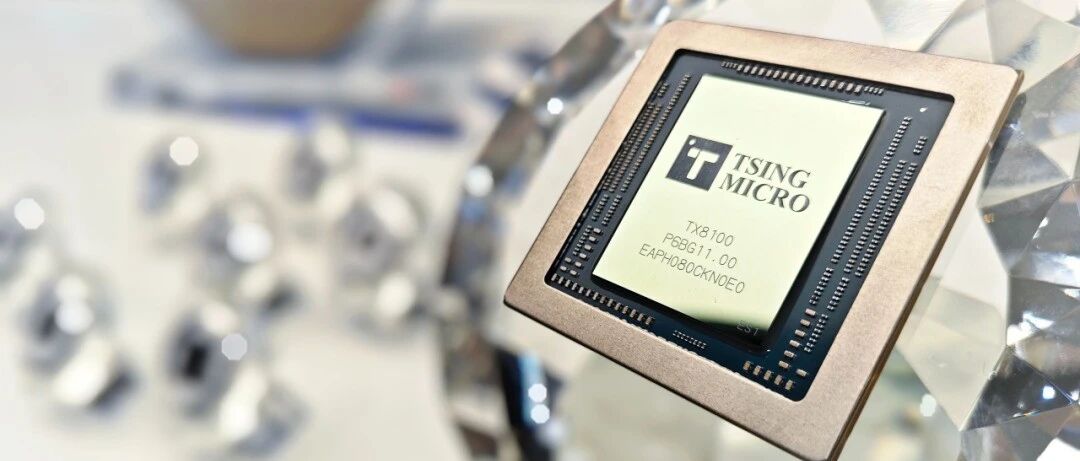
直击AI+教育场景核心痛点,清微智能联手灵书AI打造解决方案
2 1 Shi Ji Jing Ji Bao Dao· 2025-11-26 06:00
Core Viewpoint - The integration of artificial intelligence (AI) into vocational education presents a significant opportunity for transformation, focusing on enhancing teaching efficiency and talent cultivation quality [1] Group 1: AI Integration in Vocational Education - Vocational education is facing challenges such as a shortage of teachers, skill gaps, uneven computing power, and low collaboration efficiency, which are critical for deep AI empowerment in education [2] - The need for high-performance computing that supports thousands of concurrent users with low latency and manageable costs is emphasized as a core requirement for vocational institutions [1][2] Group 2: Company Overview - Qingwei Intelligent, established in 2018, specializes in the research and application of reconfigurable processing units (RPU) for AI computing, targeting various scenarios including AI computing centers and intelligent manufacturing [2][3] - The company has received investments from national and local funds, as well as from industry leaders like Ant Group and Baidu, indicating strong market confidence [3] Group 3: Technological Innovations - Qingwei's reconfigurable computing technology allows dynamic hardware adjustments to adapt to different algorithms, achieving high-end chip performance without relying on advanced processes [4] - The TX81 AI high-performance chip can deliver 4 PFLOPS of computing power, supporting deployment of large models with a cost reduction of 50% compared to industry peers and a threefold increase in energy efficiency [4] Group 4: Educational Solutions - Lingbook AI's core product, the MetaSight experimental training model library, aims to address traditional training challenges such as subjective evaluation and delayed feedback [5][6] - The system utilizes cameras and edge computing to monitor and analyze student operations, providing real-time feedback and allowing teachers to focus on personalized guidance [5][6] Group 5: Collaborative Ecosystem - The partnership between Qingwei Intelligent and Lingbook AI aims to create a closed-loop ecosystem of "chip + algorithm + scenario" for sustainable and scalable intelligent solutions in vocational education [7] - The MetaSight model library will be an open platform, initially involving over ten vocational institutions, with plans to integrate more educational and enterprise resources [6][7]

架构革命与生态竞合:可重构芯片全球产业化演进
半导体行业观察· 2025-03-31 01:43
Core Viewpoint - The article discusses the emergence and significance of Reconfigurable Processing Units (RPU) as a key technology in the post-Moore's Law era, highlighting their potential in various fields such as artificial intelligence, edge computing, and data centers [2]. Global Perspective - The global development of reconfigurable chips is characterized by diverse technological paths, with significant advancements in applications across consumer electronics, aerospace, and data centers [4]. - Xilinx, a leader in the FPGA industry, introduced the Versal series adaptive computing acceleration platform in 2018, which integrates advanced reconfigurable computing IP, enhancing DSP processing capabilities and achieving low power consumption [4]. - Samsung integrates reconfigurable accelerators into its 8K TVs and Exynos SoCs, optimizing video decoding and AI image enhancement [5]. - Intel initiated a project in 2022 to integrate reconfigurable computing units into Xeon processors, resulting in a 40% reduction in power consumption per unit of computing power [5]. - PACT's dynamic reconfigurable processors have been applied in satellite and military communication systems, achieving high throughput and rapid reconfiguration times [6]. - SambaNova's RDU technology supports training models with up to 50 trillion parameters, outperforming NVIDIA's H100 in inference performance while significantly reducing total ownership costs [6]. Domestic Landscape - Qingwei Intelligent, a core representative of China's reconfigurable chip industry, has developed a comprehensive product matrix covering cloud, edge, and terminal scenarios since its establishment in 2018 [8]. - The TX8 series from Qingwei Intelligent achieves three times the energy efficiency of traditional GPU architectures, while the TX5 series excels in low-power image processing for applications like smart security [9]. - By 2024, Qingwei Intelligent's chip shipments are expected to exceed 20 million units, with deployments in various sectors including AI and energy [9]. Industry Trends and Challenges - Data flow-driven architecture is emerging as a mainstream trend, effectively overcoming storage limitations and enhancing computational efficiency in large-scale data processing [10]. - The industry is transitioning from a closed model dominated by single vendors to an open ecosystem, with companies like Samsung and Intel lowering development barriers and fostering collaboration [12]. - However, the fragmentation of reconfigurable compilation tools poses a significant challenge, hindering ecosystem development [12]. Application Expansion - Reconfigurable chips are rapidly penetrating fields such as smart security and industrial IoT, with significant energy efficiency improvements [13]. - SambaNova's reconfigurable chips deployed at Argonne National Laboratory provide superior performance and efficiency for large-scale data processing [13]. Summary and Outlook - Reconfigurable chips are reshaping the global computing landscape, with domestic companies establishing competitive advantages in niche markets [13]. - Future industry development should focus on creating unified programming standards, developing flexible and low-power architectures, and integrating reconfigurable technology with cutting-edge innovations [13].