TVs

Search documents
Sony Group (SONY) Margins at Risk Amid Rising Memory Prices, Bernstein Warns
Yahoo Finance· 2026-03-23 18:19
Core Viewpoint - Sony Group Corporation is facing potential challenges due to rising memory prices, which could impact its profit margins, particularly for its gaming hardware [1][3][7]. Group 1: Company Overview - Sony Group Corporation is a leading global entertainment and electronics company specializing in gaming (PlayStation), imaging (cameras), audio, home entertainment (TVs), and mobile technology [4]. - The company produces high-performance sensors, develops film and music content, and provides financial services as part of its diverse portfolio [4]. Group 2: Market Analysis - Analysts at Bernstein SocGen Group downgraded Sony to Market Perform from Outperform, setting a price target of JPY3,400.00, citing concerns over rising memory prices [1]. - Memory prices are expected to increase sevenfold by the end of the year due to supply shortages driven by heightened demand for artificial intelligence memory [2]. - The anticipated rise in memory prices poses risks to the profit margins of the PS5, which currently incorporates $100 worth of memory components, and the upcoming PS6 is expected to face similar challenges [2][3]. Group 3: Financial Performance - In its fiscal third quarter of 2025, Sony reported a solid earnings beat, driven by margin outperformance across multiple divisions, despite the looming threat of rising memory costs [3].

Best Buy(BBY) - 2026 Q4 - Earnings Call Transcript
2026-03-03 14:02
Financial Data and Key Metrics Changes - The company reported Q4 revenue of $13.8 billion, with an adjusted operating income rate of 5% and adjusted earnings per share of $2.61, both slightly up from the previous year [7][29] - Comparable sales were down 0.8% year-over-year, which was within the guidance range [7][29] - The domestic segment revenue decreased by 1.1% to $12.6 billion, driven by a comparable sales decline of 0.8% [30] Business Line Data and Key Metrics Changes - Computing delivered positive comparable sales for the eighth consecutive quarter, driven by laptops, desktops, and accessories [8] - Mobile phones experienced growth for the fourth consecutive quarter, aided by expanded partnerships and operational improvements [8] - Newer categories like AI glasses, 3D printers, and health rings showed strong growth, while home theater and appliances saw declines [9] Market Data and Key Metrics Changes - The company's market share remained flat, indicating slightly softer consumer demand during the holiday quarter [7] - Online revenue decreased by 2.3% on a comparable basis, representing 39% of domestic revenue [30] - International revenue increased by 0.5% to $1.2 billion, primarily due to favorable foreign exchange rates [31] Company Strategy and Development Direction - The company aims to strengthen its position as a leading omni-channel destination for technology while scaling new profit streams [15][28] - Key priorities include driving omni-channel experiences, scaling Best Buy Ads and Marketplace, and identifying cost reductions [15][27] - The company plans to open six new stores for the first time in over a decade to meet demand in growing markets [17] Management's Comments on Operating Environment and Future Outlook - Management expects a mixed macro environment for fiscal 2027, guiding comparable sales growth between -1% to +1% [12] - There is an anticipation of continued consumer spending on high-price point products driven by technology innovation [12] - The company is focused on navigating challenges related to memory component cost inflation and supply uncertainty [13][14] Other Important Information - The company returned $1.1 billion to investors through dividends and share repurchases, increasing the quarterly dividend to $0.96 per share [11][32] - The company is enhancing its digital experience and exploring partnerships with AI platforms to improve customer engagement [18][19] Q&A Session Summary Question: Impact of higher memory pricing on product margins - Management indicated that while there could be pressure on margins in some computing categories due to memory costs, overall product margin rates are expected to remain flat year-over-year [39][40][41] Question: Performance in big screen TV sales - TV sales were below expectations in Q4, but management is optimistic about future demand driven by new RGB technology [43][44] Question: Margin flexibility in guidance - Management believes they have embedded sufficient margin flexibility to remain competitive, despite the promotional nature of the industry [52][54] Question: Same-store sales cadence for the year - Management expects Q1 to show a 1% comp, with potential for stronger performance in Q1 and Q4 compared to Q2 and Q3 [75][76] Question: Tariff mitigation efforts - Management noted a recent Supreme Court ruling led to a lower effective tariff rate, with no major impacts modeled for the year [69][70][71]

Best Buy(BBY) - 2026 Q4 - Earnings Call Transcript
2026-03-03 14:00
Financial Data and Key Metrics Changes - The company reported revenue of $13.8 billion for Q4, with an adjusted operating income rate of 5% and adjusted earnings per share of $2.61, both slightly up from the previous year [4][27] - Comparable sales were down 0.8% year-over-year, which was within the guidance range for the quarter [4][27] - The domestic segment revenue decreased by 1.1% to $12.6 billion, driven by a comparable sales decline of 0.8% [28] Business Line Data and Key Metrics Changes - Computing delivered positive comparable sales for the eighth consecutive quarter, driven by laptops, desktops, and accessories [5] - Mobile phones experienced growth for the fourth consecutive quarter, aided by expanded partnerships and operational improvements [5] - Newer categories like AI glasses, 3D printers, and health rings showed strong growth, while home theater and appliances saw declines [6] Market Data and Key Metrics Changes - The company's market share remained flat, indicating slightly softer consumer demand during the holiday quarter [4] - Online revenue decreased by 2.3% on a comparable basis, representing 39% of domestic revenue [28] - International revenue increased by 0.5% to $1.2 billion, primarily due to favorable foreign exchange rates [29] Company Strategy and Development Direction - The company aims to strengthen its position as a leading omni-channel destination for technology while scaling new profit streams [12][26] - Key priorities include driving omni-channel experiences, scaling Best Buy Ads and Marketplace, and identifying cost reductions [12][25] - The company plans to open six new stores for the first time in over a decade to meet demand in growing markets [15] Management's Comments on Operating Environment and Future Outlook - Management expects a mixed macro environment for fiscal 27, guiding comparable sales growth in the range of -1% to +1% [9] - The company anticipates continued growth in computing and mobile phones, driven by replacement cycles and innovation [10] - Management expressed confidence in navigating challenges related to memory component demand and cost inflation [11] Other Important Information - The company returned $1.1 billion to shareholders through dividends and share repurchases, increasing the quarterly dividend to $0.96 per share [31] - The company expects capital expenditures of approximately $750 million for fiscal 27 [32] - Best Buy Ads generated over $900 million in advertising collections, with expectations for 10% growth in fiscal 27 [23] Q&A Session Summary Question: Impact of higher memory pricing on product margins - Management indicated that while there could be pressure on margins due to memory costs, overall product margin rates are expected to remain flat year-over-year [36][38] Question: Performance in big screen TV sales - Management noted that both revenue and units for big screen TVs were below expectations in Q4, but they remain optimistic about future demand driven by new technology [41][42] Question: Margin flexibility in guidance - Management believes they have appropriately embedded margin flexibility in their guidance to remain competitive, despite the industry's promotional nature [50][52] Question: Same-store sales cadence for the year - Management expects Q1 to see growth in computing, gaming, and mobile phones, with improved TV trends anticipated [62][63]
Consumer confidence rebounds in February as Americans grow less pessimistic about jobs
Fox Business· 2026-02-24 23:26
Core Insights - Consumer confidence increased in February, with the Conference Board's index rising 2.2 points to 91.2, up from a revised 89 in January, which was initially reported as 84.5, the lowest since May 2014 [1][2] - Economists had predicted a February reading of 87, indicating that the actual figure exceeded expectations [1] Consumer Confidence Components - Four out of five components of the consumer confidence index improved, although the overall measure remains below the four-year peak of November 2024 [2] - The present situation index declined slightly, with current business conditions perceptions dipping by 0.7% [4] - Employment conditions saw a slight improvement, with the labor market differential increasing by 0.6 percentage points to 7.4% [4] Expectations Index - All three components of the expectations index saw slight increases, with less negative outlooks for business and labor market conditions six months ahead, and more positive expectations for incomes [5] Demographic Insights - Younger consumers (under 35) showed increased optimism, while confidence among those aged 35 and older declined [8] - Consumer confidence among Republican and Independent voters rose in February, contrasting with a decline among Democrats [9] Economic Sentiment - Consumers expressed ongoing concerns about prices, inflation, and the cost of goods, with mentions of trade and politics increasing in February [12] - Despite a decline in views of their current financial situation, expectations for future financial conditions remained less optimistic [13] Purchasing Intentions - Plans to purchase big-ticket items in the next six months increased, with more respondents indicating "yes" or "maybe" for purchases of used cars, furniture, TVs, and smartphones [14]

春节期间,烟台接续实施消费品以旧换新相关举措
Qi Lu Wan Bao· 2026-02-09 11:19
Core Viewpoint - Yantai City has introduced measures to boost consumer spending and stabilize production during the Spring Festival period, focusing on trade-in incentives for vehicles and appliances [1] Group 1: Vehicle Trade-in Incentives - Consumers who trade in old vehicles for new ones can receive subsidies of up to 20,000 yuan for scrapping and 15,000 yuan for replacement [1] - For vehicle replacement, the maximum subsidy is 15,000 yuan or 13,000 yuan depending on the specific policy [1] Group 2: Appliance and Electronics Subsidies - Consumers purchasing energy-efficient appliances such as refrigerators, washing machines, televisions, air conditioners, water heaters, and computers can receive subsidies up to 1,500 yuan [1] - For digital and smart products like smartphones, tablets, smartwatches, and smart glasses priced under 6,000 yuan, consumers can receive a maximum subsidy of 500 yuan [1] Group 3: Implementation Timeline - The measures are effective from the date of issuance until February 28, 2026 [1]
TCL bereichert die Olympischen Winterspiele 2026 in Mailand-Cortina für Fans und Athleten und inspiriert das Publikum weltweit mit der Vision „It's Your Greatness"
Prnewswire· 2026-02-08 04:11
Core Viewpoint - TCL celebrates the opening of "TCL Edelweiss Land" in Milan, coinciding with the Milano Cortina 2026 Winter Olympics, showcasing its commitment to innovation and excellence in technology [1][7]. Group 1: Event and Exhibition - The "TCL Edelweiss Land" exhibition opened on February 5, 2026, in front of Milan's central train station, featuring over 500 square meters of TCL's latest innovations [1][8]. - The exhibition runs from February 5 to February 22, 2026, allowing visitors to engage with TCL's products and experience the brand's commitment to sustainability and creativity [8][9]. Group 2: Partnership and Technology - TCL is a global partner of the Olympic Games, providing essential technology such as televisions and digital signage to enhance the viewing experience for millions of fans [4][13]. - The company aims to transform fan experiences during the Olympics through its advanced technology, including AI-enabled air conditioning and display technology [4][10]. Group 3: Athlete Support and Community Engagement - TCL supports athletes by providing next-generation household appliances and technology that enhance their comfort and connectivity during the Olympics [5][6]. - The "It's Your Greatness" campaign encourages individuals to discover their potential, aligning with the Olympic values of inspiration and excellence [3][6]. Group 4: Leadership Statements - Kevin Wang, CEO of TCL Technology, emphasized the importance of innovation in the partnership with the Olympic Committee, highlighting shared values of excellence and community [7][9]. - Kirsty Coventry, President of the International Olympic Committee, praised TCL's global reach and commitment to bringing the Olympic spirit to communities worldwide [9].

X @Bloomberg
Bloomberg· 2026-01-29 20:01
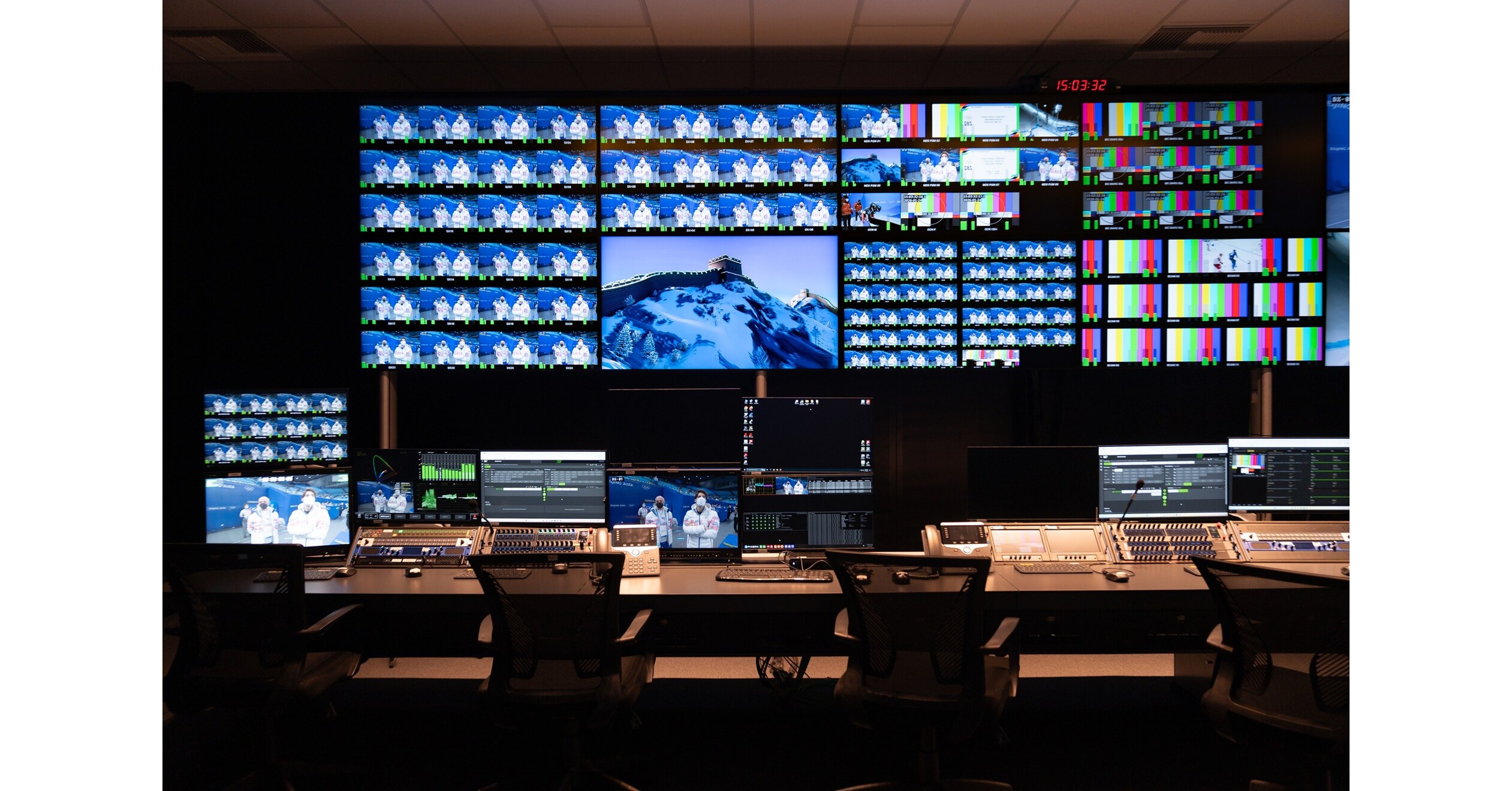
Sony is right to move on from TVs and go all-in on entertainment, writes @GearoidReidy (via @opinion) https://t.co/JX2MyYNRra ...
Gearing Up for The Big Game: WeShop Announces Electronics Offerings with Best Buy, Samsung, Lenovo and eBay
Globenewswire· 2026-01-28 12:00
Core Insights - WeShop Holdings Limited has announced retail partnerships with Best Buy, Samsung, Lenovo, and eBay to enhance its electronics offerings as demand for televisions surges ahead of major sporting events [1][5] Group 1: Partnerships and Offerings - The new partnerships aim to leverage existing relationships with leading electronics retailers to make high-ticket purchases more rewarding for consumers [2][3] - WeShop's ShareBack™ program allows users to earn WePoints through everyday purchases, which can convert into ownership in WeShop, aligning consumer spending with long-term participation in the platform's growth [2][3] Group 2: Market Strategy - WeShop integrates ShareBack™ rewards directly into the shopping experience, enabling users to earn WePoints while purchasing essential devices for game-day gatherings [3] - The company continues to expand access to ShareBack rewards across various retail categories in the U.S. and the U.K., including fashion, electronics, beauty, home goods, and travel [4] Group 3: Consumer Engagement - The head of commercial at WeShop highlighted that electronics shopping typically rises during major events like the Super Bowl, emphasizing the potential for consumers to turn planned purchases into opportunities for ownership [5]

Samsung Co-CEO warns unprecedented technology shortage could affect smartphone, TV prices
Yahoo Finance· 2026-01-05 07:51
Group 1: Memory Shortage Impact - Samsung Co-CEO TM Roh highlighted an "unprecedented" shortage in computer memory, affecting the entire consumer hardware industry and likely leading to increased prices for TVs, home appliances, and smartphones [1] - The memory market is primarily divided into volatile memory (DRAM) for short-term data access and non-volatile memory (NAND flash) for long-term storage [2] Group 2: Demand Dynamics - The demand for memory has surged due to hyperscalers like Alphabet, Meta, and Oracle investing billions in data centers for AI, significantly impacting the semiconductor industry [3] - Global memory producers are shifting focus towards high-performance computing (HPC) equipment, with Samsung, SK Hynix, and Micron dominating the DRAM market [4] Group 3: Price Trends - Prices for current-generation DDR5 RAM have more than doubled, while DDR4 RAM has also seen significant price increases, affecting the PC computing business [5] - NAND flash prices are expected to rise by "up to 50, 75%" due to competition among hyperscalers, positively impacting shares of storage makers like Western Digital and Seagate [6] Group 4: Market Reactions - The memory shortage has positively influenced stock market benchmarks in South Korea and Taiwan, with both regions' indexes reaching record highs, driven by optimism for companies like TSMC, Samsung, and SK Hynix [7]
重庆新一轮消费品以旧换新补贴开启
Xin Lang Cai Jing· 2026-01-04 16:56
Group 1 - The Chongqing government will launch a comprehensive subsidy policy for vehicle scrapping and replacement, as well as for home appliances and digital products starting January 1, 2026 [2] - The first batch of subsidies for 2026 includes 210 million yuan for vehicle scrapping, 555 million yuan for vehicle replacement, 450 million yuan for home appliances, and 301 million yuan for digital and smart products [2] Group 2 - Consumers can receive a one-time subsidy of up to 20,000 yuan for scrapping eligible gasoline and diesel vehicles registered before specific dates and purchasing qualifying new energy or low-displacement fuel vehicles [3] - The subsidy for scrapping eligible fuel vehicles and purchasing new energy vehicles is set at 12% of the new vehicle sales price, while the subsidy for low-displacement fuel vehicles is 10%, with maximum amounts of 20,000 yuan and 15,000 yuan respectively [3][4] Group 3 - For vehicle replacement, consumers can receive a one-time subsidy of up to 15,000 yuan for purchasing qualifying new energy vehicles and up to 13,000 yuan for low-displacement fuel vehicles [5] - The subsidy for new energy vehicles is 8% of the new vehicle sales price, while for low-displacement fuel vehicles, it is 6% [5] Group 4 - Consumers can receive a 15% subsidy on the sales price of energy-efficient home appliances, with a maximum of 1,500 yuan per item, and can claim one subsidy per category [6] - For digital products like smartphones and tablets, a 15% subsidy is also available, capped at 500 yuan per item, with a limit of one subsidy per category [6] Group 5 - The subsidy policy will be effective from January 1, 2026, to December 31, 2026, and will operate on a "total amount control, balanced use, and first-come, first-served" basis [6]