Temu电商平台

Search documents
果然不出默克尔所料,27国调转枪口瞄准中国,欧洲在走滑坡路
Sou Hu Cai Jing· 2025-12-16 06:47
Group 1 - The European Union (EU) is increasingly targeting Chinese companies, with recent investigations into Temu and Tongfang Weishi, indicating a systematic crackdown under the guise of fair competition [1][3] - Since the implementation of the Foreign Subsidies Regulation in 2023, over 80% of the investigated entities have been Chinese companies, highlighting a focused political agenda against them [1] - The EU Chamber of Commerce in China criticized the lack of transparency and evidence in these investigations, which have led to Chinese companies withdrawing from public projects in Europe [3] Group 2 - European leaders, including President Macron, have expressed intentions to impose tariffs if trade deficits with China do not improve, reflecting a collective anxiety towards China's rise [3] - The report from the Thomas More Institute warns that Europe risks sliding into a third-world status, with significant declines in wealth and economic stagnation in countries like France and Germany [5] - The EU's actions against Chinese firms are seen as defensive reactions to its declining competitiveness, particularly in sectors like electric vehicles and solar technology, where China has surpassed Europe [5][7] Group 3 - Europe is losing its competitive edge in the digital revolution, with no major tech companies or impactful social media platforms emerging from the region [7] - Internal divisions among EU member states regarding industrial policies and market regulations are exacerbating the continent's structural disadvantages in global competition [7] - The shift towards protectionism and the blame directed at China are viewed as a betrayal of Europe's core values and a misdirection of focus from internal structural issues [7]

Shein和Temu加大欧洲广告支出
news flash· 2025-05-06 14:58
Group 1 - In April, two e-commerce platforms increased their digital advertising spending in Europe, with significant growth in France and the UK [1] - Shein's advertising expenditure grew by 35% month-over-month, while Temu's spending increased by 40% in France and 20% in the UK [1] - The increased marketing efforts led to a noticeable rise in download volumes, although both companies experienced limited growth in daily active users locally [1]
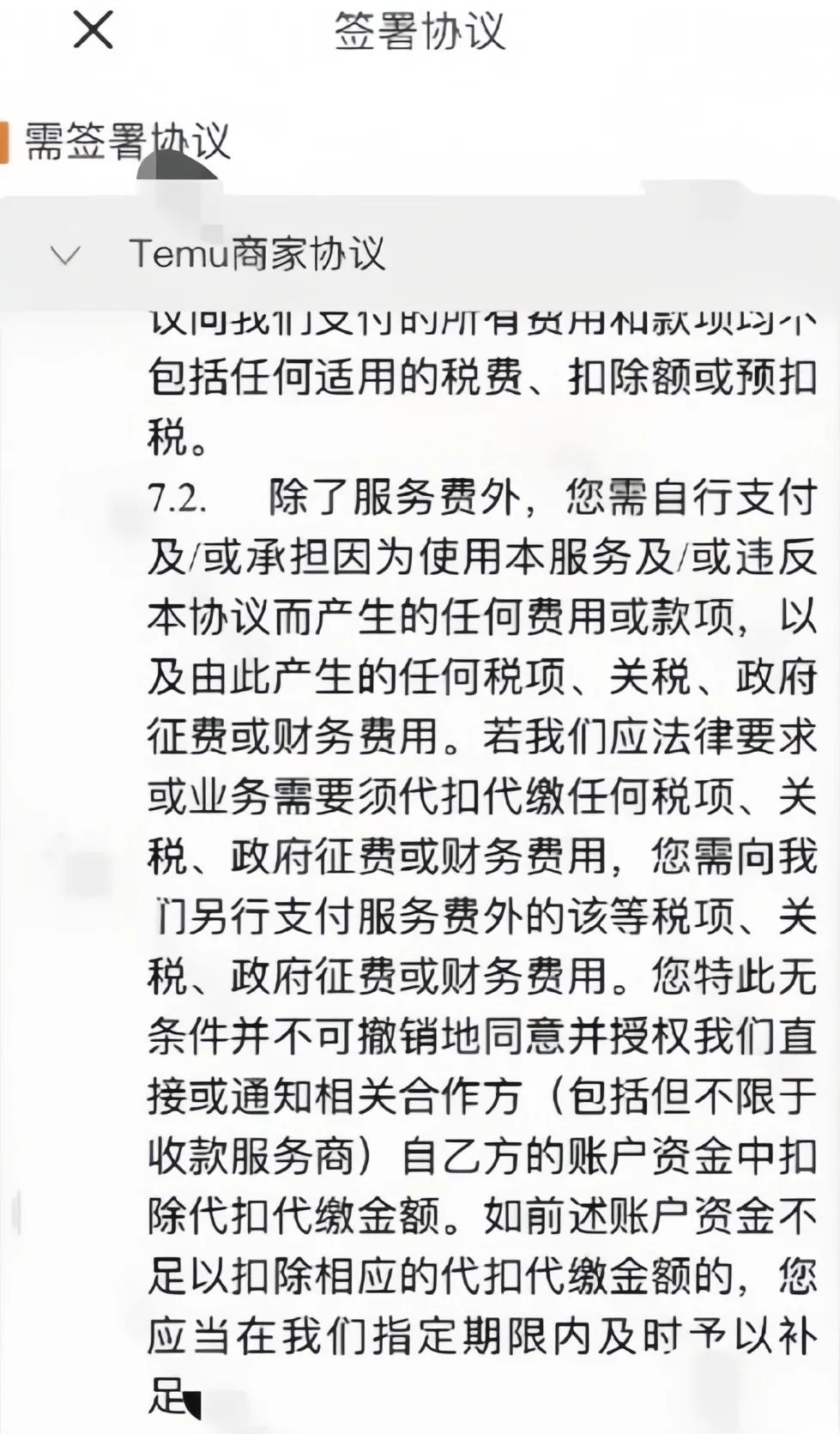
卖家群炸了!Temu要求卖家承担美区关税?
3 6 Ke· 2025-04-19 00:51
Core Viewpoint - Temu is facing significant backlash from cross-border sellers in the U.S. due to a recent update in its seller agreement, which mandates that sellers bear all tax costs, leading to a crisis of trust among merchants [1][3][10]. Group 1: Seller Agreement Changes - The updated seller agreement includes a clause stating that the platform has the right to deduct taxes directly from seller accounts, which has caused panic among sellers, especially those using the full-service model [3][4]. - Many sellers feel abandoned by Temu, particularly as they await the implementation of a new U.S. tax policy that could further impact their profits [3][4]. Group 2: Impact on Sales and Trust - Temu's order volume in the U.S. has reportedly halved since April, with weekly active users decreasing by 19% and monthly users by 18% [4]. - A survey indicated that 88% of respondents trust Amazon more than Temu, which only garnered 4.9% trust [4]. Group 3: Strategic Shift and Market Expansion - Temu is reportedly planning to reduce its reliance on the U.S. market, aiming to decrease its sales share from 60% to 30% by 2025, while focusing on expanding in Europe and other regions [5][6]. - The company has already begun to shift its advertising budget and operational focus towards markets in Europe, Asia, and the Middle East, indicating a strategic pivot away from the U.S. [5][6][9]. Group 4: Broader Industry Implications - The current crisis reflects deeper challenges within the Chinese cross-border e-commerce sector, as platforms like Temu are caught between maintaining profitability and managing seller relationships amid changing regulatory landscapes [10][11]. - The evolving situation may push Chinese e-commerce companies to explore new compliance and diversification strategies, potentially transforming their business models from quick profits to brand building [10][11].