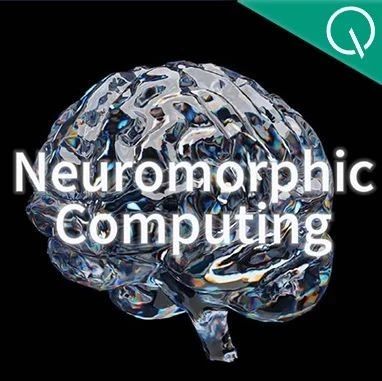
TrueNorth芯片

Search documents
那些昆虫“教”给AI的事
Huan Qiu Wang Zi Xun· 2026-02-06 02:06
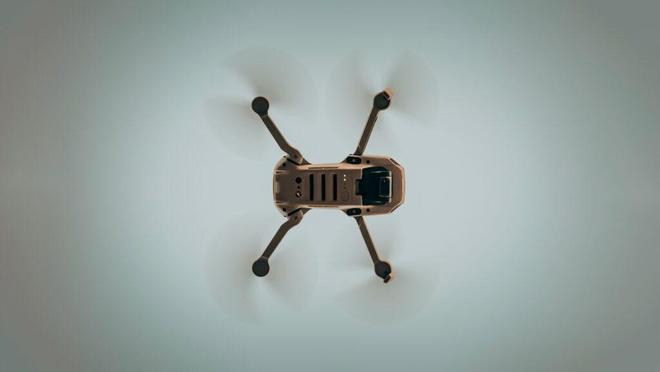
来源:科技日报 科技日报记者 刘霞 一个名为Insect Neuro Nano的国际合作项目正在欧洲5国的大学与实验室间悄然推进。据物理学家组织 网报道,该项目致力于研发一种受蜜蜂大脑启发的纳米光子芯片,将传感与神经计算融为一体,最终是 将昆虫神经系统的高效架构与先进的纳米光子技术相结合,打造出超低功耗、高集成度的人工智能 (AI)硬件系统。 当前,在追求更智能、更高效的AI之路上,越来越多科学家开始把目光投向那些微小却非凡的生命 ——昆虫。它们的大脑和身体虽小,却蕴藏着进化的智慧,正为AI的发展提供源源不断的灵感。 虫脑虽小,内藏进化智慧 人类大脑拥有约860亿个神经元,而大多数昆虫大脑仅有百万甚至十万级别的神经元。然而,在导航、 识别模式、快速决策等方面,它们的表现却令人惊叹,其效率与适应力远超当前最先进的AI系统。 以蜜蜂为例,其大脑仅含约100万个神经元,却能飞越10公里精准归巢。它们能记住复杂的花形图案, 通过"摇摆舞"传递信息,甚至能作出群体性选择。 果蝇更甚,神经元不足10万个,却能完成高难度飞行,从经验中学习,并展现复杂的求偶行为。 相比之下,像GPT-4这样的大型语言模型,依赖数十亿参数和巨 ...

20瓦就能运行下一代AI?科学家瞄上了神经形态计算
量子位· 2025-06-16 04:50
Core Viewpoint - Scientists are attempting to create a neuromorphic computer that mimics the human brain, potentially revolutionizing AI by significantly reducing energy consumption while enhancing processing speed [2][4][6]. Group 1: Current AI Challenges - The rapid development of large language models has led to an "energy crisis" in AI, with projected electricity costs for running these models reaching $25 trillion by 2027, surpassing the annual GDP of the United States [3][4]. - In contrast, the human brain operates on approximately 20 watts daily, comparable to a household LED bulb, prompting researchers to explore more efficient AI models [4]. Group 2: Neuromorphic Computing - Neuromorphic computing aims to replicate the structure and function of the human brain, utilizing energy-efficient electronic and photonic networks to integrate memory, processing, and learning [6][8]. - Key features of neuromorphic systems include: 1. Event-driven communication that activates circuits only when necessary, reducing power consumption [9]. 2. In-memory computing to minimize data transfer delays [10]. 3. Adaptability, allowing systems to learn and evolve over time without centralized updates [10]. 4. Scalability, enabling the architecture to accommodate complex networks without significantly increasing resource demands [10]. Group 3: Technological Advancements - Current neuromorphic computers possess over 1 billion neurons and 100 billion synapses, indicating the potential for brain-level complexity [15]. - Major tech companies like IBM and Intel are at the forefront of this technological revolution, with products like IBM's TrueNorth chip and Intel's Loihi chip designed to simulate brain activity [18]. - The global neuromorphic computing market is expected to grow exponentially, reaching $1.81 billion by 2025, with a compound annual growth rate of 25.7% [19].
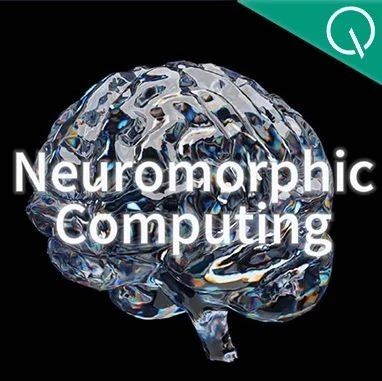
20瓦就能运行下一代AI?科学家瞄上了神经形态计算
量子位· 2025-06-16 04:49
Core Viewpoint - Scientists are attempting to create a neuromorphic computer that mimics the human brain, potentially revolutionizing AI by significantly reducing energy consumption while enhancing processing speed [2][4][19]. Group 1: Current AI Challenges - The rapid development of large language models has led to an "energy crisis" in AI, with projected electricity costs for running these models reaching $25 trillion by 2027, surpassing the annual GDP of the United States [3][4]. - In contrast, the human brain operates on approximately 20 watts daily, comparable to a household LED bulb, prompting researchers to seek more energy-efficient AI solutions [4]. Group 2: Neuromorphic Computing - Neuromorphic computing aims to replicate the structure and function of the human brain, utilizing energy-efficient electronic and photonic networks to integrate memory, processing, and learning into a unified design [6][8]. - Key features of neuromorphic computing include: 1. Event-driven communication that activates circuits only when necessary, reducing power consumption [9]. 2. In-memory computing to minimize data transfer delays [10]. 3. Adaptability, allowing systems to learn and evolve over time without centralized updates [10]. 4. Scalability, enabling the architecture to accommodate complex networks without significantly increasing resource demands [10]. Group 3: Technological Advancements - Current neuromorphic computers possess over 1 billion neurons and 100 billion synapses, indicating the potential for brain-level complexity [15]. - Major tech companies like IBM and Intel are at the forefront of this technological revolution, with products like IBM's TrueNorth chip and Intel's Loihi chip designed to simulate brain activity [18]. - The global neuromorphic computing market is expected to grow exponentially, reaching $1.81 billion by 2025, with a compound annual growth rate of 25.7% [19].