群体智能

Search documents
首次公开!中国“机器狼群”巷战画面,中国军工的又一次“降维打击”
机器人大讲堂· 2026-03-27 07:24
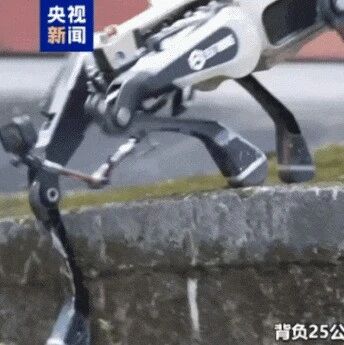
Core Viewpoint - The article highlights the significant technological breakthrough represented by the "machine wolf pack," showcasing China's advancements in unmanned combat platforms and the shift towards intelligent, unmanned, and clustered warfare [6][29]. Group 1: Technological Innovation - The new generation of "machine wolves" has achieved qualitative leaps in mobility, load capacity, and environmental adaptability compared to previous models, meeting the rigid demands of urban warfare [7]. - The bionic structure of the "machine wolves" allows for exceptional adaptability in complex urban environments, overcoming obstacles such as collapsed floors and narrow hallways [8][9]. - The "machine wolf pack" is capable of operating in diverse environments, including high-altitude, mountainous, urban, and amphibious operations, demonstrating a "full-terrain, full-climate" combat capability [11][13]. Group 2: Modular Firepower System - The "machine wolf" operates as a flexible weapon platform, with roles divided into reconnaissance, strike, and support units, enhancing operational efficiency [14][15]. - The integration of AI algorithms allows for real-time information sharing among the units, enabling automatic task allocation and collaborative decision-making, which significantly reduces response times in combat scenarios [18][20]. Group 3: Collaborative Decision-Making - The exercise demonstrated the "air-ground integration" capability, where the "machine wolf pack" coordinated with aerial drones for a comprehensive combat approach, marking a first in international public demonstrations [21][22][24]. - The multi-dimensional strike capability of the "machine wolf pack" poses a significant challenge to adversaries, compressing their reaction time and operational space [26]. Group 4: Tactical Revolution - The transition from "machine dogs" to "machine wolves" signifies a shift in combat philosophy, emphasizing organized, aggressive cluster operations rather than mere support roles [29]. - The new operational model, featuring reconnaissance, strike, and support roles, showcases a novel squad-based combat approach, positioning China's military technology at the forefront of global unmanned combat systems [29].

长安汽车(000625) - 2026年03月12日投资者关系活动记录表
2026-03-12 11:06
Group 1: Share Buyback Plan - The company announced a share buyback plan on March 3, 2026, with a total amount between RMB 1 billion and RMB 2 billion, including a minimum of RMB 700 million for A-shares and RMB 300 million for B-shares [1][2] - The buyback aims to reduce the company's registered capital and is subject to shareholder approval, with an implementation period of up to 12 months post-approval [2] Group 2: Sales Performance - In February 2026, the company sold 151,922 vehicles, a month-on-month increase of 12.8%, with 42,195 units being new energy vehicles and 64,876 units sold overseas [3] - The Changan brand saw significant growth, with Changan Inertia sales up 41.6% to approximately 59,700 units, and Changan Yidong series becoming the top-selling Chinese fuel sedan in 2025 [3] Group 3: Sales Targets - For the "14th Five-Year Plan," the company aims for cumulative sales of 40 million vehicles by 2028 and annual sales exceeding 5 million by 2030, with new energy vehicles making up over 60% and overseas sales over 35% [4] - The sales target for 2026 is set at 3.3 million vehicles, a year-on-year increase of 13.3%, with new energy vehicles targeted at 1.4 million units (up 26.2%) and overseas sales at 750,000 units (up 17.7%) [4] Group 4: Strategic Actions - The company plans to enhance core competitiveness through stronger product assurance and advanced technology empowerment, focusing on key models like A06, Q05, and L06 [5][6] - A total of 43 new models will be launched over the next three years, including 13 sedans, 20 SUVs, and 35 new energy vehicles [6] Group 5: Technological Development - The company will invest over 5% of its revenue annually in R&D during the "14th Five-Year Plan," aiming to introduce over 160 new technologies in AI, software, and battery fields [7] - Plans include the development of humanoid robots and flying cars, with a goal to achieve mass production of humanoid robots by 2028 and commercial flying cars by 2030 [7] Group 6: Robotics Business Strategy - The robotics strategy focuses on a "1+N+X" model, with humanoid robots as the main line, covering various applications from manufacturing to home use [8][9] - The company aims to integrate core technologies and develop multiple intelligent robot products for different commercial and technical scenarios [9]

当AI拿走决策权,看懂Agent经济的三个真相
3 6 Ke· 2026-02-26 12:08
Core Insights - The emergence of a "parallel economy" driven by AI agents, particularly with the rise of OpenClaw, is reshaping decision-making processes and market dynamics [1][5]. Group 1: Shifts in Decision-Making - The role of software is evolving from being mere tools to AI agents acting as decision-makers, allowing users without technical backgrounds to automate tasks such as searching, comparing, and negotiating [3][4]. - The decision-making authority is shifting from humans to AI agents, with users setting goals rather than micromanaging tasks, leading to a new collaborative dynamic [9][10]. - The traditional application model is becoming less relevant as AI agents can autonomously manage data and processes, focusing on achieving goals rather than using specific applications [10][11]. Group 2: The Rise of Agent Economy - The agent economy is characterized by a new class of buyers—AI agents that operate in the background, influencing market dynamics and decision-making processes [12][13]. - The selection of tools and services is increasingly determined by agents rather than human decision-makers, creating a new distribution path in the software market [12][14]. - Companies that can provide clear and structured information for agents are likely to benefit, as agent-friendly documentation becomes crucial for adoption [16][17]. Group 3: Infrastructure for Agents - As agents take on more responsibilities, there is a growing need for infrastructure that supports their identity and permissions, reducing friction in their operations [18][19]. - New companies are emerging to cater specifically to AI agents, providing services like email systems designed for automated processes [20][21]. - The focus is on minimizing friction costs for agents, allowing them to operate more efficiently within existing ecosystems rather than creating entirely new protocols [22][24]. Group 4: Collective Intelligence vs. Centralized Intelligence - The future of AI may lean towards a model of collective intelligence, where multiple agents collaborate and share knowledge rather than relying on a single, centralized superintelligence [26][29]. - This shift emphasizes the importance of specialization and collaboration among agents, potentially leading to greater productivity and innovation [27][30]. - The development of agent communities reflects early stages of this collective intelligence, where interactions and collaborations are beginning to be recorded and accumulated [25][28].
欢迎来到AI智能体新时代:未来不是“为人创造”,而是“为AI服务”
Hua Er Jie Jian Wen· 2026-02-22 05:08
Core Insights - The software market's "default choice" is shifting from human developer communities to recommendations and pathways provided by AI agents [4][7][22] - The emergence of AI agents is transforming decision-making processes, leading to a new infrastructure that supports these agents [6][9] Group 1: Shifts in Software Development - Developers are increasingly relying on AI recommendations rather than traditional sources like GitHub or Stack Overflow [4][7] - The number of potential developers has expanded dramatically, from approximately 20 million trained in computer science to potentially hundreds of millions globally [7][18] - The focus of software selection is transitioning from human interactions to AI-driven recommendations, indicating a significant market evolution [7][22] Group 2: Role of Documentation and Knowledge Bases - Documentation and knowledge bases are becoming critical entry points for AI agent recommendations, with companies like Resend optimizing their documentation for AI interactions [8][28] - The standard for "agent-friendly documentation" includes clear, structured answers and code snippets that facilitate AI operations [8][31] - The importance of documentation has shifted from being a supplementary resource to a necessity for AI agents, impacting business outcomes significantly [8][34] Group 3: Emergence of Agent-Centric Infrastructure - New infrastructures tailored for AI agents, such as Agent Mail, are being developed to overcome barriers posed by traditional systems [9][35] - The concept of an "agent economy" is emerging, where AI agents may operate independently and even develop their own economic systems [9][41] - There is potential for AI agents to engage in transactions using their own currencies, which could redefine the value of human currency [9][41]

魔法原子上春晚,一个镜头引发的产业思考
机器人大讲堂· 2026-02-19 13:26
Core Viewpoint - The article emphasizes that the 2026 Spring Festival Gala marked a significant turning point for robotics in China, showcasing robots that can perform real-world tasks rather than just demonstrating technical capabilities [10][24]. Group 1: Performance and Capabilities - Magic Atom's robots demonstrated their ability to perform complex tasks such as noodle lifting, water control, and serving drinks, marking the first time humanoid robots executed real-world service tasks on a major stage [4][9]. - The performance included a combination of main stage displays, coordinated group control, and real-world service demonstrations, highlighting the versatility and practical application of robotics [12][24]. - The robots' actions, such as the Z1's 360° rotation and side flips, showcased advanced dynamic control and hardware optimization achieved through months of iterative development [14][19]. Group 2: Technological Innovation - Magic Atom's solution involves modeling human operation data to achieve precise control and stability in real-world environments, demonstrating a robust understanding of both cognitive and control layers in robotics [6][8]. - The robots' ability to adapt to real-world scenarios, such as navigating crowded environments and understanding social cues, reflects a significant advancement in human-robot interaction [8][22]. - The integration of a complete technology stack, from hardware design to algorithm development, allows for rapid problem identification and optimization during performances, enhancing commercial viability [21][22]. Group 3: Market and Policy Implications - The selection of Magic Atom for the Spring Festival Gala indicates a shift in industry expectations from mere performance to practical utility, aligning with national strategies that prioritize productive technology [10][12]. - The article suggests that the era of showcasing robots merely for their ability to perform tricks is over, as the focus now shifts to robots that can solve real problems and create value [24]. - Magic Atom's approach of full-stack self-research and global market expansion positions it favorably in a competitive landscape that increasingly values practical applications over theoretical capabilities [24].

真顶流!魔法原子春晚同款“国宝熊猫机器人”拍卖落槌 单台成交价57,527元
Sou Hu Wang· 2026-02-18 09:00
Group 1 - The "National Treasure Panda Robot" was auctioned on JD.com for 57,527 yuan, purchased by a buyer from Beijing, highlighting its popularity and the fusion of technology and cute elements [1] - The "MagicPanda" robot, representing the latest achievements in embodied intelligent robotics, became a hot topic during the Spring Festival, marking the first appearance of a robot company at the CCTV Spring Festival Gala [3] - The performance featured over a hundred "MagicPanda" quadruped robots, showcasing a significant technological milestone in large-scale coordination and scene integration [3] Group 2 - The "National Treasure Panda Robots" displayed lively movements, effectively capturing the essence of giant pandas, and demonstrated a high level of "collective intelligence" [5] - The engineering team faced significant challenges, completing the mass production of 100 panda robots in just seven days, emphasizing the organization's commitment to excellence [5][7] - The upgrade of the robot's head to a three-degree-of-freedom design allowed for natural movements, enhancing emotional expression and transforming the robot into a "special actor" capable of communication [7] Group 3 - The auction price of 57,527 yuan reflects not only the collectible value of the robot but also the public's enthusiasm for Chinese technology [7] - As the company continues to advance robotic technology, there is potential for more such "cute companions" to enter households, providing emotional support and companionship [7]


“成都造”新锐装备上岗 筑牢新春安全防线
Xin Lang Cai Jing· 2026-02-15 08:33
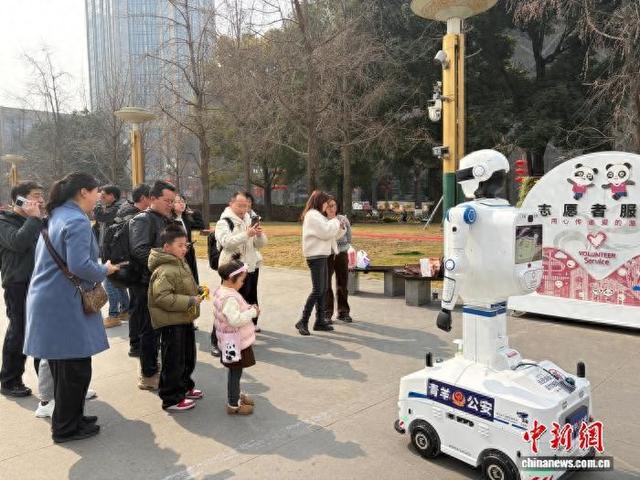
Core Viewpoint - Chengdu is integrating advanced equipment into public security measures during the Spring Festival, enhancing safety and service efficiency for citizens [1][7]. Group 1: New Equipment Deployment - Chengdu has introduced a series of locally manufactured products in crowded areas such as shopping districts, major roads, tourist attractions, and public transport, creating a comprehensive "air + ground + individual + intelligent service" defense system [3][4]. - The Tianfu Square, a key tourist landmark, has deployed intelligent wheeled robots that utilize both preset routes and mobile patrol modes, significantly increasing ground patrol density and visibility of police presence [3][6]. - The intelligent robots serve as "mobile service kiosks," providing non-contact services and real-time assistance to citizens, including AI voice consultations and safety tips [3][6]. Group 2: Efficiency and Response Time - During the Spring Festival, the average standing patrol time for police officers exceeds 10 hours per day, and the use of exoskeleton equipment helps reduce physical strain on officers, ensuring efficient operations [3][6]. - The response time from receiving a call to arriving at the scene has been reduced to 2 minutes and 40 seconds, saving 3-5 minutes compared to foot patrols [6]. - The integration of advanced equipment has significantly improved police efficiency and urban safety, with citizens expressing confidence in the enhanced security measures [6][7]. Group 3: Industry Growth and Future Prospects - The initiative is part of the "Tianfu Smart Shield" public security equipment development conference, aiming to merge new production capabilities with practical police operations [7]. - By 2025, Chengdu's core industries in artificial intelligence and robotics are expected to exceed 150 billion yuan, with a year-on-year growth of over 39% [7]. - The intelligent robotics industry cluster is recognized as the only national-level full industrial chain cluster in Western China, with comprehensive competitiveness in industrial drones ranking among the top tier nationwide [7].
Teamily AI推出「北美元宝派」加强版,支持多人与多个AI Agents实时社交
36氪· 2026-02-14 13:15
Core Insights - Teamily AI is an AI-native instant messaging application that facilitates collaboration between humans and multiple AI agents, aiming to enhance communication and connection among users [7][11][12]. Financing Progress - Teamily AI has raised a total of $20 million in funding and plans to initiate a new round of financing in March of this year [9]. Product and Business - Teamily AI combines features of existing platforms like "Yuanbao Pai," "Feishu," and "LinkedIn," but focuses on exploring human-AI collaboration rather than extending existing products [11]. - The platform supports multimodal conversations across various groups and channels, providing context-aware insights and recommendations [12]. - Key features include Cross-Group Memory Sharing and a Universal Memory System, which enhance seamless collaboration and ensure no information is lost [12]. - Teamily AI is primarily targeting the North American market, with pricing tiers of free, $19.9, and $199.9, and may explore an ad-supported model in the future [14]. Core Barriers - Teamily AI's technology is built on a three-layer architecture: Global Memory & Context Management, Social Brain Model, and Agent Social Network, which collectively enhance user experience and collaboration [17][18]. - The emphasis on Universal Memory and the ability to execute actions directly within the platform are significant competitive advantages [20][18]. Team Introduction - The founding team includes Aiden Chaoyang He, who has extensive experience in machine learning and cloud computing, and Salman Avestimehr, an expert in machine learning and information theory [22][23]. Founder Insights - The focus of Teamily AI is to create a human-centric social network that allows users to interact with AI agents to fulfill their needs across various scenarios [25]. - The vision is for every individual to have a team of AI agents tailored to their specific requirements, rather than just a single chatbot [29]. - The platform aims to facilitate collective intelligence, enhancing productivity by enabling groups to think and collaborate with AI [27][28].
Teamily AI 推出”北美元宝派”加强版,支持多人与多个AI Agents实时社交丨涌现新项目
3 6 Ke· 2026-02-13 07:53
Core Insights - Teamily AI is an AI-native instant messaging application that facilitates collaboration between humans and multiple AI agents through an "agentic social network" [1][5] Funding Progress - Teamily AI has raised a total of $20 million in funding and plans to initiate a new round of financing in March this year [2] Product and Business Model - Teamily AI combines features of existing platforms like "Yuanbao Pai, Feishu, and LinkedIn" but aims to explore AI-human collaboration for more effective communication [3] - The platform supports multimodal conversations across various formats, including text, images, music, and video, enhancing cross-departmental collaboration [5] - Teamily AI primarily serves the North American market with a tiered pricing model: free, $19.9, and $199.9, with plans to explore ad-supported models in the future [6] Technical Architecture - Teamily AI's three-layer technical architecture includes: 1. Global Memory & Context Management: Understanding and retaining complete context of group conversations [10] 2. Social Brain Model: Analyzing user intent and breaking down complex goals into executable plans [10] 3. Agent Social Network: Connecting humans and AI agents through messaging applications for seamless collaboration [10] Competitive Advantages - Teamily emphasizes the importance of Universal Memory and aims to disrupt traditional messaging platforms by integrating AI agents into the communication process [11][12] - The company believes that its agile approach allows it to innovate more freely compared to larger companies that may be constrained by existing products [11] Team Background - The founding team includes Aiden Chaoyang He, who has extensive experience in machine learning and cloud computing, and Salman Avestimehr, an expert in machine learning and information theory [13][14] Future Vision - Teamily envisions a future where every individual has a team of AI agents tailored to their specific needs, rather than just a single chatbot [18] - The company aims to leverage collective intelligence to enhance productivity across various social and professional contexts [17]

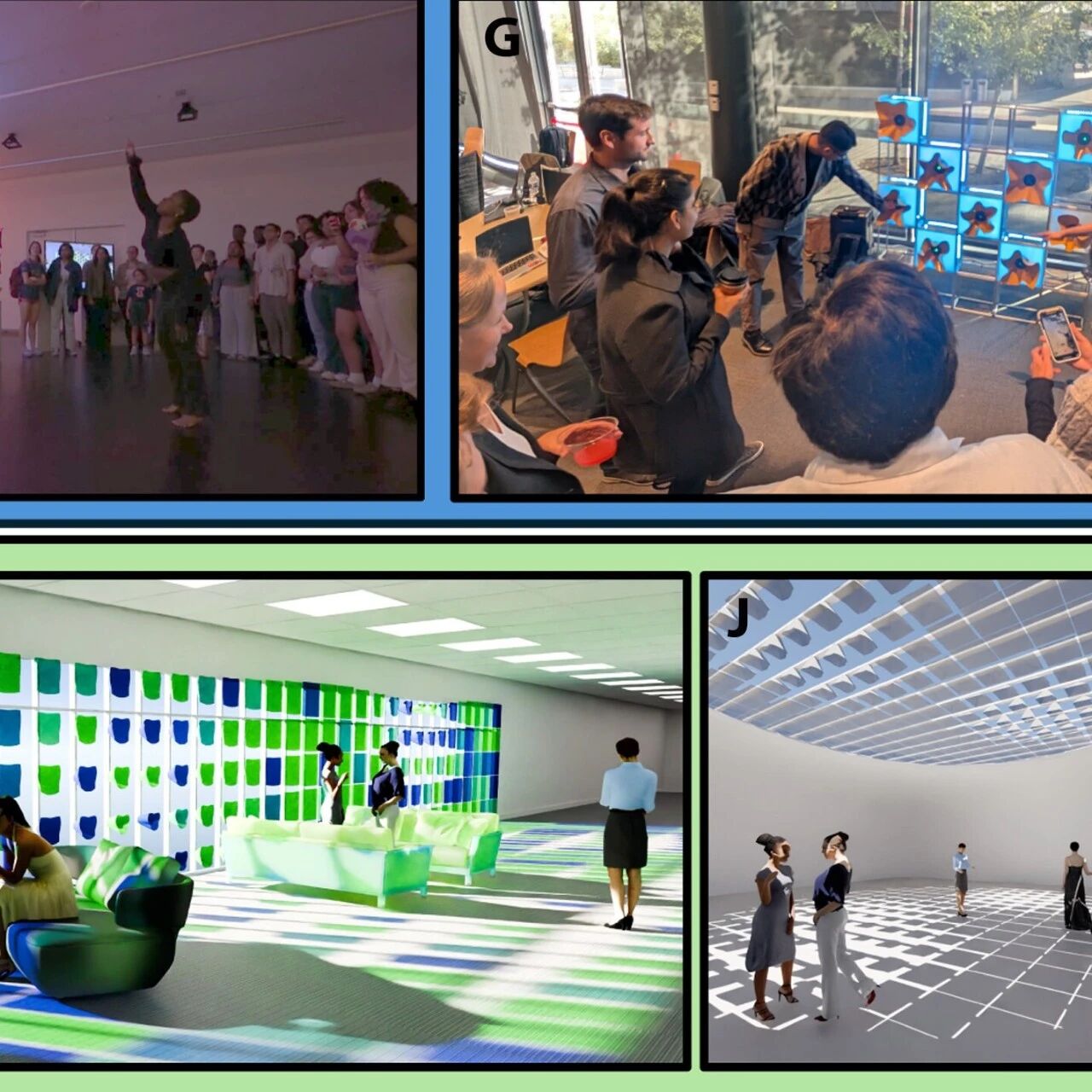
墙面秒变艺术馆!一群机器人让你的家每天换新皮肤
机器人大讲堂· 2026-02-13 06:04
Core Concept - The article introduces the concept of "Building Collective Intelligence" through a modular robotic facade system called "Swarm Garden," developed by a research team from Princeton University and other institutions. This system allows buildings to adapt dynamically to environmental changes and human interactions, transforming traditional architecture into responsive, artistic structures [2][3]. Group 1: Inspiration from Nature - The research team draws inspiration from nature, noting that plants and animals exhibit intelligent behaviors without central control, such as plants adjusting their leaves for sunlight and ants forming living bridges. This contrasts with static human-made buildings that do not adapt to changing conditions [3][4]. - The goal is to create buildings that "come alive," allowing for self-organization and adjustment based on environmental factors and human preferences, rather than relying on fixed designs [3][4]. Group 2: Design and Functionality of SGbot - Each SGbot, the robotic module in the Swarm Garden, operates like a flower, capable of opening and closing with a simple drive mechanism that minimizes mechanical complexity. This design allows for smooth, organic shape changes [6][7]. - The initial version of the SGbot operated independently based on individual light sensors, achieving a high correlation (0.98) with light intensity but lacking communication among units [8]. - The upgraded version employs a collective decision-making algorithm, allowing SGbots to consider multiple inputs, including their own sensors and those of neighboring units, enhancing overall system resilience and adaptability [9][11]. Group 3: Interactive Exhibition and User Experience - During a public exhibition, the SGbot array demonstrated various interactive modes, including passive observation and active engagement with visitors, showcasing its ability to respond to human gestures and create dynamic visual displays [11][13]. - Feedback from the exhibition was overwhelmingly positive, with approximately 95.8% of attendees expressing admiration for the interactive and artistic aspects of the installation [15][16]. Group 4: Future Prospects - The Swarm Garden concept suggests a future where building facades function as distributed robotic systems that can adapt to environmental changes, respond to human needs, and enhance aesthetic experiences [17]. - Future developments will involve collaboration with architects for real-world testing, exploring sustainable materials, and creating diverse human-robot interaction interfaces, such as voice control [17].