XBOX

Search documents
Steam Machine 横空出世,立刻被内存短缺摁在原地
3 6 Ke· 2026-02-06 00:42
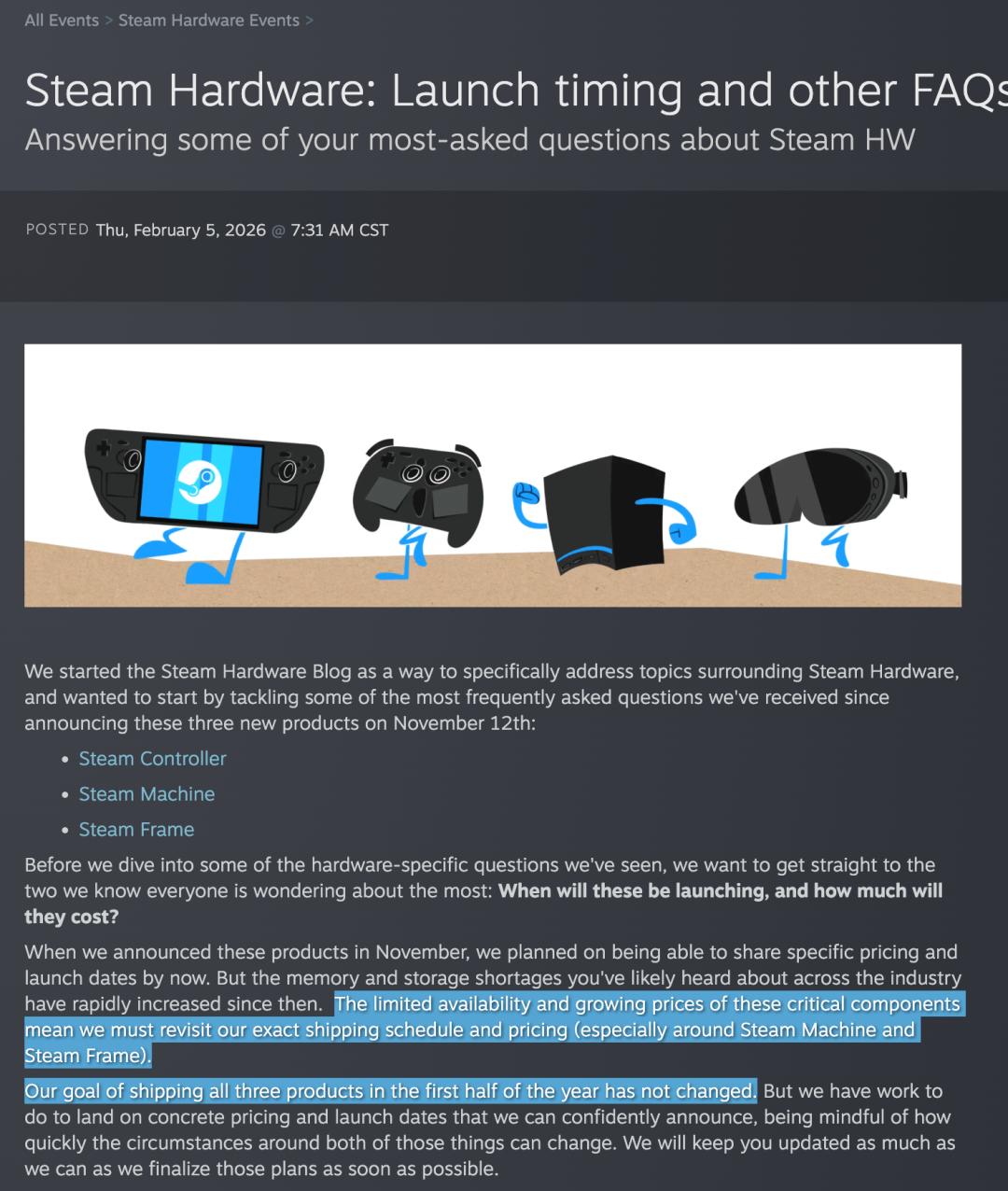
Core Viewpoint - Valve's Steam Machine, along with the Frame headset and Controller, has been delayed due to rising memory and storage costs, impacting pricing and release schedules [1][15]. Group 1: Market Dynamics - TrendForce reports that by 2026, 70% of global memory chip production will be consumed by data centers, with Citibank predicting an 88% year-on-year increase in average DRAM prices [3]. - The price of DDR5 memory has surged 3-4 times in recent months, exacerbating the cost challenges for consumer hardware [3][21]. - Samsung and SK Hynix have signed a significant agreement with OpenAI to supply nearly half of the global DRAM capacity for AI infrastructure, leading to a strategic reallocation of silicon wafer production [5]. Group 2: Product Positioning and Challenges - The Steam Machine's pricing is expected to be significantly higher than initially planned, with the 512GB version potentially priced at $950 and the 2TB version at $1,070, surpassing the PS5 Pro's price of $749 [5][15]. - Valve's previous attempt at the Steam Machine in 2013 failed due to high prices, unclear positioning, and a lack of a compelling user experience compared to traditional consoles [6][11]. - The current Steam Machine aims to be closer to an entry-level PC, featuring AMD's Zen 4 CPU and RDNA3 GPU, but faces challenges in delivering a simple, plug-and-play experience that consumers expect from consoles [12][15]. Group 3: Competitive Landscape - The Steam Machine's hardware performance is estimated to be about 85% of the market's RX7600 GPU, which may limit its appeal for high-performance gaming at 4K resolution [17]. - For PC gamers with older hardware, the Steam Machine may be attractive, but for those with mid to high-end PCs, its appeal is limited compared to established consoles like the PS5 Pro [18]. - The overall consumer hardware market is facing structural challenges due to rising costs, making it difficult for new entrants like the Steam Machine to gain traction [21][22].

三年裁员1.5万人,微软游戏要完蛋了吗?
创业邦· 2025-08-18 00:10
Core Viewpoint - Microsoft is undergoing significant layoffs, with a total of 15,000 employees laid off over the past three years, indicating a shift in strategy and management issues within the Xbox division [6][9][11]. Group 1: Layoffs and Management Changes - Microsoft announced layoffs of 9,000 employees, marking the fifth round of layoffs in three years, totaling 15,000 [6]. - The Xbox division, led by Phil Spencer, is a primary target of these layoffs, affecting key studios and franchises [7][9]. - The layoffs reflect a broader trend in the gaming industry, with other companies like Embracer Group and Ubisoft also announcing significant job cuts [10]. Group 2: Xbox's Historical Context - Xbox's initial success was driven by strategic decisions and key titles like "Halo: Combat Evolved," which showcased the potential of console gaming [13][15][18]. - The Xbox 360 era saw further success, selling over 10 million units in three years, but management issues persisted [31]. - Microsoft's approach to Xbox has often been reactive, with leadership changes impacting the direction and focus of the gaming division [39][41]. Group 3: Current Strategy and Challenges - Under CEO Satya Nadella, Microsoft shifted focus from hardware to a subscription-based service model, impacting game development and studio management [41][43]. - Recent titles, such as "Redfall," have received poor reviews, highlighting issues in game development and management practices [45][61]. - The Xbox Game Pass (XGP) has generated significant revenue, but developers express concerns over profitability and sustainability [59][61]. Group 4: Future Outlook - The layoffs and strategic shifts may improve financial performance in the short term, but they pose risks to the long-term viability of Xbox and its game offerings [61][62]. - The industry is questioning whether Microsoft can balance service-oriented strategies with the need for creative and engaging game development [62].

关税风波中的游戏市场:任天堂直言Switch2定价误判,中国厂商提前布局海外主体
2 1 Shi Ji Jing Ji Bao Dao· 2025-04-09 09:12
Core Viewpoint - The recent tariff adjustments initiated by the U.S. government have significant implications for the gaming and digital entertainment industry, particularly affecting hardware manufacturers and the overall supply chain, while having limited direct impact on Chinese game developers due to the nature of digital products being exempt from tariffs under current WTO rules [1][2]. Group 1: Impact on Chinese Game Developers - Chinese game developers are largely insulated from the direct effects of the new U.S. tariffs, as game software and services are classified as digital products, which are exempt from tariffs under WTO regulations [2][3]. - To mitigate potential risks from geopolitical tensions and regulatory changes, many Chinese gaming companies have relocated their publishing entities or servers overseas [2][3]. Group 2: Hardware Price Increases - The U.S. tariff adjustments are expected to lead to increased prices for gaming hardware, particularly affecting major console manufacturers like Sony, Microsoft, and Nintendo, which rely heavily on overseas supply chains [4][5]. - The global console market is projected to reach approximately $24.1 billion in 2024, with the U.S. market accounting for about $7.848 billion [5]. - The majority of gaming consoles sold in the U.S. are manufactured in China, making them vulnerable to tariff impacts [5][6]. Group 3: Market Dynamics and Consumer Behavior - Rising hardware costs and declining consumer purchasing power may compress the gaming market in the U.S., potentially shifting consumer interest towards mobile or PC gaming [7][8]. - Despite the challenges, the gaming industry remains a relatively low-cost entertainment option, which may sustain consumer interest even as other costs rise [8][9]. Group 4: Regulatory Environment and Compliance Costs - The tightening of regulatory policies in the U.S. and globally is increasing operational and compliance costs for Chinese gaming companies looking to enter foreign markets [9]. - The number of applications being removed from platforms like Google Play and App Store has surged, indicating a more stringent regulatory environment that could impact the operations of Chinese firms in the U.S. [9].